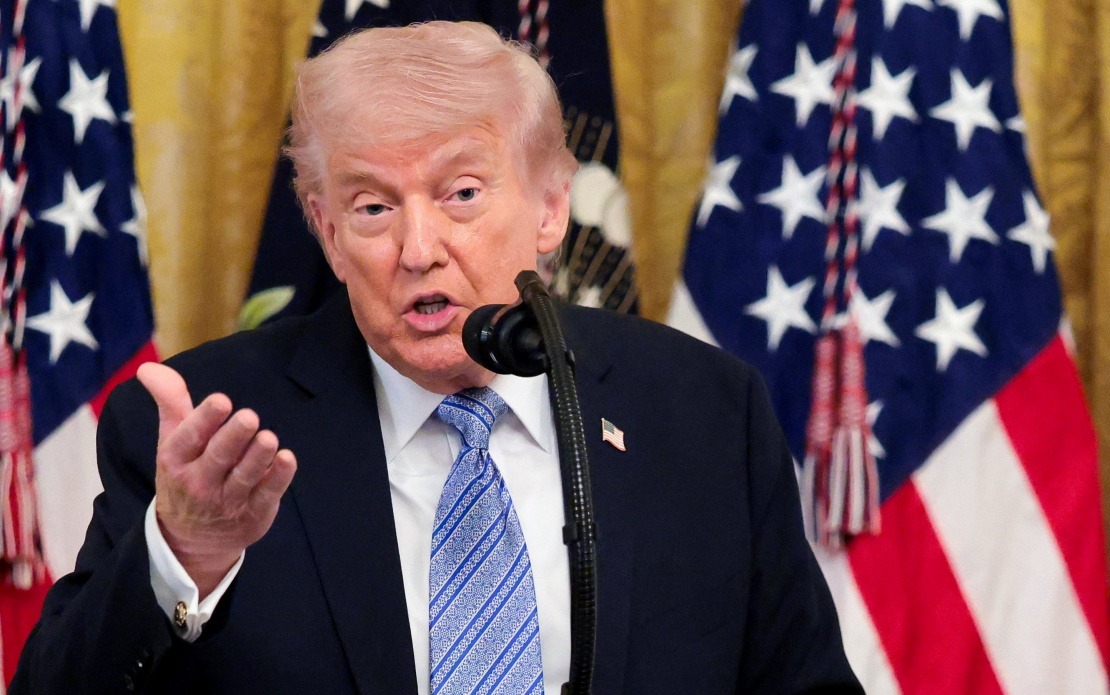
US President Donald Trump announced on Monday that he had conducted a constructive phone call with Andy Burnham, the newly appointed British Prime Minister, signalling early diplomatic engagement between Washington and the United Kingdom's fresh leadership. The Republican president took to his Truth Social platform to characterise the exchange as positive, suggesting that transatlantic relations remain a priority for his administration at the outset of the British government's tenure.
The bilateral discussion touched upon a diverse range of strategic and economic matters reflective of the depth of the US-UK relationship. According to Trump's account, the conversation ranged across North Sea oil development, bilateral trade arrangements, the military alliance binding the two nations, and efforts to clear mines from the Hormuz Strait—a critical shipping corridor in the Middle East through which vast quantities of global energy supplies transit daily.
Trump's characterisation of the call as "interesting and very well executed" underscores the apparent absence of friction in the initial contact between the new British administration and the White House. The president elaborated that he and Burnham discussed "many subjects," suggesting a comprehensive review of shared interests rather than a narrowly focused conversation on a single issue. This breadth hints at the traditional closeness of Anglo-American relations, which typically encompasses security arrangements, trade partnerships, and coordinated diplomatic initiatives across multiple regions.
The mention of North Sea oil carries particular significance for energy security discussions within the Atlantic partnership. As Europe seeks to diversify its energy sources and reduce dependency on Russian supplies following geopolitical tensions, discussions about hydrocarbon extraction and development in UK waters remain economically and strategically important. Trump's administration has historically emphasised energy independence and the expansion of fossil fuel production, making this topic a natural point of discussion with British counterparts managing their own energy transition and economic priorities.
Trade negotiations figure prominently in transatlantic discussions, particularly given that both nations have pursued independent trade relationships following Britain's departure from the European Union. The UK has signalled interest in establishing closer commercial ties with the United States, and Trump's emphasis on discussing trade matters suggests ongoing negotiations or at least a commitment to exploring mutually beneficial economic arrangements. Such discussions typically encompass tariffs, regulatory alignment, and sectoral opportunities in industries ranging from agriculture to technology.
The military alliance reference carries implications for NATO structure, intelligence sharing arrangements, and joint defence operations that have characterised the relationship for generations. The presence of substantial US military installations in the UK, combined with integrated command structures and intelligence partnerships, makes military coordination a cornerstone of bilateral relations. Burnham's government will inherit these defence relationships and appears willing to maintain them, based on Trump's positive assessment.
The Hormuz Strait demining operations represent a more immediate security concern. The strategic waterway, through which approximately one-third of global maritime petroleum traffic flows, has experienced increased tensions in recent years. Joint efforts by multiple nations to clear mines and ensure safe passage reflect international security concerns and the willingness of allied partners to contribute to regional stabilisation efforts. Trump's inclusion of this topic suggests active coordination on Middle Eastern security matters between Washington and London.
Trump's statement that the two leaders would meet "in the not too distant future" signals an intention to move from preliminary telephone diplomacy to in-person bilateral engagement. Such summit-level meetings typically involve more detailed discussions on policy implementation, joint initiatives, and addressing any bilateral issues requiring high-level attention. The timing of this planned meeting remains unspecified, but the commitment itself reflects the importance both nations place on maintaining robust transatlantic relations.
The tone of Trump's remarks, offering "good luck" to Burnham as he assumes office, reflects a customary diplomatic courtesy while also suggesting genuine support for the new British leadership. This positive framing matters for Southeast Asian observers, as the strength of transatlantic cooperation influences global geopolitical dynamics and economic patterns that affect the region. A harmonious US-UK relationship typically translates to coordinated approaches on international trade, security arrangements, and diplomatic initiatives that have regional implications.
For Malaysia and other Southeast Asian nations, the state of US-British relations carries indirect but meaningful consequences. The two countries often coordinate positions on regional security matters, trade agreements, and responses to geopolitical challenges. A well-functioning transatlantic partnership tends to provide greater stability and predictability in international affairs, whereas tension between Washington and London could fragment Western positions on issues ranging from Indo-Pacific security to global economic governance.
Burnham's election as British Prime Minister reflects his previous prominence in UK domestic politics, and his approach to foreign policy will shape Britain's international engagement during his tenure. Trump's early overture suggests the White House intends to work constructively with the new administration, positioning the relationship for continued cooperation on matters of mutual strategic importance. The early warmth in their first interaction sets a positive baseline for future engagement.
As both nations navigate complex global challenges—from economic pressures to security threats to energy transitions—the quality of their bilateral relationship will remain consequential. Trump's emphasis on their "outstanding relationship" reflects not merely diplomatic convention but an acknowledgment that the US-UK partnership continues to anchor broader Western security and economic frameworks. For regional powers like Malaysia, these superpower relationships ultimately influence the stability of global systems within which Southeast Asia operates and prospers.

