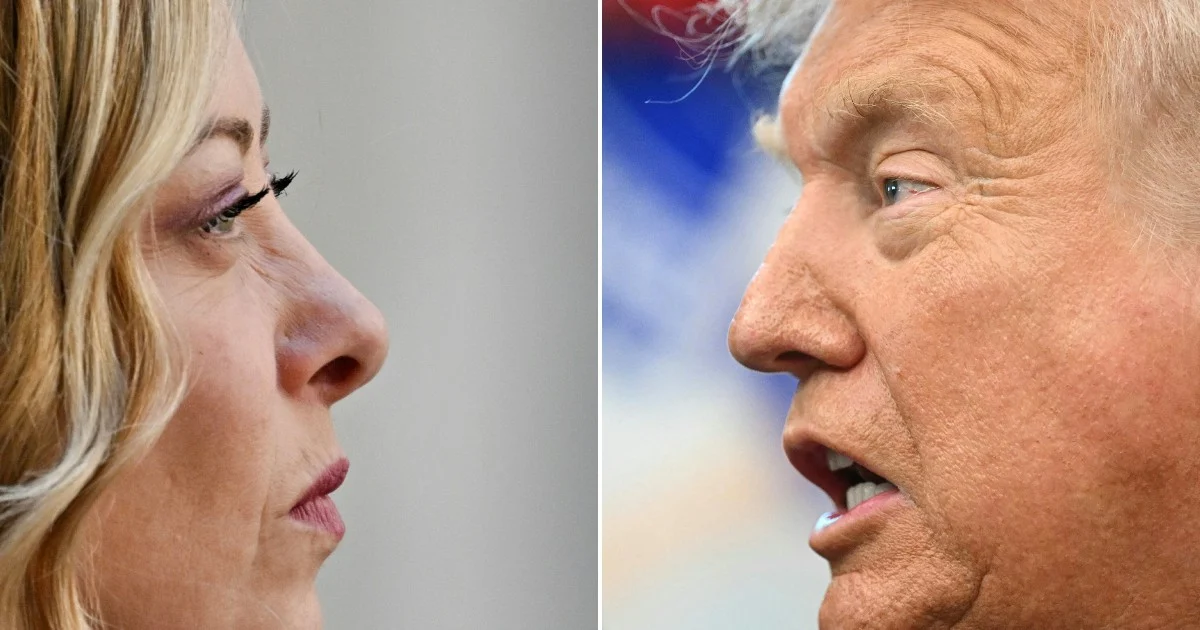
The diplomatic tension between Washington and Rome reached a new pitch on Saturday when US President Donald Trump publicly accused Italian Prime Minister Giorgia Meloni of persistently seeking photo opportunities with him, turning what might have appeared as a minor interpersonal matter into a broader statement about transatlantic relations and strategic divergences.
Trump's escalation of the dispute signals a willingness to conduct high-level disagreements through public commentary rather than private channels, a characteristic approach that has become increasingly familiar in his style of diplomatic engagement. By raising the matter in such a public manner, the US president has effectively elevated what could have remained a bilateral issue into a matter of international attention, with implications for how other nations calculate their dealings with the American administration.
The photograph disagreement itself appears to have emerged during recent G7 proceedings, where Meloni and Trump would have encountered each other in a multilateral setting. However, Trump's characterisation of her behaviour as repeated attempts to secure photographs suggests a pattern of interaction that he perceived as noteworthy enough to comment upon publicly. This type of personal-level observation, when aired by a sitting president, carries weight beyond ordinary social exchange and frequently signals underlying policy frustrations.
What distinguishes this particular row from routine diplomatic posturing is Trump's explicit linkage of the photograph dispute to substantive geopolitical matters involving Iran and NATO. By connecting what appears to be a personal grievance to these significant strategic issues, the US president has indicated that the interpersonal tension reflects deeper disagreements about fundamental security and foreign policy directions. Italy's position within NATO, its approach to sanctions and diplomatic engagement with Iran, and broader questions about European strategic autonomy from American leadership all become relevant contexts for interpreting this public friction.
For Southeast Asian observers, this spat illustrates how volatile transatlantic relations have become under Trump's leadership, a development with potential ramifications for the broader international order that shapes global commerce and security arrangements. When Washington and major European allies struggle even at the level of public comity, it creates uncertainty about the consistency and reliability of existing international frameworks and partnerships. This unpredictability extends beyond Europe, affecting how countries in Asia structure their own diplomatic and strategic calculations.
Italy's position in this dispute warrants particular attention, as Meloni's government has attempted to maintain a delicate balance between its NATO obligations, European Union commitments, and a desire to engage independently with various international actors. The public friction with Trump may reflect genuine policy differences regarding engagement with Iran or military commitments, or it could represent broader Italian concerns about being sidelined in major strategic decisions. Meloni's government has also pursued a more assertive Italian foreign policy agenda, and tensions with Washington could reflect differing visions for European agency in global affairs.
The invocation of NATO in Trump's criticism carries particular significance, given the president's well-documented scepticism about the alliance's value and burden-sharing arrangements. His suggestion that tensions with Meloni relate to NATO matters may indicate frustration with Italian defence spending levels, force deployments, or alignment on specific NATO operations. These concerns have been central to Trump's critique of the alliance throughout his presidency, and any European leader who fails to meet his expectations regarding military contributions or strategic alignment becomes a potential target for public rebuke.
The Iran dimension adds another layer of complexity to understanding this dispute. Trump's administration has taken a notably hardline stance toward Iran, pursuing maximum pressure policies and strict sanctions regimes. If Meloni's government has advocated for diplomatic channels or questioned the effectiveness of certain sanctions approaches, this could explain the broader frustration Trump has expressed. European countries have repeatedly found themselves at odds with American Iran policy, seeking to preserve space for diplomatic engagement even as Washington pursued confrontational strategies.
From a communications standpoint, Trump's decision to air this grievance publicly rather than address it through diplomatic channels reflects a calculated choice about how to exert pressure on the Italian government. Public criticism from the American president carries significant political weight for European leaders, who must manage domestic audiences, European partners, and American relationships simultaneously. By choosing to criticise Meloni publicly, Trump creates pressure on her to respond, either through matching criticism or through demonstrated policy alignment that addresses his concerns.
The broader implications for international relations suggest that disputes that might have remained confidential in previous administrations are now becoming matters of public record and media scrutiny. This shift toward transparency, while potentially increasing accountability, also introduces volatility into relationships that benefit from a degree of diplomatic discretion. Other nations, both allies and competitors, must now assume that private disagreements may become public fodder if they incur sufficient presidential displeasure.
For Malaysia and Southeast Asia, this incident underscores the importance of maintaining multiple partnership vectors rather than relying too heavily on any single relationship. When even long-standing NATO allies face public rebuke from Washington, it reinforces the strategic wisdom of regional countries cultivating diverse international relationships. The unpredictability evident in US-European relations during this period makes it essential for Asian nations to develop robust relationships with multiple powers while avoiding excessive dependence on any single partner's goodwill.
Moving forward, observers should watch whether this public dispute between Trump and Meloni translates into measurable policy changes affecting either country's international positions. The photograph controversy appears to be a symptom rather than a cause, masking underlying disagreements about Iran, NATO, and European strategic direction. How both sides navigate this public tension will likely influence how other leaders, both allies and adversaries, calibrate their own approaches to engaging with the Trump administration.