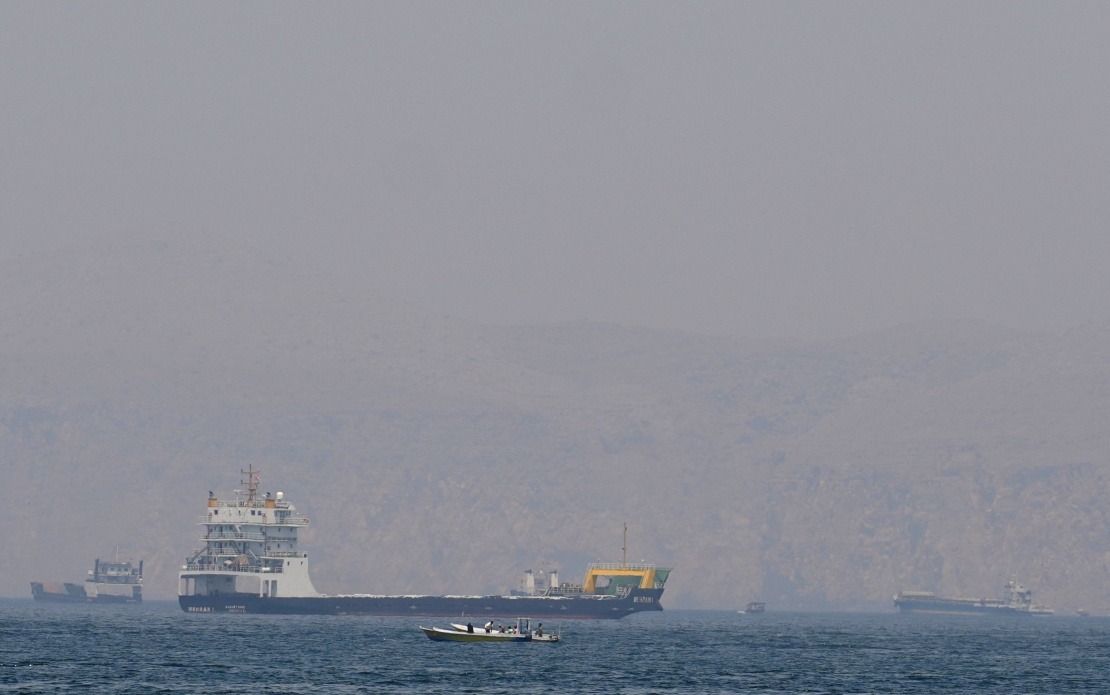
US President Donald Trump has staked out a contentious position on one of the world's most strategically vital waterways, declaring that no maritime tolls will be levied in the Strait of Hormuz during a current 60-day ceasefire period but explicitly reserving the right for Washington to impose its own fees thereafter. The announcement, made via Trump's Truth Social platform, signals a hardening American stance on what has long been a flashpoint for regional tensions and a critical artery for global energy commerce.
Trump's language suggests a transactional approach to America's security commitments in the Persian Gulf. He characterised any future American tolls as compensation for "services rendered as the guardian angel" to West Asian nations, framing them as necessary "reimbursement of costs" for both past and future protection should negotiations falter. This framing transforms the Strait of Hormuz from an international commons into a potential revenue stream, a shift with profound implications for regional stability and the roughly one-third of seaborne traded oil that transits the passage annually.
The declaration comes amid heightened regional tensions. Iran's Khatam al-Anbiya Central Headquarters had announced that the waterway would be closed, citing alleged American breaches of commitment and Israeli violations of a ceasefire in Lebanon. This Iranian assertion represented an escalation in rhetoric and a direct challenge to the existing arrangements governing the strategic passage. For Malaysia and other Southeast Asian economies heavily dependent on stable energy supplies and maritime trade routes, such threats carry immediate consequences.
The United States has moved quickly to dismiss Iranian claims of control or authority over the Strait. US Central Command, through spokesperson Captain Tim Hawkins, categorically stated that American forces remain "present and vigilant" to ensure all agreement provisions are upheld. CENTCOM further asserted that maritime traffic continues to flow normally, directly contradicting Iranian announcements of closure. This public contradiction underscores the geopolitical competition for influence over what remains one of the world's most consequential maritime passages.
Captain Hawkins' pointed remark that "Iran does not control the Strait of Hormuz" carries significant weight. It reflects Washington's strategic positioning and its assertion of military and diplomatic primacy in the Persian Gulf region. However, this assertion sits uneasily with Trump's suggestion that the United States itself might soon impose tolls on passage. The logical tension between denying Iranian authority while reserving American toll-collection rights reveals the complicated calculus underlying Trump's approach.
For Malaysian traders, shipping operators, and energy importers, the implications are substantial. Malaysia relies on stable, predictable transit through the Strait for a significant portion of its petroleum imports and for maintaining viable trade routes with Middle Eastern partners. Any disruption—whether from Iranian closure attempts or potential American toll imposition—threatens to raise costs and introduce uncertainty into supply chains already stressed by global economic volatility.
The 60-day window appears designed as a negotiation period, with Trump explicitly linking any final agreement to the suspension of American toll threats. This creates incentive structures for regional actors to conclude whatever underlying arrangements are being discussed. However, Trump's public declaration of intent to charge tolls after the ceasefire period potentially undermines negotiating flexibility by publicly committing to a fee structure.
The strategic context matters considerably. The Strait of Hormuz has historically been a zone where regional powers contest influence, and where international actors maintain military presence ostensibly to ensure freedom of navigation. Trump's toll proposal effectively attempts to monetise that presence in ways previous administrations avoided. Whether other major maritime users—including China, India, Japan, and European nations—would accept American toll collection remains an open question with significant geopolitical ramifications.
Regional stability depends partly on the predictability and legitimacy of arrangements governing critical waterways. International law, particularly the United Nations Convention on the Law of the Sea, generally protects rights of innocent passage. American toll collection would represent a unilateral departure from established norms, potentially inviting similar claims from other straits controllers and destabilising the entire system of maritime commerce.
The immediate 60-day ceasefire appears fragile. Iran's threats to close the Strait and American assertions of freedom of navigation suggest underlying disputes remain unresolved. Whether these two months prove sufficient to reach "a final deal" that Trump references remains highly uncertain. The alternative scenario—American tolls kicking in after 60 days amid unresolved tensions—presents a genuinely destabilising possibility for regional and global commerce.
Malaysia and Southeast Asia's interests align with maintaining open, toll-free passage through international straits. As maritime-dependent economies with significant energy import needs and growing trade volumes, the region benefits from predictable, stable transit arrangements. Trump's announcement injects considerable uncertainty into these calculations and may prompt regional governments to recalibrate strategic relationships and diversify supply sources to hedge against potential disruptions.
The situation also illustrates how security arrangements in critical regions increasingly become tied to financial considerations and how unilateral decisions by major powers can reshape the environment for smaller maritime nations. The coming 60 days will likely involve intensive diplomacy not only between Washington and Tehran but also behind-the-scenes engagement involving major trading nations concerned about Strait stability and maritime commerce.