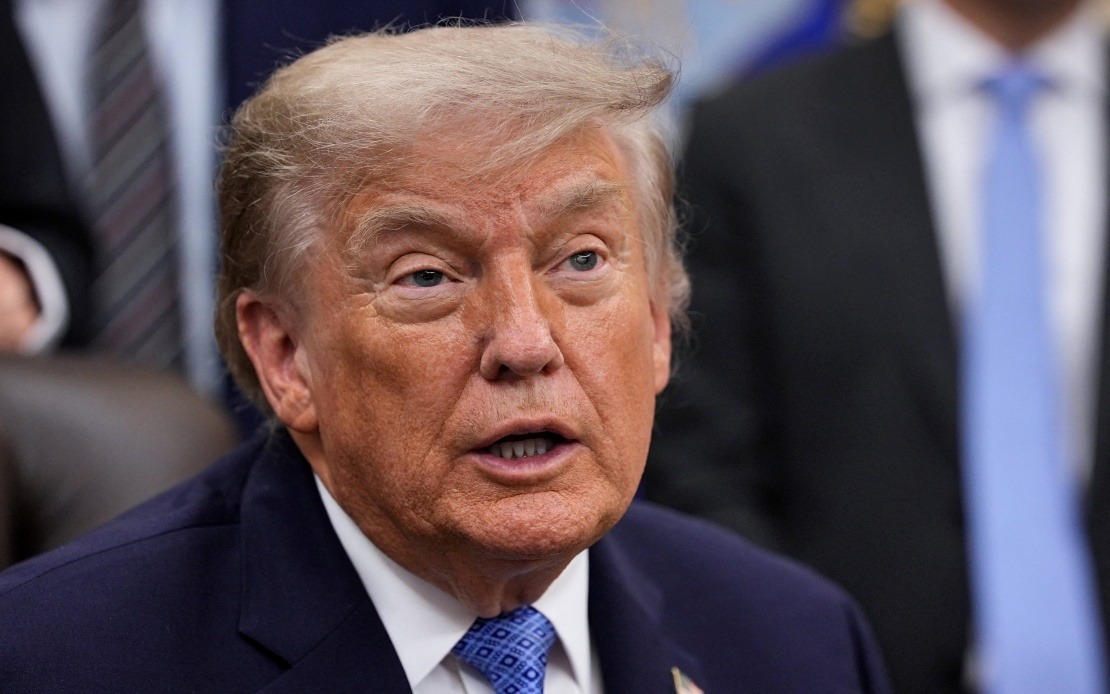
US President Donald Trump has escalated tensions with Canada over transboundary wildfire smoke, demanding tariff increases as compensation for what he characterises as environmental negligence. In a Friday posting on his Truth Social platform, Trump declared that the cost of the air pollution "must of necessity be added to the TARIFFS Canada is currently paying," signalling his intent to weaponise trade policy in response to the ecological crisis. The statement underscores how environmental issues have become entangled with broader geopolitical friction between the two North American neighbours, with Trump using the smoke crisis as leverage in ongoing trade disputes.
The wildfires responsible for the smoke affecting vast stretches of the northeastern continent originate primarily from Ontario and Minnesota, with fires across the Canadian province spreading thick haze across major population centres including Toronto, Chicago, Detroit, and Washington. The smoke has particularly impacted New York, where residents have experienced dramatically reduced visibility and lingering odours throughout affected regions. This widespread air quality degradation has drawn attention to how environmental disasters respect no borders, causing economic and public health consequences that extend far beyond their geographic origin.
Trump's approach has been to directly fault Canada's forest management practices. He contends that inadequate maintenance of Canadian forests, combined with insufficient removal of brush and debris, has directly precipitated these fires. The president characterised the situation in inflammatory language, claiming the United States was being "unnecessarily invaded by filthy, polluted, and unhealthy air, the quality of which is dangerous, and totally unacceptable!" This framing positions environmental pollution as a form of invasion, rhetorically escalating what might otherwise be viewed as a shared regional challenge requiring collaborative responses.
Trump indicated his intention to contact Prime Minister Mark Carney to demand clarification regarding Canada's intended course of action. This threat of direct political pressure complements the tariff warnings, creating a dual-track approach combining trade measures with diplomatic pressure. The timing and tenor of these threats suggest Trump views the wildfire crisis as an opportunity to extract concessions from Canada on broader trade matters, rather than as a problem requiring transnational environmental cooperation.
However, the scientific consensus contradicts Trump's narrative about forest management being the primary culprit. Extensive research has consistently linked North American wildfires to climate change, which intensifies drought conditions, extends fire seasons, and creates more volatile weather patterns conducive to large-scale blazes. This divergence between Trump's claims and scientific evidence represents a fundamental disagreement about the roots of the problem—a distinction with profound implications for any solution pursued by either nation.
Ontario Premier Doug Ford offered a starkly different perspective, asserting that rather than launching accusations, political leaders should mobilise resources to combat the crisis. Ford pointed out that Canada had previously extended emergency assistance to American counterparts facing similar disasters, framing the current situation as one where reciprocal aid should supersede blame. His statement "Because we have done the exact same thing for our American friends" emphasises the historical pattern of cross-border cooperation during natural disasters, challenging Trump's approach of punishment through tariffs.
The divergence between Trump and Ford's positions reflects broader philosophical differences about how nations should handle transboundary environmental crises. Trump's approach prioritises accountability through economic penalties and tariff escalation, treating the situation as a grievance to be monetised. Ford's stance emphasises mutual assistance and recognition of shared vulnerability, suggesting that both nations periodically require help during environmental emergencies. For Malaysia and other Southeast Asian nations watching this dispute, the episode illustrates how developed nations grapple with environmental consequences of climate change while simultaneously managing trade relationships and political narratives.
The wildfire smoke affecting northeastern North America also carries implications beyond immediate bilateral relations. It demonstrates how climate-driven environmental changes increasingly generate transnational pollution and resource disputes. As climate change intensifies extreme weather events globally, more nations will face situations where environmental disasters originating in one jurisdiction create problems for neighbours, potentially generating friction similar to that unfolding between the United States and Canada.
Ford's invocation of previous Canadian assistance to Americans facing disasters suggests an expectation of reciprocal solidarity during crises. This principle contrasts sharply with Trump's instinct to impose economic penalties, raising questions about whether environmental emergencies should be exempted from trade-conflict logic or whether all interactions between nations should be subordinated to economic calculation. The resolution of this dispute will likely signal whether North American cooperation on shared environmental challenges can transcend partisan political positions.
The tariff threat particularly warrants scrutiny, as it represents an attempt to address an environmental problem through trade policy mechanisms fundamentally designed for commercial disputes. Whether tariff increases could reasonably incentivise Canadian forest management improvements remains unclear, and such measures might simply deepen bilateral tensions without producing environmental benefits. The situation reflects how Trump administration officials often attempt to resolve multifaceted problems through tariff instruments, regardless of whether trade policy represents an appropriate mechanism.
For regional observers in Southeast Asia, where transboundary haze regularly affects multiple nations, the Canada-US dispute offers instructive lessons. The tendency to blame neighbouring jurisdictions for environmental pollution, the risk of using environmental crises as justifications for economic penalties, and the importance of maintaining cooperative frameworks despite friction all resonate with regional experience. The wildfire smoke crisis illustrates how climate change increasingly generates interstate tensions while simultaneously requiring unprecedented international cooperation to address root causes.
Looking forward, the fundamental question centres on whether the Trump administration will pursue punitive trade measures or whether cooler diplomatic heads will prevail, emphasising shared environmental interests. Ford's plea for assistance-centred approaches rather than blame-centred responses provides a counternarrative, though whether it gains traction with Washington remains uncertain. The outcome will likely influence not only US-Canada relations but also global perceptions of whether wealthy nations can respond cooperatively to climate-driven environmental challenges or whether they will resort to economic coercion.

