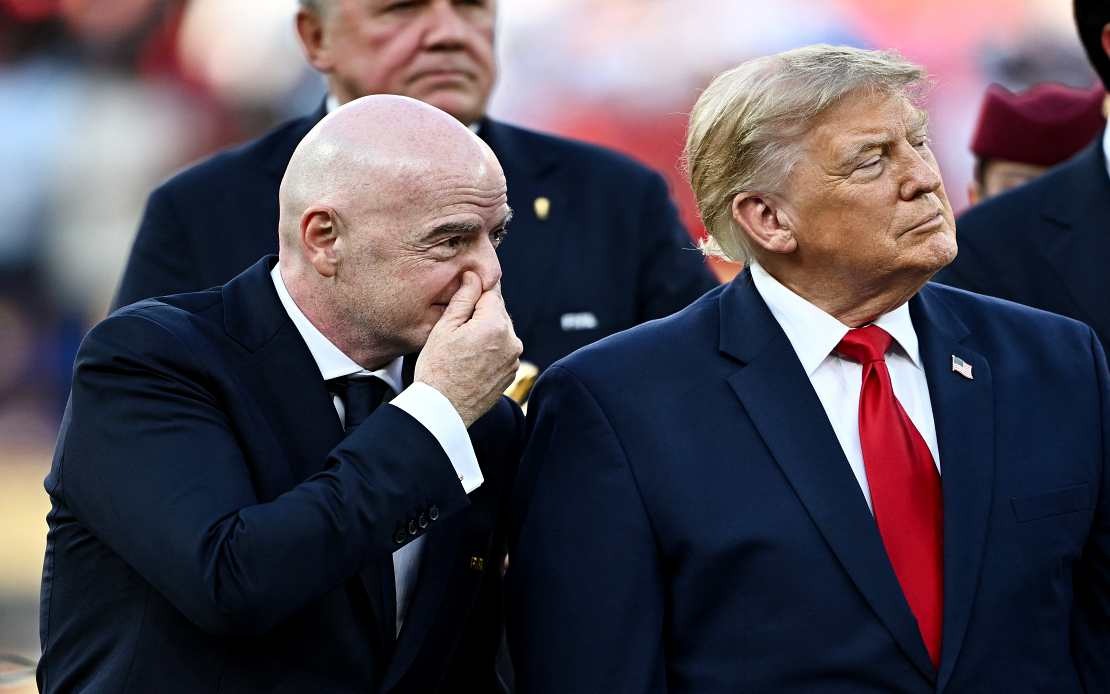
United States President Donald Trump has thrown his weight behind FIFA President Gianni Infantino, describing him as a fantastic and irreplaceable figure in international football leadership. The American president's endorsement comes at a particularly delicate moment for Infantino, who faces mounting pressure from some of the world's most influential football bodies over his handling of a major commercial transaction. Trump took to Truth Social to emphasise that FIFA would be committing a grave error should it entertain replacing the Swiss executive, citing the record-breaking success of recent World Cup tournaments under his stewardship.
The criticism levelled at Infantino has come from an imposing alliance of continental football organisations. The Union of European Football Associations, the Asian Football Confederation, and the Confederation of North, Central American and Caribbean Football jointly issued an open letter demanding an independent investigation into the circumstances surrounding FIFA's proposed sale of certain commercial rights. This coordinated action from three major confederations represents a significant show of dissatisfaction with how the FIFA administration has managed what was intended as a landmark restructuring of the organisation's revenue streams.
At the heart of the controversy lies an ambitious plan announced in July to raise approximately US$4.2 billion through the sale of roughly 20 per cent ownership stakes in a newly created entity. This company was designed to take control of FIFA's media and commercial rights portfolios, including the lucrative broadcasting arrangements for World Cup tournaments. The proposal represented one of the most substantial privatisation efforts in international sports governance, potentially fundamentally altering FIFA's financial structure and operational independence. For a governing body that has historically maintained tight control over its commercial assets, the plan signalled a dramatic shift in organisational philosophy.
Speculation surrounding the identity of potential investors injected another layer of complexity into the proceedings. Media reports suggested that Joshua Kushner, brother of Jared Kushner who served as an adviser to Trump during his first administration, could be positioned to acquire a significant stake through his family foundation. This potential connection to the Trump orbit drew additional scrutiny and raised questions about the intertwining of American political and business interests with international football governance. Such concerns proved particularly sensitive given FIFA's efforts over recent years to rebuild its reputation following earlier corruption scandals.
Facing this coordinated opposition, Infantino convened an emergency gathering of FIFA's senior leadership structure in early August to address the gathering storm. During this crucial meeting, the FIFA board reaffirmed its support for the president, though the discussions also touched upon his acknowledgment of mistakes made in relation to the FIFA Forward Enterprise commercial initiative. The fact that Infantino felt compelled to apologise for management errors regarding the commercial project suggested that even within FIFA's own leadership hierarchy, concerns had surfaced about how the proposal had been developed and presented.
The pushback from UEFA proved particularly consequential, as the European confederation announced that all of its member nations would boycott FIFA competitions unless FIFA completely withdrew the commercial rights proposal. This represented an unprecedented challenge to FIFA's authority, as European teams account for a substantial proportion of global football's commercial and competitive value. The threat of a European boycott posed an existential risk to FIFA's core international competitions and would have cascading effects throughout the football calendar.
Facing the prospect of a continental-level boycott and amid intensifying scrutiny from multiple football authorities, FIFA ultimately capitulated. Infantino announced that the federation had abandoned the initiative to sell commercial rights, effectively reversing course on the proposal that had triggered the crisis. This retreat represented a significant defeat for the FIFA president, suggesting that even his considerable authority over the world's governing body has limitations when confronted with unified resistance from the sport's largest confederations.
Trump's intervention in this governance dispute is notable given his own experience navigating complex institutional politics and his documented interest in major sporting events. His assertion that FIFA would never again achieve the level of commercial success demonstrated under Infantino's tenure suggests confidence in the president's financial acumen and tournament management capabilities. The American president's endorsement carries weight not only because of his elevated platform but also because of his historical involvement in real estate and business ventures, lending credibility to his assessment of Infantino's commercial achievements.
For Malaysian and Southeast Asian readers, the developments carry implications for how international sports bodies manage commercial relationships and the extent to which political figures from powerful nations can influence governance decisions within supposedly independent sporting organisations. The AFC's participation in the critical confederation letter underscores that Asian football has a seat at the table when major decisions affecting world football are made, though this incident also illustrates the challenges of coordinating positions across geographically dispersed regions with varying interests and power dynamics.
The crisis surrounding Infantino and the failed commercial rights initiative illuminates broader tensions within modern sports governance between the imperative to generate revenue through innovative financial structures and the need to maintain institutional independence and transparency. FIFA's experience suggests that even globally dominant organisations must exercise caution when introducing radical structural changes, particularly when those changes create opportunities for external investors to gain influence over the sport's commercial operations. The episode also demonstrates that despite FIFA's considerable power, coordinated resistance from multiple confederations can compel significant strategic retreats.
Infantino's survival of this episode, bolstered by Trump's public support and the internal backing of FIFA's board, suggests that his position remains relatively secure despite the setback. However, the incident has demonstrated the limits of unilateral decision-making authority and the continued importance of maintaining consensus among football's major continental bodies. Moving forward, the FIFA president will likely need to adopt a more consultative approach to major institutional changes, particularly those with implications for the organisation's commercial autonomy and governance structures.

