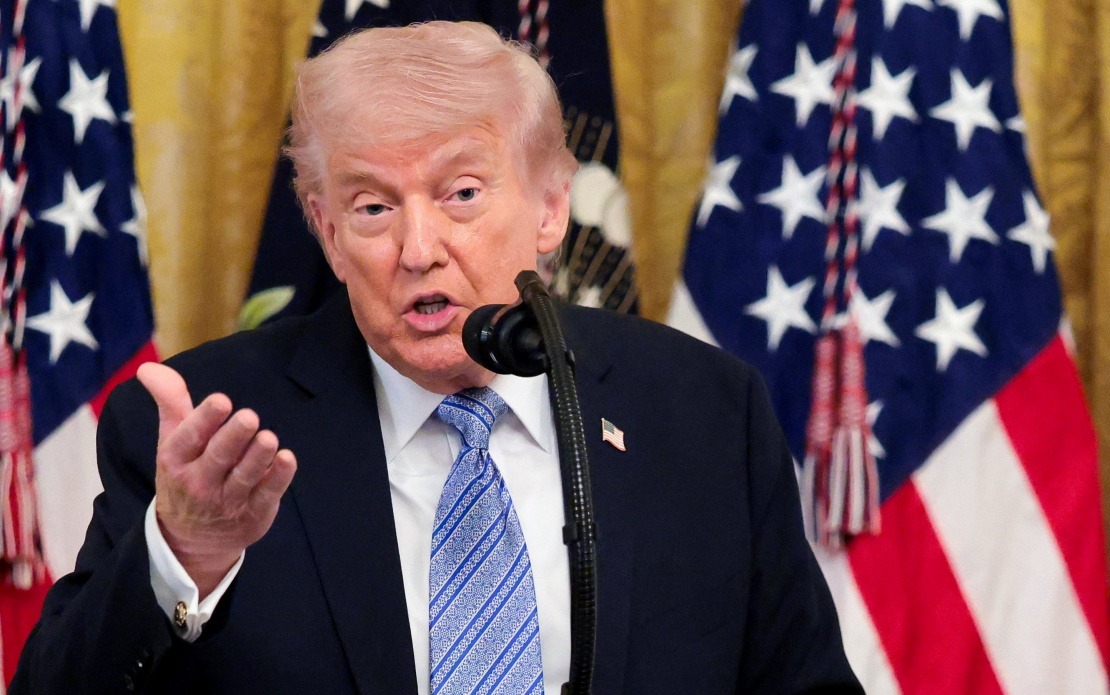
President Donald Trump is reportedly backing FIFA President Gianni Infantino to become the next secretary-general of the United Nations, marking an unconventional selection that reflects the American leader's distinctive approach to international diplomacy. The New York Post first reported the proposal on Tuesday, citing sources close to Trump who indicated the president believes Infantino possesses rare qualities needed to navigate the complexities of global governance.
Trump's endorsement centres on his assessment that Infantino commands widespread respect across international boundaries and possesses an exceptional talent for building consensus among disparate nations and interests. This positioning suggests Trump views the FIFA president's diplomatic experience and relationship-building record as assets that could strengthen the organisation during a period of significant global tension. The candidacy, if pursued formally, would represent a dramatic departure from conventional selections for the UN's top administrative post, which has typically gone to career diplomats and international civil servants.
Infantino, who is 56 years old and was born in Switzerland, cultivated a notably close relationship with Trump throughout 2024, actively working to establish rapport with the American president during the global football championship. The FIFA leader's outreach culminated in December when he presented Trump with the organisation's newly created Peace Prize, a ceremonial gesture that underscored his strategic engagement with the incoming US administration and signalled alignment with Trump's international vision.
The timing of the proposal is significant, as the current UN secretary-general, Antonio Guterres, will complete his tenure before a successor assumes office on January 1, 2027. This five-year term beginning in 2027 offers the incoming administration time to build support for its preferred candidate through the complex multilateral selection process that governs the appointment.
Under the formal mechanisms established by Article 97 of the UN Charter, the secretary-general selection process requires navigating multiple institutional hurdles. The candidate must first secure recommendation from the Security Council, the fifteen-member body where permanent members—China, France, Russia, the United Kingdom, and the United States—each hold veto power. This means any one of these nations can block an appointment regardless of international consensus. Only after clearing this Security Council stage can a candidate proceed to a vote in the General Assembly, which comprises all UN member states and provides the final approval.
Trump's interest in reshaping UN leadership reflects his broader dissatisfaction with the organisation's effectiveness in addressing major international conflicts. The American president has repeatedly voiced frustration with what he characterises as the UN's inadequate response to global security crises, suggesting it has failed to mobilise sufficient pressure on key actors or broker meaningful resolutions to longstanding disputes. This criticism has animated his administration's foreign policy, driving decisions about America's engagement with multilateral institutions.
Shortly after assuming office, Trump created the US-led Board of Peace, an initiative that sparked considerable speculation about whether the administration was constructing a parallel diplomatic infrastructure designed to circumvent traditional UN channels. The president subsequently denied suggestions that the board represented an alternative mechanism to replace UN functions, though observers noted the timing and scope suggested a fundamental reimagining of how Washington approaches international conflict resolution.
The administration has backed its philosophical objections to UN governance with concrete policy changes. Trump has substantially reduced American financial contributions to the organisation, effectively weakening its operational capacity and signalling Washington's determination to redirect resources. More strikingly, the administration has withdrawn from several UN-affiliated bodies, most notably the World Health Organization, representing a significant rupture with decades of American institutional participation and raising questions about future US commitment to multilateral health cooperation.
For Malaysia and other Southeast Asian nations, the prospect of an Infantino appointment carries substantial implications. The region's engagement with UN mechanisms, particularly regarding maritime disputes, human rights advocacy, and development initiatives, could shift significantly depending on the secretary-general's priorities and approach. Nations that have relied on UN frameworks for addressing regional tensions would need to recalibrate their strategies if UN leadership tilts toward approaches that prioritise American interests or reflect different institutional priorities.
Infantino's background in sports administration rather than traditional diplomacy introduces an unpredictability factor. While his FIFA experience demonstrates capacity for managing competing national interests within a global organisation, the vastly different scope and stakes of UN work present unprecedented challenges. The secretary-general role demands expertise in conflict mediation, humanitarian crises, and development issues that differ substantially from federation football governance.
The Security Council's composition creates particular complications for this nomination. Russia's presence on the permanent council, coupled with traditional diplomatic alignments, suggests substantial obstacles to confirmation even if Trump formally advances Infantino's candidacy. China and France might harbour reservations about an American-backed candidate whose primary credential involves sports rather than diplomatic or development experience.
Regional observers should recognise that this proposal, whether ultimately pursued or abandoned, signals Trump's intention to pursue transformative changes in how Washington engages multilateral institutions. The administration's simultaneous reduction of UN funding and exploration of alternative diplomatic frameworks suggests a coherent strategy to diminish institutional constraints on American unilateral action, with implications that extend well beyond personnel selection to fundamentally reshape how international organisations function in the coming decade.
The nomination discussion also reflects growing American willingness to prioritise personal relationships and unconventional credentials over established protocols in selecting international leadership, a pattern that extends across the administration's broader approach to diplomacy and institutional reform.

