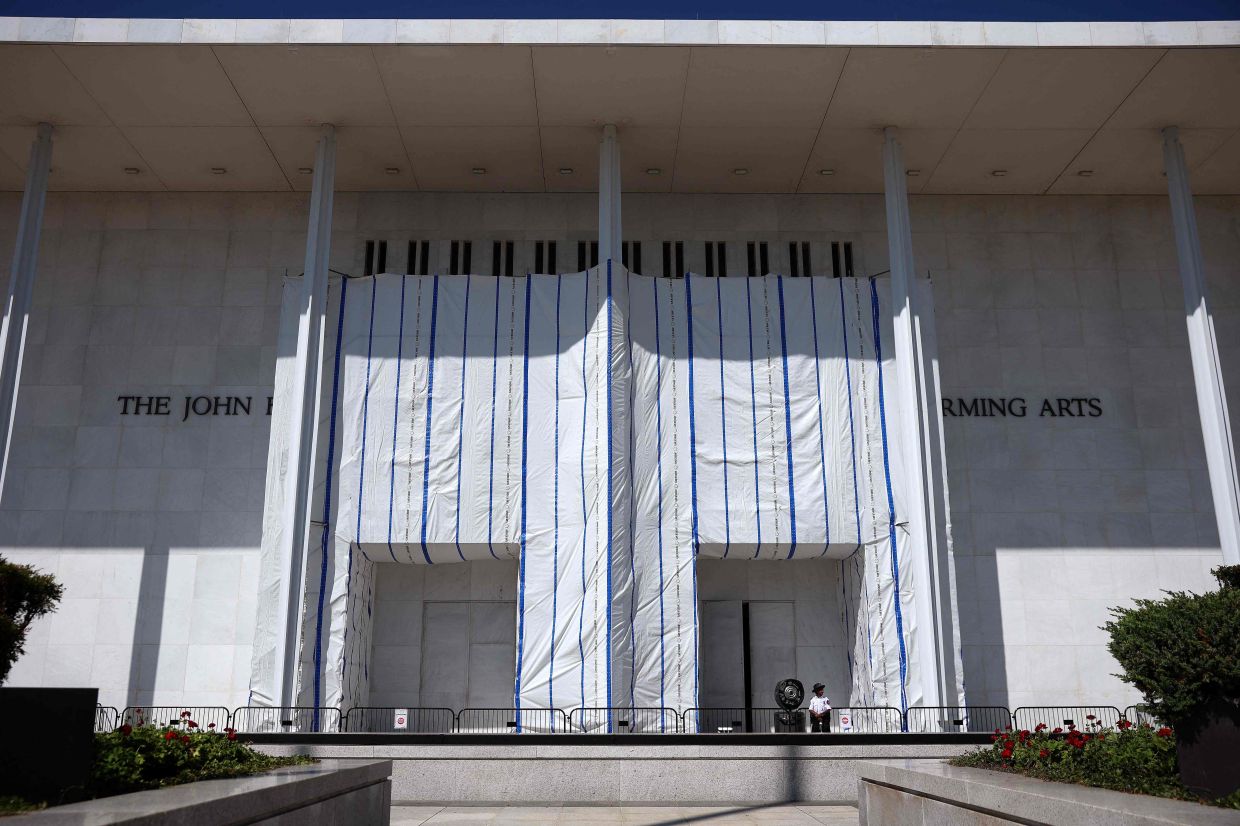
The Trump administration has injected extraordinary rhetoric into an escalating dispute over the Kennedy Center, suggesting through a Justice Department filing that the iconic Washington performing arts venue could be demolished if legal challenges succeed in blocking the president's renovation and naming ambitions. The warning surfaced on Tuesday in documents opposing Democratic efforts to halt a two-year restoration programme and prevent the Trump name from being prominently displayed on one of America's most celebrated cultural institutions.
While the filing stops short of announcing any formal demolition plan, it employs stark language to frame Trump's involvement as essential to the building's survival. Justice Department attorney Brantley Mayers wrote that without Trump's restoration efforts and fundraising initiatives, the centre would "deteriorate further into an unsafe, decrepit structure that will be required to be taken down." This framing fundamentally redefines the stakes of what began as a dispute over naming rights into a question of the building's very existence—a rhetorical maneuver that appears designed to pressure courts into accepting the administration's position.
The government's legal strategy extends beyond mere warnings. Should demolition become necessary, Mayers suggested, the riverfront site overlooking the Potomac could be repurposed as a large outdoor amphitheater. The filing explicitly acknowledged this alternative would "fail to adequately honor" President John F. Kennedy, whose memory the original centre was established to preserve, yet framed it as cheaper to construct and maintain. This candid admission that replacing the Kennedy Center would diminish its commemorative purpose underscores the aggressive nature of the administration's position.
The Justice Department's characterisation of the Kennedy Center as "structurally unsound, fundamentally unsafe, and embarrassing to the nation's capital" stands in sharp contrast to how the institution's own officials have previously described the necessary work. Career Kennedy Center administrators had outlined the planned renovation in far more measured terms, identifying extensive repairs to electrical systems, stage mechanisms, and waterproofing as the main objectives. Crucially, those officials stated the work would neither materially alter the building's exterior nor require it to be reduced to its structural frame, suggesting the current condition, while requiring attention, is far less dire than the Justice Department's characterisation implies.
Central to the administration's legal argument is the claim that Trump's personal involvement and recognition are essential to sustaining donor enthusiasm. Justice Department lawyers asserted that Trump's administration has secured US$258 million from Congress for restoration work and cultivated a new donor base, with the clear implication being that withholding the president's name would jeopardise this financial support. This argument transforms the naming dispute from a question of institutional integrity into a matter of financial necessity, though it raises uncomfortable questions about whether private donors should effectively control the naming of a public, federally-funded landmark established as a memorial to a slain president.
The Trump-appointed board of the Kennedy Center recently voted to inscribe "Restored and Renovated by President Donald J. Trump" beneath the institution's name and to rename its surrounding grounds the "President Donald J. Trump Plaza." These decisions sparked immediate legal action from Congresswoman Joyce Beatty, an ex officio board member and Democratic representative, who argues that only Congress possesses the constitutional authority to name the centre, given its original designation as a "living memorial" to Kennedy. This legal distinction between board authority and congressional prerogative has become the crux of the dispute.
A federal judge previously sided with Beatty's position, ruling that the board lacked the unilateral power to rename the institution and ordering the removal of earlier Trump signage. The administration is currently appealing that decision, treating the naming rights as sufficiently important to pursue through the courts rather than accepting the judicial determination. This persistent effort to overturn a federal judge's ruling demonstrates the administration's investment in achieving its naming objectives, lending weight to the theory that the demolition threat may be partly tactical—designed to create pressure that might lead to a settlement favourable to Trump's interests.
For Malaysian and Southeast Asian observers, this dispute offers instructive lessons about institutional autonomy, the intersection of political patronage and public cultural institutions, and how executive power can be deployed to reshape established landmarks. The Kennedy Center situation illustrates tensions that exist globally between political leaders seeking legacy recognition through public works and the need to preserve institutional independence and historical integrity. In regional contexts where state involvement in cultural institutions is similarly pronounced, the question of whose name adorns public buildings carries implications for how nations commemorate their histories and whose contributions are officially recognised.
The broader context reveals a pattern in which the Trump administration has sought to assert executive control over established institutions. By framing the Kennedy Center's restoration as dependent on Trump's personal involvement and suggesting demolition as an alternative to accepting his conditions, the administration employs a form of institutional leverage that extends beyond the specific dispute. This approach effectively transforms a renovation project into a referendum on Trump's power to reshape Washington's cultural landscape according to his preferences.
A federal hearing scheduled for Thursday will address both the proposed closure and the latest efforts to recognise Trump on the building. The outcome will likely determine whether the administration's legal strategy succeeds in overcoming congressional and judicial resistance to the naming, or whether institutional protections prove sufficiently robust to prevent executive overreach. The decision may also influence how other nations with similar disputes over public monuments and naming rights approach these contentious questions about who deserves recognition in shared cultural spaces.

