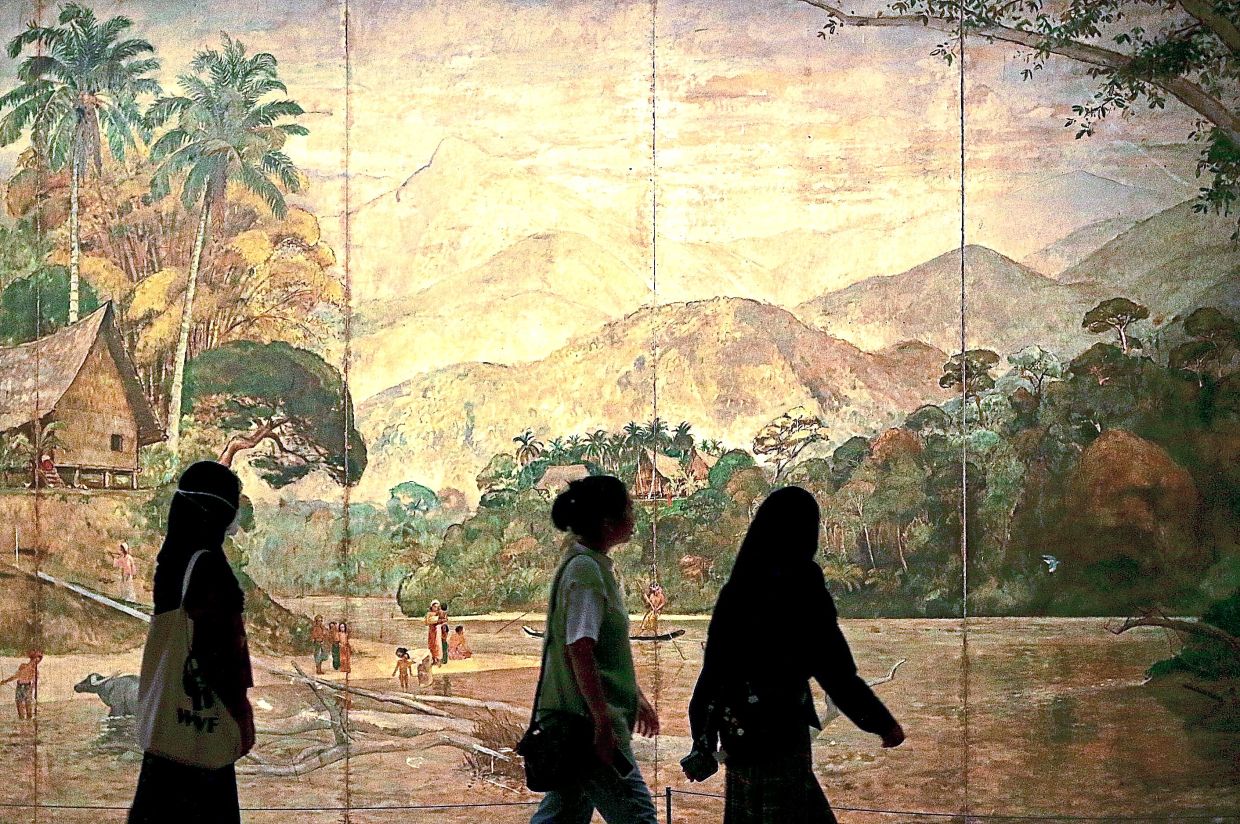
The preservation of Malaysia's artistic heritage faces a formidable challenge rooted in the country's natural environment. The combination of high humidity and intense ultraviolet radiation inherent to the tropical climate creates conditions that gradually undermine the physical integrity of paintings, sculptures, and other cultural objects. Unlike temperate regions where artworks may remain stable for centuries under conventional preservation methods, Malaysian institutions must confront a distinctly different set of environmental pressures that demand equally distinct solutions. This recognition has prompted the National Art Gallery to convene regional experts this December to examine how Southeast Asian countries can develop conservation practices tailored to their specific climatic realities.
According to Tan Hui Koon, senior chief curator of the Collection and Conservation section at the National Art Gallery, the threat posed by Malaysia's climate operates subtly but relentlessly. She explains that artworks require protective measures analogous to those humans use against sun exposure. Tinted glass and museum-standard materials that filter ultraviolet radiation have become essential components of display cases and storage facilities throughout the institution. The challenge extends beyond simple light exposure; the region's persistent moisture creates a cycle of expansion and contraction in organic materials such as textiles, canvas, and wood that can progressively weaken structural bonds and compromise paint layers. Once this degradation occurs, complete restoration to original condition becomes impossible, fundamentally altering the work's historical integrity.
The preventive conservation approach championed by the National Art Gallery represents a philosophical shift from traditional restoration practices that prioritize repair of existing damage. Instead, institutional staff focus on maintaining optimal environmental conditions, implementing rigorous handling protocols, and establishing appropriate storage environments before problems arise. This strategy acknowledges an uncomfortable truth: while conservators can stabilize damaged works and restore certain qualities, they cannot truly erase the harm that has already occurred. The goal becomes preserving what remains and preventing further deterioration through constant vigilance and environmental management.
Recognizing the urgency and complexity of these challenges, the National Art Gallery will host the seventh Asia-Pacific Tropical Climate Conservation Art Research Network conference from December 7 to 9, drawing conservation specialists from Malaysia, Thailand, Singapore, Australia, and the Philippines to Kuala Lumpur and Ipoh. This gathering represents the culmination of over a decade and a half of collaborative research dating to the network's founding in 2008. Participants will collectively examine how different art materials, particularly Western paintings that comprise significant portions of regional museum collections, respond to and deteriorate within tropical conditions. The conference addresses a genuine knowledge gap, as most conservation science has historically been developed in temperate climates and may not translate effectively to Southeast Asian conditions.
The 2024 conference programme reflects a deliberate shift in emphasis toward indigenous knowledge and regional expertise rather than uncritical adoption of Western conservation models. Sessions will explore disaster response methodologies suited to the specific environmental hazards facing individual nations, acknowledging that a conservation approach effective in Australia may require substantial adaptation for Malaysia or the Philippines. This contextualized approach represents intellectual maturity within the field, recognizing that conservation science must evolve alongside the diverse geographies and climatic conditions it serves.
Beyond academic presentations and technical discussions, the conference includes a field component that will take participants to heritage sites in Lenggong through collaborative programming with the Islamic Arts Museum Malaysia, the Department of National Heritage, and People of Remarkable Talents. This experiential dimension allows conservators to examine actual artworks and heritage structures in situ, observing how specific materials have responded to prolonged tropical exposure and how local conservation strategies have performed across extended periods.
The conference agenda encompasses multiple dimensions of contemporary conservation practice. Climate change itself emerges as both a pressing concern and a catalyst for innovation, forcing institutions to anticipate accelerating environmental challenges. Disaster management assumes particular relevance in Southeast Asia, where monsoons, flooding, and occasional seismic activity can rapidly damage large collections. Artificial intelligence and advanced materials research technology offer promising tools for monitoring environmental conditions and developing new protective materials suited to tropical applications. Equally important, the conference will address conservation ethics, ensuring that the drive to preserve heritage does not overshadow considerations of cultural ownership, community engagement, and equitable resource distribution.
Tan emphasizes that the research network serves a crucial developmental function within the region's conservation community. By facilitating knowledge transfer between experienced practitioners and emerging professionals, the network builds institutional capacity and ensures that expertise accumulated over decades does not remain concentrated in a few major institutions. This intergenerational exchange recognizes conservation as inherently interdisciplinary, requiring the integration of art history, chemistry, physics, materials science, and increasingly, digital technology. The collaborative framework enables smaller institutions and those in countries with more limited conservation training infrastructure to access expertise and methodologies that might otherwise remain inaccessible.
The evolution of conservation practice in Malaysia since 2008 provides a meaningful metric for assessing the research network's impact. Over this period, Malaysian institutions have progressively strengthened their technical capabilities, developed regional standards, and earned recognition for innovative approaches to tropical climate challenges. The December conference offers an opportunity to trace this developmental arc while simultaneously positioning Malaysian expertise on the international stage. Tan notes that stronger international networks carry the potential to enhance Malaysia's visibility as a centre of conservation excellence and to showcase the country's artistic heritage to global audiences.
For Malaysian policymakers and cultural administrators, the conference underscores an uncomfortable reality: the preservation of national artistic heritage requires sustained institutional investment, technical expertise, and infrastructure that extends far beyond acquisition and display. Environmental control systems, conservation staffing, research programmes, and international collaboration all demand significant financial commitment. Yet the alternative—passive acceptance of continued deterioration—would gradually erode cultural assets that cannot be replaced. The December gathering in Kuala Lumpur and Ipoh represents both an acknowledgment of existing challenges and a demonstration of regional commitment to developing sustainable solutions adapted to Southeast Asia's distinctive environmental context.

