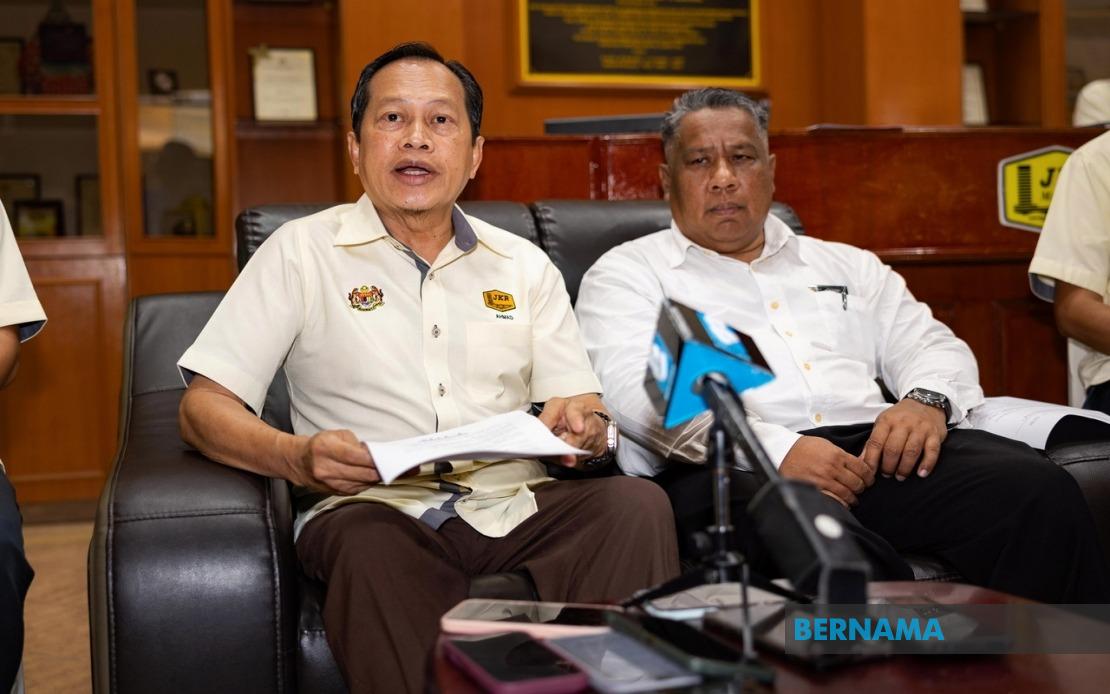
The responsibility for managing trees along Malaysia's federal roads rests with local authorities, not the Public Works Department, Deputy Works Minister Datuk Seri Dr Ahmad Maslan said during a working visit to Lumut on August 4. The clarification comes amid growing concerns about fallen trees and slope failures on major routes, particularly following a fatal incident on the Bentong-Kuala Lumpur Old Road where four family members were killed.
Ahmad Maslan's statement addresses a longstanding point of confusion in the management hierarchy. Under Section 101(b) of the Local Government Act 1976, local authorities (known as PBT in Malay) possess the statutory power to plant, prune, or remove trees within their administrative boundaries. This authority extends specifically to trees located on federal road reserves that fall within each PBT's jurisdiction, a distinction that clarifies the overlapping terrain between state infrastructure and local governance.
The Deputy Minister emphasised that JKR's role focuses on road infrastructure proper—road furniture and signage—rather than vegetation management. This delineation reflects the boundaries established in concession agreements that govern maintenance operations on federal roads. According to these agreements, maintenance concessionaires can only remove trees that have already fallen and pose immediate hazards; they lack authority to conduct proactive tree management or felling operations.
Ahmad's remarks come in response to calls from Bentong MP Young Syefura Othman, who has urged JKR and private maintenance companies to strengthen collaboration with certified arboricultural experts. Othman advocated for periodic technical assessments of mature trees and slope stability along federal routes to prevent similar tragedies. The fatal incident on FT68, where a substantial tree collapsed onto a vehicle, has intensified public scrutiny of preventive maintenance practices across the road network.
The Deputy Minister's position reflects a careful balancing act within Malaysia's multi-layered infrastructure governance. While asserting that JKR is not shirking its obligations, Ahmad acknowledged the department's willingness to coordinate with local authorities and maintenance concessionaires to bolster road safety outcomes. This collaborative approach recognises that effective tree management requires input from multiple agencies despite formal jurisdictional divisions.
For Malaysian drivers and residents, this clarification matters because it highlights the fragmented accountability landscape. A tree threatening safety on a federal road may fall under a local authority's legal domain, yet JKR operates the road itself and private companies maintain it under contract. This institutional complexity can create gaps in preventive action if communication breaks down between stakeholders or if local authorities lack resources to manage their statutory obligations.
During his Manjung District visit, Ahmad stressed the importance of continuous monitoring and close coordination between the Ministry of Works, state JKR offices, and district-level departments. He underscored that every infrastructure project and maintenance operation must meet required specifications, timelines, and budget allocations. The visit itself reflected a broader commitment to strengthening technical service delivery at the district level, where many road safety issues originate.
The broader Southeast Asian context reveals that Malaysia is not alone in grappling with tree-related road hazards. Urban and peri-urban roads across the region frequently experience problems with mature vegetation, particularly during monsoon seasons when wind and saturated soil increase failure risk. The institutional response—clarifying responsibility rather than centralising it—reflects Malaysia's federal system but may require clearer protocols for inter-agency cooperation.
Meanwhile, the concession agreement structure limiting tree removal to already-fallen specimens reflects a conservative legal and contractual framework. While such constraints protect assets and maintain contractual clarity, they may inhibit proactive risk mitigation. Local authorities must therefore shoulder the burden of identifying hazardous trees before they fail, which demands adequate funding, technical expertise, and coordination mechanisms.
Ahmad's emphasis on continuous monitoring signals that JKR understands the political and public safety dimensions of the issue. Families affected by roadside incidents naturally expect government agencies to prevent such tragedies, regardless of formal jurisdictional boundaries. The Deputy Minister's commitment to strengthening coordination across all levels of JKR aims to address this expectation through enhanced oversight.
Moving forward, the clearest path toward improved safety involves local authorities executing their statutory duties with adequate resources and expertise, while JKR and maintenance concessionaires support these efforts through information sharing and collaborative assessment. For Malaysian road users, the message is that responsibility for tree safety is distributed across multiple agencies—a reality that demands seamless coordination rather than territorial disputes over liability.
The incident on the Bentong-Kuala Lumpur Old Road and the Deputy Minister's subsequent clarification underscore that preventing future tragedies requires not just clarifying who is responsible, but ensuring that whoever holds responsibility possesses the tools, training, and authority to discharge it effectively. As Malaysia's road network continues to age and urban encroachment creates new pressures on vegetation management, this interagency partnership will prove essential to maintaining both infrastructure integrity and public safety.

