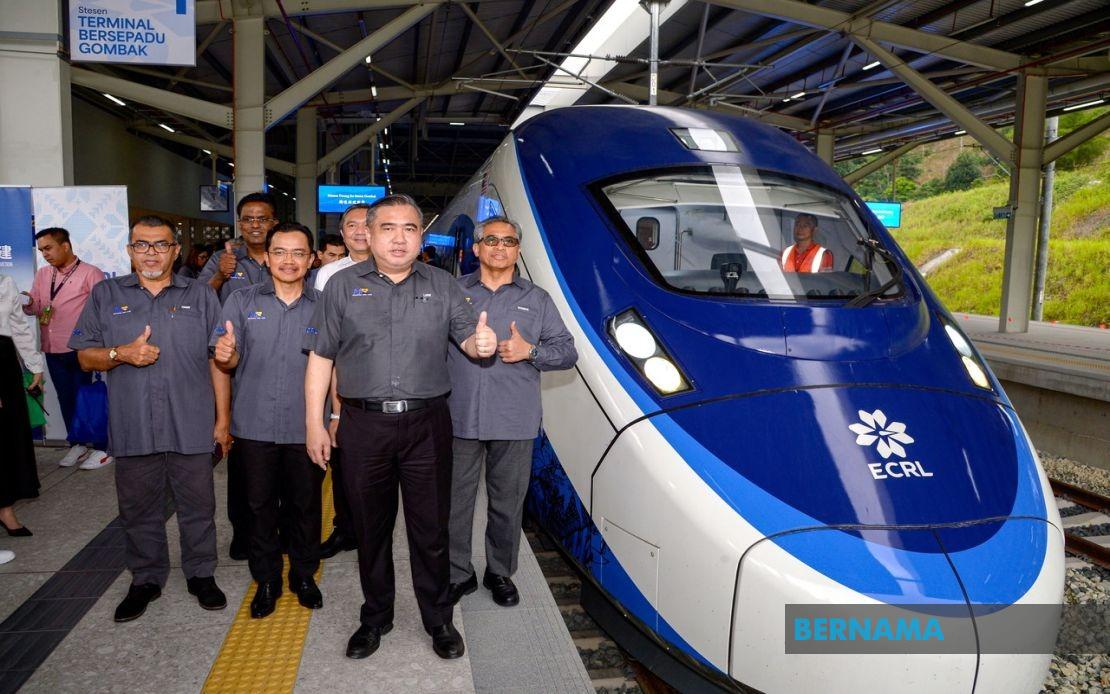
Malaysia's Transport Minister Anthony Loke Siew Fook has signalled an ambitious push to bring the East Coast Rail Link Phase 1 into commercial operations by December this year, substantially ahead of the previously scheduled January 2027 commencement. The acceleration represents a significant advancement in the mega-infrastructure project that aims to connect Kelantan and Selangor through a modern rail corridor. Speaking at the launch of the Comprehensive Inspection Train and the System Integration Testing phase at Gombak Integrated Terminal Station, Loke emphasised that the accelerated timeline hinges entirely on the smooth execution of ongoing rigorous testing protocols.
The transport portfolio has tasked Malaysia Rail Link Sdn Bhd and the project's main contractor China Communications Construction Company Ltd to intensify their efforts to compress the traditional testing schedule. Currently, the certification and testing processes typically demand between two and three months to complete. The ministry is working with the Land Public Transport Agency to explore ways of streamlining these procedures without undermining the safety verification requirements that protect both infrastructure integrity and future passenger welfare. This collaborative approach between government agencies underscores the complexity of railway project implementation and the need to balance speed with prudence.
The testing framework now underway encompasses multiple critical phases that must be sequentially completed and independently verified. System Integration Testing, which commenced this month, will evaluate the interoperability of complex electrical and signalling systems that form the backbone of modern rail operations. Following this initial phase, the project will progress to Fault-Free Run testing in September, where newly delivered train sets and electric locomotives must traverse 8,000 kilometres under real operational conditions while remaining unpressurised for passengers. This extended proving run allows engineers to identify and rectify any latent defects or system incompatibilities that laboratory testing might miss.
Loke was at pains to emphasise that the drive to accelerate the timeline does not signal a willingness to compromise on established safety protocols or regulatory certifications. He highlighted that extensive factory testing in China preceded the arrival of equipment in Malaysia, providing confidence in the baseline quality and manufacturing standards of the rolling stock. The minister's repeated assurances about safety prioritisation reflect the high-stakes nature of railway operations and the potential reputational damage that any operational failure could inflict on both government and contractors. His personal commitment to risk mitigation suggests an appreciation for the scrutiny any major rail accident would attract.
The ECRL Phase 1 project has achieved an overall completion rate of 95.08 per cent as of July, indicating that the physical infrastructure is largely ready to receive and accommodate operational train services. This advanced state of construction readiness provides genuine foundation for optimism about the December target, provided that testing and certification processes proceed without unexpected complications. However, experience with large infrastructure megaprojects across Southeast Asia suggests that unforeseen technical issues frequently emerge during integration testing phases, potentially creating delays regardless of political pressure to maintain aggressive schedules.
The broader ECRL initiative extends beyond Phase 1, with the second phase extending the rail corridor from Gombak southward to Port Klang, Malaysia's primary container port. Phase 2 construction remains on track for completion by December 2027, with commercial operations anticipated to commence in January 2028. This sequencing allows Phase 1 to generate operational experience and revenue while Phase 2 nears completion, creating an effective learning curve for Malaysia Rail Link and its partners. The phased approach also enables the government to demonstrate early success with a working east-coast connection before fully integrating the link into Malaysia's broader rail network.
The presence of senior government officials at the Gombak launch event reflected the political significance attached to the ECRL programme. Chief Secretary to the Government and Malaysia Rail Link chairman Tan Sri Shamsul Azri Abu Bakar, Deputy Transport Minister Datuk Hasbi Haji Habibollah, and Chinese Ambassador Ouyang Yujing all participated in the ceremony, underscoring the project's standing both within the Malaysian administration and within the bilateral relationship with China. The involvement of China Communications Construction Company as principal contractor represents one element of Malaysia's deepening infrastructure ties with Beijing, extending beyond the original ECRL investment and reflecting broader regional economic integration patterns.
From a Malaysian transportation perspective, the ECRL represents a transformative shift in regional connectivity. The new rail link will substantially reduce travel times between Kelantan and Selangor, offering an alternative to road transport that is more economical and environmentally efficient. For businesses located along the corridor, improved transport connectivity typically catalyses economic development through reduced logistics costs and improved access to broader markets. The Port Klang connection envisaged in Phase 2 potentially creates a multimodal transport chain linking the economically vibrant east coast region directly to Malaysia's principal maritime gateway.
The transportation challenges that the ECRL addresses are longstanding. Kelantan and other east coast states have historically experienced relative transport isolation compared to the western corridor, where highway networks concentrate and traffic density favours service expansion. A functioning rail link specifically addresses this asymmetry by providing a rapid, high-capacity alternative that makes east coast locations more competitive for manufacturing and distribution hubs. The implicit regional equity dimension suggests that the ECRL transcends narrow cost-benefit calculations and reflects broader national development priorities.
However, achieving the December launch target faces real technical hurdles that political determination alone cannot overcome. Testing phases must conform to rigorous international railway standards, and independent certification bodies will ultimately determine whether safety and reliability criteria have been satisfied. Any attempt to circumvent these verification processes would expose Malaysia to significant operational and liability risks. The historical record of transport megaprojects indicates that timelines slip frequently, and stakeholders should prepare for the possibility that testing complications or certification delays might necessitate pushing the commercial launch into 2025 or beyond, despite current ministerial ambitions.

