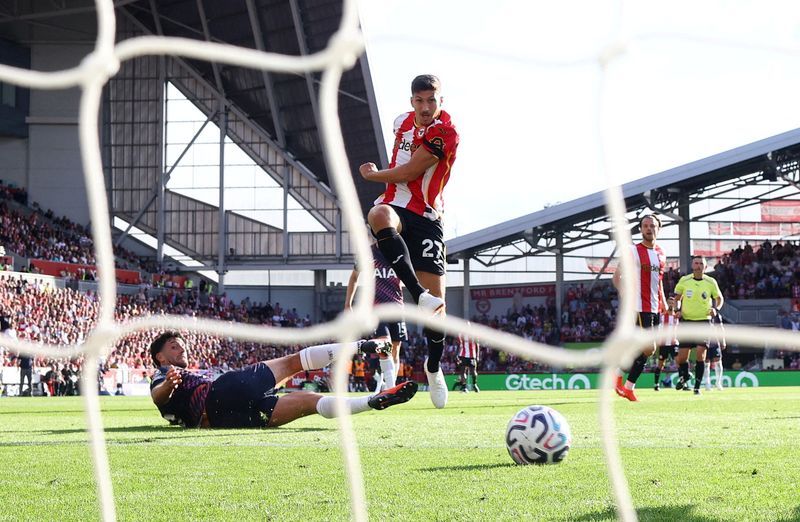
Tottenham Hotspur's expensive summer overhaul collapsed spectacularly on the opening weekend of the Premier League season as they suffered a 3-0 drubbing at Brentford, raising serious questions about whether financial investment can fix deeper structural problems at the North London club. The emphatic reverse at the Gtech Community Stadium on Saturday exposed a troubling pattern for a side that has endured back-to-back 17th-place finishes and required a dramatic last-day rescue from relegation just months earlier. Despite committing to expenditure exceeding £300 million, Tottenham looked comprehensively outclassed by a rival operating on a fraction of their budget, suggesting that under manager Roberto de Zerbi, systemic issues cannot be resolved through recruitment alone.
The scale of investment undertaken by Spurs' ownership demonstrates the magnitude of their ambitions for this campaign. Record signing Sandro Tonali, fresh from his move from AC Milan, was thrust directly into the starting eleven alongside fellow summer acquisitions Jan Paul van Hecke, Marcos Senesi, and Andy Robertson. Later in the contest, £85 million midfielder Mateus Fernandes entered the fray in his competitive debut for the club. Yet despite assembling a selection littered with expensive signings and fresh talent, the team produced a display lacking cohesion, intensity, and basic competitive quality. They failed to manage even a single shot on target throughout the opening period, a damning indictment that suggested hasty integration and insufficient preparation preceding the campaign.
De Zerbi inherited a club in freefall when he arrived mid-season and performed miracles in stabilizing their position across seven matches. His appointment came with considerable expectations that his proven managerial credentials would catalyze sustained improvement, and the club's willingness to fund his vision with over £300 million in transfers underscored their faith. However, the Italian tactician recognized immediately following the Brentford debacle that financial resources mean nothing without proper conditioning, understanding, and commitment to the fundamentals of competitive football. In his post-match assessment, De Zerbi highlighted the absence of adequate physical preparation amongst his squad and the failure of his players to engage in the battle for loose balls and contested duels—the unglamorous but essential elements that separate winners from also-rans.
The contrast with Brentford's approach provides an instructive lesson for any ambitious English club seeking sustained success. Under manager Keith Andrews, who took the reins after his predecessor departed to take charge of Tottenham in 2025, the West London outfit has pursued a philosophy rooted in stability and judicious recruitment. Beyond their own record acquisition of midfielder Mamadou Sangare from RC Lens for £39 million, Brentford largely maintained their squad architecture whilst carefully adding centre back Jannik Schuster and winger Jaidon Anthony. This strategic continuity meant the team arrived at the season's outset boasting the cohesion, understanding, and mutual familiarity that only extended time together can cultivate. Displaying confidence and collective purpose, they utterly dominated Tottenham and moved comfortably towards what could become a ninth-place finish—a respectable outcome achieved through intelligent planning rather than extravagant spending.
Tottenham's injury situation provided de Zerbi with a legitimate explanation, though one that did not entirely excuse the magnitude of the defeat. Newly appointed captain Micky van de Ven remained sidelined, as did World Cup-winning defender Pedro Porro and long-term absentees including Xavi Simons, Mohammed Kudus, and Dejan Kulusevski. The absence of established senior figures meant that twenty-year-old midfielder Archie Gray inherited the captaincy, becoming the youngest player to wear Spurs' armband in recent memory. Yet whilst injuries explain some shortcomings, they do not account for the tactical disorganization and physical capitulation displayed across ninety minutes against opponents who, whilst stronger than mid-table sides, hardly represent the elite of English football.
De Zerbi's own words in the aftermath revealed a manager grappling with the reality that integration of multiple new signings occurs gradually, and that many squad members arrived late following extended summer breaks or World Cup commitments. The manager emphasized the necessity of deeper analysis concerning how Tottenham must approach comparable contests in future, acknowledging that their current methodology is fundamentally inadequate. His comments suggested that whilst further recruitment—including anticipated arrivals such as winger Savinho from Manchester City—may eventually strengthen the club, immediate priority must be establishing basic standards of physical condition, tactical discipline, and competitive mentality. Without these foundations, successive waves of expensive acquisitions risk becoming expensive mistakes.
The wider context for Malaysian and Southeast Asian observers is that Tottenham's struggles reflect broader challenges faced by clubs seeking to build sustained competitiveness in the modern Premier League. Financial resources alone prove insufficient; organizational coherence, managerial stability, and a clear recruitment philosophy matter equally. Brentford's more modest but effective approach offers a template increasingly emulated across Europe, particularly amongst clubs without access to bottomless financial resources. The contrast between Spurs' expensively assembled collection and Brentford's more carefully curated squad serves as a reminder that football remains ultimately about eleven players functioning effectively as a collective unit rather than accumulations of individual talent.
Looking forward, Tottenham faces an immediate challenge of recalibration and building momentum before the weight of expectation becomes entirely crushing. Additional reinforcements such as Savinho may yet arrive, but De Zerbi's comments make clear that squad additions must be accompanied by significant improvement in standards of preparation and mentality. The manager retains considerable credit from his stabilizing influence last season, yet patience amongst supporters will inevitably diminish if opening-weekend capitulations become a recurring pattern. For a club attempting to return to genuine title contention after years adrift in mid-table obscurity, Saturday's performance represented a concerning false start that suggested the road ahead remains considerably steeper and more demanding than even pessimistic pre-season assessments might have suggested.

