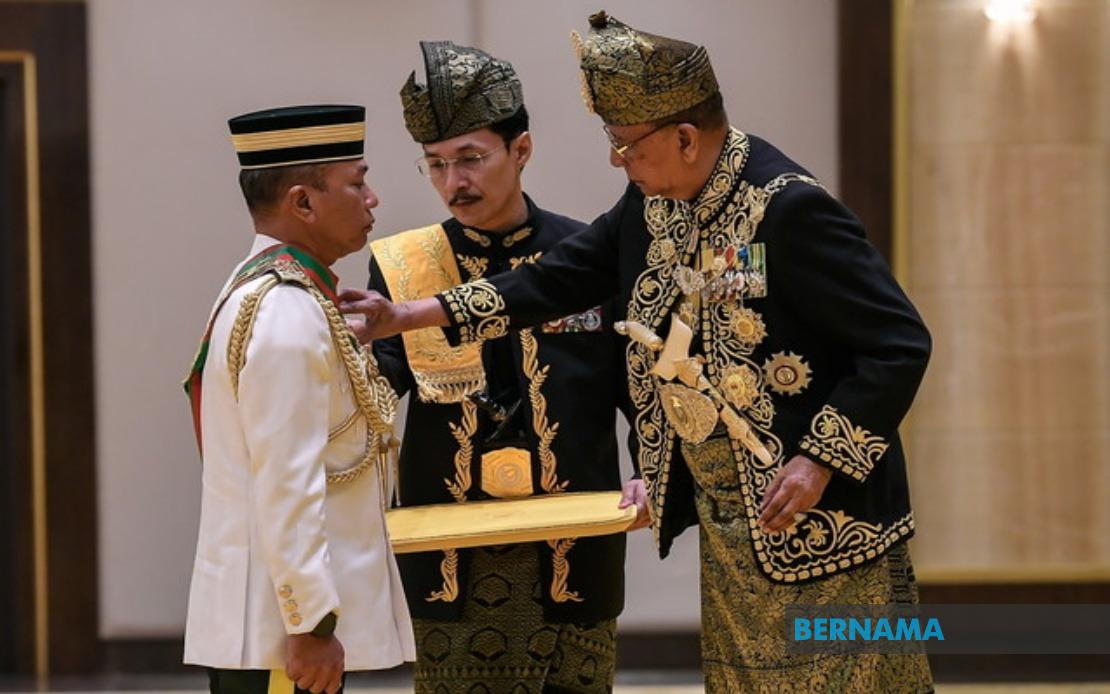
The Sultan of Kedah, Al Aminul Karim Sultan Sallehuddin Sultan Badlishah, conferred a comprehensive slate of state honours and medals on July 5 during his 84th birthday celebration at Istana Anak Bukit in Alor Setar, with the nation's highest-ranking military and police officers receiving the most prestigious recognitions. General Tan Sri Malek Razak Sulaiman, who heads the Chief of Defence Forces, and Tan Sri Mohd Khalid Ismail, the Inspector-General of Police, were named to the top of the honours roll, reflecting the traditional prominence given to security sector leaders in Malaysian state ceremonies. The dual appointment underscores the consistent recognition afforded to defence and law enforcement chiefs at royal occasions across Malaysia's states.
The apex of Kedah's honours system, the Darjah Dato' Seri Setia Pahlawan Yang Amat Dihormati (S.S.P.K), was reserved for these two senior officials, a distinction that carries significant ceremonial weight within the state's honours framework. This category represents the highest order that the Sultan can bestow upon individuals for exceptional service and contribution. The decision to honour both figures simultaneously signals the sultanate's appreciation for the coordination between military and police operations within the state, a particularly salient matter given the challenges of internal security and border management that Kedah faces as a northern gateway state.
Beyond the top tier, the Sultan recognised numerous figures across Kedah's administrative and civil society structures through the Orang Besar rankings, traditional titles that denote senior leadership positions within the state hierarchy. Datuk Syed Khairol Anuar Syed Abidin received the Orang Besar Enam Belas designation, while Datuk Mohamad Che Nai was conferred the Orang Besar Tiga Puluh Dua title, both of which represent historic ranks within Kedah's feudal administrative system that persist in ceremonial contexts. These appointments acknowledge the continued relevance of traditional governance structures alongside modern administrative frameworks.
The Darjah Dato' Setia Diraja Kedah (D.S.D.K) was awarded to four recipients, representing the next significant tier of honours, followed by the conferment of the Darjah Dato' Setia Pahlawan (D.D.S.P) upon Kedah's police chief, Datuk Adzli Abu Shah, recognising his leadership of the state constabulary. The Darjah Setia Sultan Sallehuddin Kedah (S.S.S) went to two distinguished recipients: Major (Rtd) Mansor Zakaria, a state executive council member, and Afnan Hamimi Taib Azamudden, who leads PAS Youth. The inclusion of a political party youth wing leader alongside a retired military officer in government service demonstrates the sultanate's cross-party recognition of service and contribution to state affairs.
Nine individuals received the Darjah Setia Diraja Kedah (S.D.K), a category encompassing a diverse range of professional and institutional leaders. Among them, Syeikh Mohamad Subhi Abdullah heads the Kedah State Islamic Religious Affairs Department, a critical position given Islam's constitutional role in Malaysian governance and Kedah's substantial Muslim population. Maznim Ismail, serving as deputy chief executive (Management) of the Langkawi Development Authority, brings recognition to the tourism and economic development sector that has become increasingly central to Kedah's growth strategy. Ir Mohd Fisal Ismail, director of the Kedah Public Works Department, represents the infrastructure modernisation efforts essential for state development, while Zulkifli Romli, general manager of the Muda Agricultural Development Authority, acknowledges the agricultural sector that remains economically significant despite urbanisation pressures.
The healthcare sector received substantial recognition through the honours of Dr Jamaliah Omar, deputy director of the Health Ministry's Dental Health Programme, and two senior clinicians from Sultanah Bahiyah Hospital: Dr Adam Mohd Zakaria, head of the Neurosurgery Department, and Dr Manisekar K. Subramaniam, a senior consultant general surgeon. The prominence given to healthcare professionals in state honours reflects the increasing prioritisation of medical services and specialist care within Malaysian public health infrastructure. The inclusion of these figures demonstrates royal acknowledgement of frontline healthcare delivery in a period when healthcare accessibility has become a central policy concern across Southeast Asia.
The real estate and development sector was represented by Yeoh Su Guan, chairman of the Real Estate and Housing Developers Association for Kedah and Perlis, alongside Jaffri Ahmad, president of Bismi Empire Sdn Bhd, recognising the private sector's role in meeting housing demand and economic expansion. This inclusion reflects the sultanate's understanding that state development depends substantially on private enterprise participation and responsible development practices, particularly relevant given Malaysia's ongoing urbanisation and housing pressures across major states.
Beyond the higher-order honours, the Sultan extended recognition to 31 recipients of the Ahli Mahkota Kedah (A.M.K) and another 31 honoured with the Bintang Perkhidmatan Cemerlang Kedah (B.C.K), demonstrating a substantial commitment to recognising service across state institutions. A further 43 recipients received the Bintang Kebaktian Masyarakat (B.K.M), acknowledging community contributions and civic engagement from diverse backgrounds. The Ahli Cemerlang Semangat Jerai Kedah (A.S.K) was bestowed on five recipients, maintaining focus on merit-based recognition across the state's civil and community sectors.
Additional recognition categories distributed across 115 further recipients included the Pingat Perkhidmatan Cemerlang Kedah (P.C.K) awarded to 55 individuals, the Pingat Jasa Kebaktian (P.J.K) given to 40 recipients, and the Pingat Perkhidmatan Lama (P.P.L) presented to 15 individuals representing long service contributions. These broader categories encompass teachers, civil servants, social workers, and community volunteers who constitute the backbone of state administration and public service. The scale of this distribution—with well over 200 individuals recognised across multiple tiers—underscores the sultanate's commitment to acknowledging the diverse contributions that sustain state governance and social cohesion.
For Malaysian readers and Southeast Asian observers, such honours ceremonies serve multiple functions beyond ceremonial significance. They reinforce social hierarchies and institutional legitimacy through royal recognition, provide pathways for acknowledging meritorious service across public and private sectors, and demonstrate how constitutional monarchies integrate traditional ceremonial authority with contemporary governance structures. The balance evident in Kedah's 2024 honours list—between security sector leadership, civil administration, healthcare, development, and community service—reflects broader patterns across Malaysian states regarding how sultans calibrate recognition to address contemporary priorities including healthcare delivery, economic development, and institutional effectiveness.

