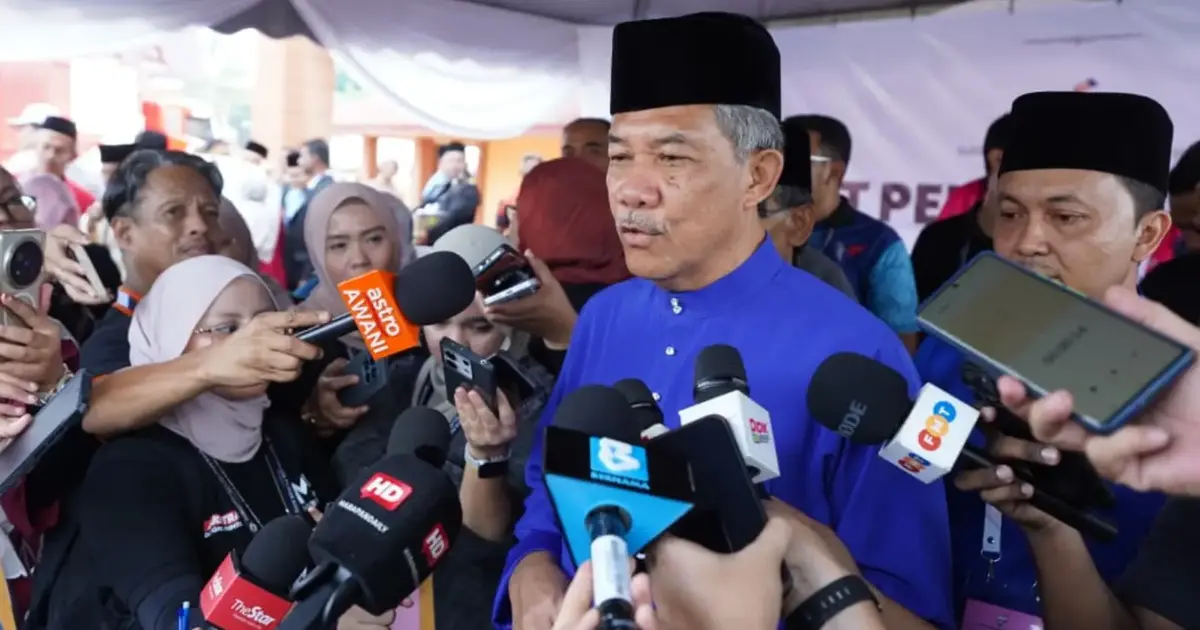
Mohamad Hasan, the influential Negeri Sembilan politician commonly known as Tok Mat, has issued a firm directive to Barisan Nasional candidates competing in the state to steer clear of adat-related controversies during their campaign activities. The warning reflects deep sensitivities surrounding customary institutions that remain foundational to Negeri Sembilan's political and social fabric, where the Minangkabau heritage continues to shape governance and community relations.
The adat system in Negeri Sembilan represents far more than ceremonial tradition. It embodies a distinct legal and administrative framework that predates modern Malaysia and enjoys constitutional protection under the Malaysian federal structure. The institution operates alongside conventional state governance, creating a unique dual-track system where the Undang Muda and associated customary leadership wield genuine authority over matters affecting their domains. This complexity means that adat issues carry particular weight in local politics, transcending the rhetoric of typical electoral campaigns.
Tok Mat's intervention signals recognition that election season inevitably tempts political actors to exploit sensitive communal issues for short-term advantage. When candidates instrumentalise adat matters—whether by questioning customary leaders' decisions, challenging their legitimacy, or leveraging grievances around land rights and succession—they risk disturbing equilibriums that have generally been maintained through respectful engagement rather than public confrontation. The Negeri Sembilan context makes such calculations especially fraught because adat authority commands genuine loyalty among significant portions of the electorate.
The political implications extend beyond mere campaign etiquette. Negeri Sembilan has experienced periodic tensions around adat governance, particularly regarding the appointment and authority of customary leaders and the interpretation of customary law versus civil law in property disputes. Previous electoral contests have occasionally seen candidates attempt to capitalise on these tensions by promising intervention or reform, rhetoric that typically inflames rather than resolves underlying disputes. Tok Mat's directive attempts to establish boundaries that protect the integrity of customary institutions from becoming battlegrounds between rival political factions.
For the BN specifically, the appeal carries organisational logic. The coalition has historically relied on strong relationships with traditional institutions across Malaysia, viewing respect for these bodies as foundational to political legitimacy in rural and semi-urban constituencies. In Negeri Sembilan, where adat remains vibrant in ways that distinguish the state from most others in Malaysia, the BN's positioning as the guardian of established institutions—including customary systems—represents a core electoral asset. Encouraging candidates to avoid inflammatory adat rhetoric thus serves the coalition's broader strategic interest in portraying itself as the stabilising force for traditional order.
The warning also reflects awareness that opposition parties might exploit any BN missteps on this terrain. Should Barisan Nasional candidates be seen as disrespecting or politicising adat matters, rivals could effectively counter-position themselves as true custodians of Negeri Sembilan's heritage. This dynamic renders discipline on the adat issue particularly important for maintaining BN coherence, especially in a state where electoral margins have sometimes proven narrow and where customary leaders' implicit endorsements or criticisms carry measurable weight among voters.
Tok Mat's intervention demonstrates the continuing relevance of Malaysia's layered governance architecture. While federal and state politics often command media attention, the ongoing authority exercised by customary institutions in certain states remains consequential for local electoral politics and community stability. Negeri Sembilan's adat system represents a reminder that Malaysian politics cannot be reduced to purely modern, technocratic categories—inherited structures and respected authorities continue to shape how communities organise themselves and make political choices.
The directive also underscores generational continuity in how establishment figures approach sensitive institutions. Rather than attempting to reform or marginalise adat structures—positions that periodically emerge in modernisation debates—Tok Mat advocates for their protection from electoral opportunism. This stance reflects perhaps a pessimistic assessment about the consequences of allowing such institutions to become routine objects of campaign contestation, based on historical experience suggesting that politicisation tends to erode rather than strengthen them.
For candidates operating in Negeri Sembilan, the guidance establishes clear expectations: focus campaigns on development promises, governance records, and policy platforms rather than attempting to leverage adat grievances or customary controversies. This framing allows the BN to maintain electoral competitiveness while simultaneously signalling respect for institutions that command deep loyalty among crucial voter segments. Whether all candidates will adhere to this guidance remains uncertain, but the issuance of such a directive itself signals that party leadership recognises the stakes involved in how adat becomes woven into electoral discourse.

