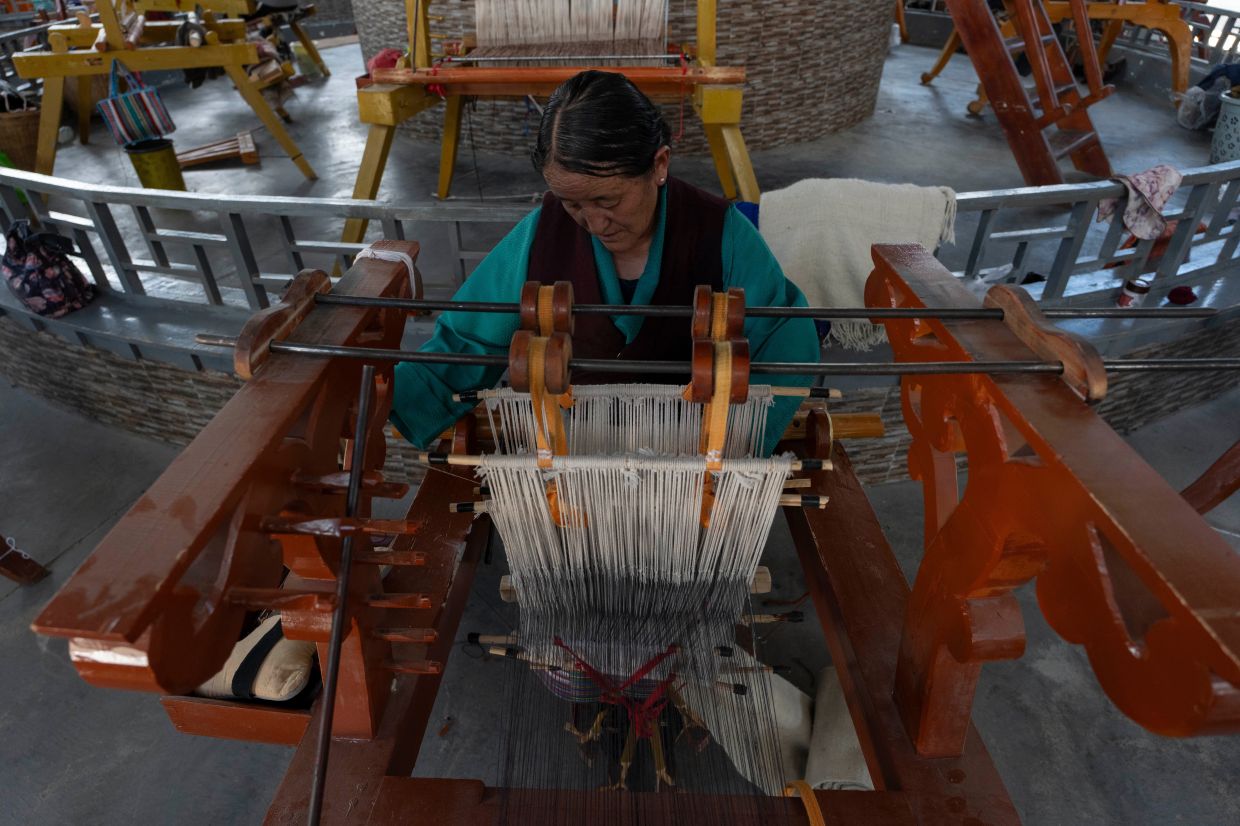
On wooden looms arranged throughout a workshop in Shannan, skilled artisans methodically work shuttles through carefully aligned wool yarn, creating the intricate patterns that define Pulu—a traditional textile that has provided warmth and cultural identity to Tibetan plateau communities for generations. This painstaking craft, where each thread must be individually tensioned and woven into place, represents far more than simple textile production; it embodies the preservation of a heritage that once nearly disappeared entirely.
The Ethnic Huaji Handwoven Cooperative, established in 2008 by Tibetan artisan Pasang, has become an unexpected repository of cultural continuity in the modern era. Operating in Shannan at approximately 3,700 metres above sea level, the workshop currently employs over 100 local residents, notably including individuals with disabilities who might otherwise struggle to secure meaningful employment in the region's limited job market. This dual commitment—to cultural preservation and economic opportunity—distinguishes the cooperative from purely commercial enterprises and reflects a deeper understanding of how traditional knowledge systems can sustain communities rather than consign them to historical obscurity.
Pasang's personal journey illuminates the precarious state of this craft in recent decades. When he inherited weaving knowledge from his parents, fewer than ten individuals across the entire region retained the technical expertise required to produce Zeter, the finest variety of Pulu. This near-extinction of knowledge represented not merely the loss of an economic skill but the erasure of cultural memory embedded within textile patterns and techniques developed over centuries. Pasang's decision to transform personal expertise into an educational and productive institution prevented that loss from becoming permanent.
Zeter occupies a distinctive position within the broader Pulu tradition, distinguished by its exceptional softness and delicacy. The cooperative sources raw materials from sheep raised in the high-altitude regions surrounding Shannan, harvesting particularly fine wool from the neck and back areas of animals adapted to the plateau's extreme climate. This specialisation in premium material reflects both technical sophistication and an understanding that quality products command higher market value—enabling the cooperative to offer competitive wages while maintaining artisanal standards that mass-production economies typically abandon.
The historical depth of Pulu weaving extends beyond practical functionality into the symbolic realm of cultural statecraft. According to local tradition and supported by historical records, the weaving techniques that became central to Tibetan material culture arrived on the plateau through Princess Wencheng, who married seventh-century King Songtsen Gampo. Statues commemorating this union stand at the cooperative's centre, serving as both historical markers and reminders that cultural exchange and synthesis have characterised Tibetan-Chinese relations across centuries. During the Ming dynasty, Zeter's exceptional quality elevated it to diplomatic status, presented as tribute from Tibetan communities to the imperial court—a recognition that underscores the craft's historical prestige.
China's official designation of Pulu weaving as part of the national intangible cultural heritage portfolio provides institutional validation that reinforces Pasang's efforts to transmit knowledge to younger generations. This classification, while acknowledging the craft's significance, also creates certain expectations and constraints around authenticity and traditional practice. The cooperative must balance genuine preservation against pressures toward commodification, ensuring that products sold in the showroom adjacent to the workshop maintain integrity rather than becoming diluted commercial approximations of authentic work.
The cooperative's commercial strategy reveals pragmatic adaptation to contemporary market realities. While most sales occur within Tibet itself, products including scarves, shawls, jackets, and bags have begun reaching customers throughout broader China, suggesting that demand for authentic, high-quality handicrafts extends beyond regional boundaries. This expanding market provides economic sustainability for the cooperative's operations and justifies continued employment of artisans who might otherwise see their skills rendered economically obsolete by industrial textile production.
Tsering Yangchen's eight-year tenure at the cooperative exemplifies the human dimensions of preservation work. At 80 years old, she relocated to Shannan and faced employment barriers that the cooperative specifically addressed through its commitment to inclusive hiring. For her, weaving represents both livelihood and cultural continuity—Pulu garments function as essential practical items within her community, woven from pure wool that offers protection against plateau temperatures. Her participation demonstrates how heritage preservation creates meaningful work for individuals whom market economies frequently marginalise, particularly in regions where alternative employment remains scarce.
The workshop's location at high altitude ensures access to the specific raw materials that make Zeter production feasible, while situating artisans within communities where textile knowledge remains embedded in cultural memory and daily practice. Unlike urban craft revivals that depend on conscious retrieval of abandoned techniques, the Shannan cooperative operates within a cultural context where weaving still carries practical and symbolic significance—reducing the artificiality that often accompanies heritage preservation initiatives in industrialised societies.
Pasang's vision extends beyond immediate economic concerns to address the demographic challenge of knowledge transmission. Younger Tibetans increasingly pursue urban opportunities and formal education, potentially severing generational continuity of craft knowledge. The cooperative's employment structure and teaching programmes attempt to make traditional weaving economically competitive enough to attract younger participants, recognising that cultural survival ultimately depends on making heritage practices sustainable within contemporary economic realities rather than treating them as museum exhibits.
For Southeast Asian observers, the Shannan cooperative model offers instructive examples regarding cultural preservation within development contexts. The initiative demonstrates that heritage crafts need not remain economically marginal if positioned within quality-focused market segments and supported by institutional frameworks that value authenticity. The cooperative's success in generating stable employment while maintaining rigorous standards suggests that cultural and economic objectives, often portrayed as contradictory, can be productively aligned through careful strategy and genuine commitment to community welfare.

