A three-year-old child from Cendering suffered an injury to his left foot when it was inadvertently compressed beneath a tow vehicle participating in this morning's National Day parade in Kuala Terengganu. The incident, which unfolded around 9.45 am near Wisma Persekutuan, has drawn attention to crowd management challenges during major public celebrations. The boy, Che Ku Muhammad Khairul Amir Che Ku Mohd Khairul Azlan, was taken to Sultanah Nur Zahirah Hospital (HSNZ) where medical assessment confirmed no bone fractures despite the frightening nature of the accident.
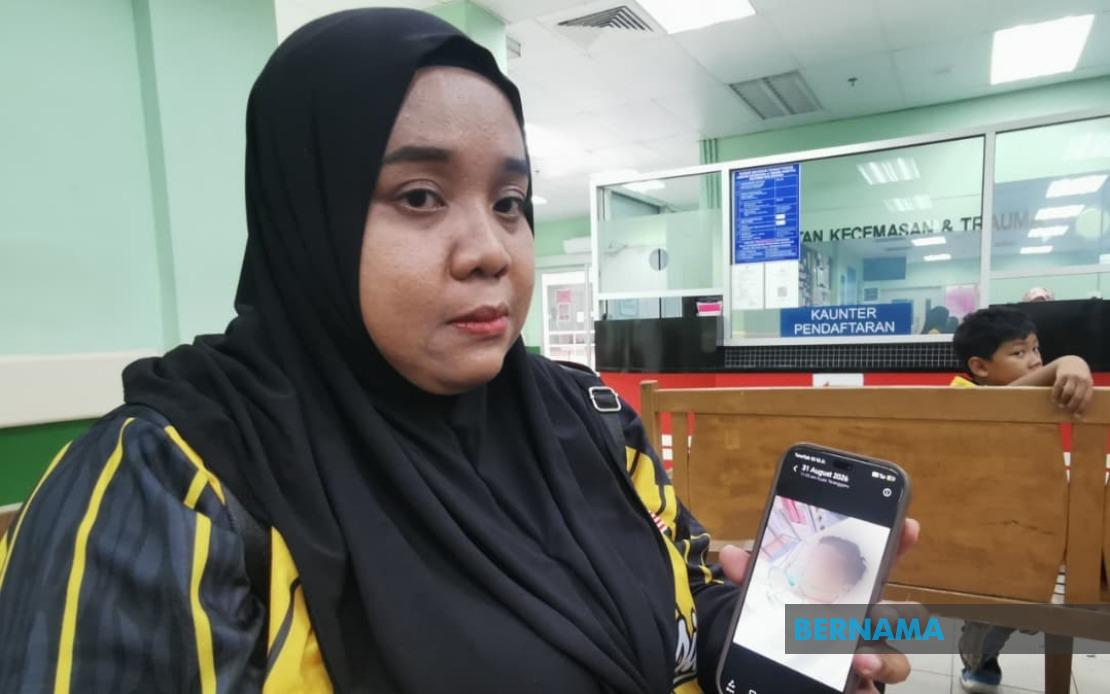
According to the child's mother, Puteri Anis Athirah Wan Rosli, 36, the sequence of events began when the tow vehicle carrying a Fire and Rescue Department boat made multiple stops in front of the Wisma. Her seven-year-old daughter had moved ahead of the family to capture photographs of the parade procession, and the younger boy followed his sister, as children commonly do during such events. When firefighters observed the child's proximity to the moving vessel and attempted to reposition him to a safer location, the toddler lost his balance and tumbled forward. In that critical moment, the tow vehicle advanced slightly, resulting in the child's foot being trapped beneath one of its wheels.
Despite the potentially serious nature of such an incident, medical examination at HSNZ provided significant reassurance to the family. The X-ray imaging conducted shortly after admission revealed no fractures or breaks in the affected foot, indicating that while the child experienced trauma and localized injury, the damage was less severe than initially feared. The boy remained hospitalised for continued observation and monitoring to ensure no complications developed from the incident. His mother expressed considerable gratitude for the swift medical response, noting that the ambulance transported him to the hospital at approximately 10.15 am, just thirty minutes after the incident occurred.
Puteri Anis Athirah demonstrated a measured and understanding response to what could easily have escalated into a blame-focused scenario. Rather than directing criticism toward the firefighters or Fire and Rescue Department personnel who were performing their operational duties, she acknowledged the reality of the situation with compassion and perspective. She emphasized that the firefighters were actively managing both the safety of parade participants and the movement of their equipment, responsibilities that required constant attention during a crowded public event. She recognized that her son's enthusiasm for the festivities—a natural response from a young child witnessing the spectacle of a national celebration—had contributed to the unfortunate circumstances.
The mother also commended the rapid police response and their coordination in ensuring the injured child received emergency medical transport. Law enforcement personnel coordinated with emergency medical services to facilitate the ambulance journey to HSNZ, demonstrating the coordination required among various government agencies during such incidents. Their swift action helped minimize any potential complications that might have arisen from delayed medical attention, even though initial assessments suggested the injuries, while certainly painful and distressing, were not life-threatening.
Kuala Terengganu district police chief ACP Azli Mohd Noor confirmed awareness of the incident and noted that a formal investigation into the exact circumstances remains ongoing. Police investigations into such accidents serve multiple purposes: establishing a clear factual record of events, identifying any procedural lapses that might be addressed in future parade preparations, and documenting the incident within official records. The ongoing nature of the investigation suggests authorities are taking the matter seriously, even as preliminary indicators suggest the incident resulted from an unfortunate confluence of circumstances rather than negligence.
National Day parades represent significant cultural and civic occasions throughout Malaysia, drawing substantial crowds of families and community members eager to celebrate national identity and heritage. The presence of children at these events is expected and encouraged, yet instances like this underscore the inherent tensions between maintaining vibrant, accessible public celebrations and ensuring adequate safety protocols. Parade organizers must balance the desire to permit spontaneous joy and unrestricted movement with the responsibility to protect vulnerable participants, particularly young children who may lack the spatial awareness and judgment to maintain safe distances from heavy machinery and vehicles.
This incident highlights practical considerations for event planners and emergency services personnel coordinating major parades. While firefighters and rescue personnel are essential elements of national celebrations—their vehicles and equipment demonstrating the nation's emergency response capabilities—their participation requires careful choreography of crowd barriers, designated spectator zones, and clear communication protocols. The accident in Kuala Terengganu occurred despite personnel attempting to actively manage safety by repositioning the child, demonstrating that even proactive intervention can be insufficient in rapidly evolving crowd situations.
For Malaysian parents and guardians attending national celebrations, this event serves as a reminder of the importance of maintaining close supervision of young children in crowded settings, particularly near moving vehicles and large equipment. The visibility and accessibility of parade participants that makes these events appealing also creates scenarios where unexpected incidents can occur within seconds. Parents may benefit from establishing clear proximity boundaries with their children, designating specific viewing areas, and maintaining consistent line-of-sight supervision, particularly for toddlers whose curiosity and limited judgment can outpace their safety awareness.
The broader implications of this incident extend beyond the immediate family's experience to encompass systemic considerations for public event management across the country. State and federal authorities overseeing National Day celebrations will likely utilize this incident as a case study for reviewing existing safety protocols, perhaps implementing enhanced training for personnel managing vehicles within pedestrian-heavy parade environments. Enhanced barrier systems, clearly demarcated spectator zones with restricted access, and improved communication systems between vehicle operators and crowd management personnel may be examined as potential improvements.
Preliminary reports suggest no criminal negligence or intentional wrongdoing contributed to the accident, distinguishing this as the type of tragic-but-unforeseeable incident that can occur at large public gatherings despite reasonable precautions. The child's fortunate outcome—medically speaking—and the family's response marked by understanding rather than litigation or blame may facilitate a more constructive analysis of what transpired. Such circumstances allow relevant agencies to examine procedures and identify refinements without the complications that arise when incidents become focal points for legal or political disputes.
As the 2026 National Day celebrations continue in Kuala Terengganu and across the nation, this incident will likely prompt quiet reflection among event coordinators and emergency personnel about the balance between celebration and precaution. The speedy recovery anticipated for the young child, combined with the measured response from his family and the swift intervention of emergency services, offers a somewhat positive resolution to what could have resulted in far more serious consequences. Moving forward, such incidents typically precipitate enhanced safety discussions that ultimately benefit all future participants in national celebrations.

