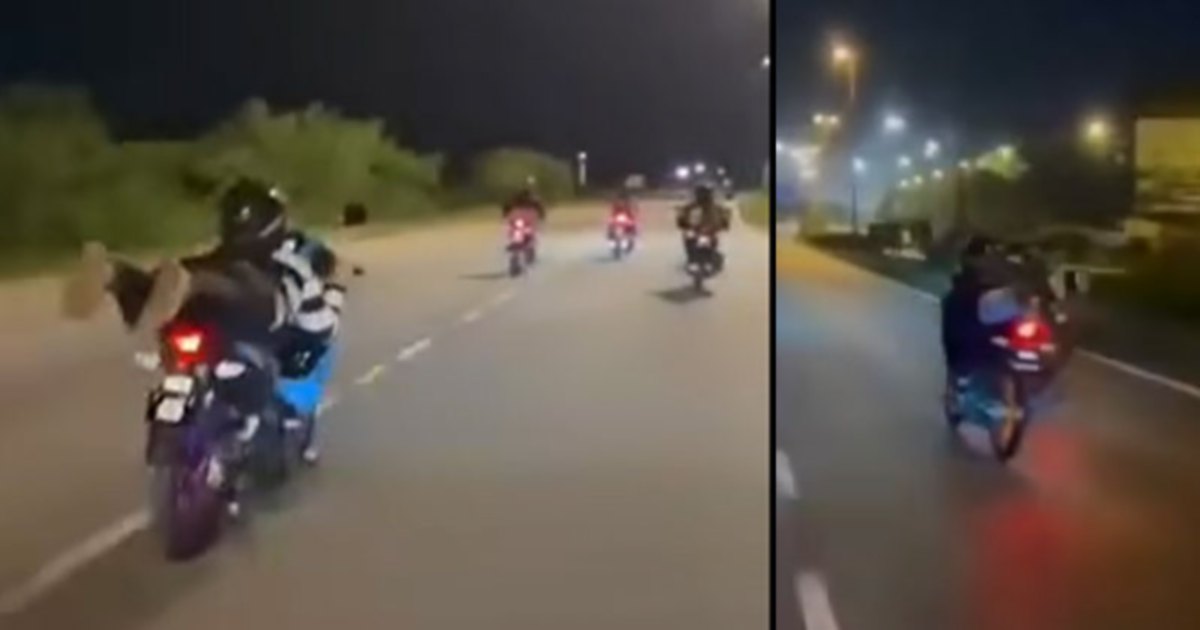
Three teenage girls have been apprehended by authorities in Kuantan following a social media incident in which they performed perilous 'Superman' motorcycle stunts along Jalan Kuantan Bypass-Gebeng road. The arrests follow public outcry over the viral video, which demonstrated the riders standing on their motorcycle seats while in motion—a stunt colloquially termed the 'Superman' position due to its resemblance to the superhero's flying pose.
The incident underscores a growing trend of reckless riding behaviour among Malaysian youth, amplified by the reach of social media platforms where such content can garner immediate attention and validation. The circulation of the video sparked concerns among traffic safety advocates and law enforcement agencies, who view such displays as not only illegal but extraordinarily hazardous to the riders themselves and other road users.
This case adds to mounting incidents involving young motorcyclists engaging in stunting for viral content. The motivations behind such behaviour often include peer pressure, the desire for online recognition, and underestimation of the genuine risks involved. A single loss of balance at highway speed could result in catastrophic injury or death, yet the immediate gratification of social media engagement frequently overrides prudent risk assessment among adolescents whose prefrontal cortex—responsible for weighing consequences—remains underdeveloped.
The Kuantan Bypass-Gebeng road, a major thoroughfare in Pahang's administrative capital, carries considerable traffic volume. Performing stunts in such environments multiplies the danger exponentially, as other motorists have minimal warning to react to unpredictable behaviour. Collision scenarios involving standing riders are particularly severe, as the absence of proper grip and body positioning eliminates the rider's ability to stabilise the motorcycle during emergency manoeuvres.
Police investigations will likely examine whether the riders knowingly endangered themselves and the public, and whether any financial incentive or dare prompted the stunt. Malaysian road traffic laws carry penalties for reckless or dangerous riding that can include fines and licence suspension. For young offenders, the matter may also involve parental accountability and consideration of whether supervision or guidance was inadequate.
The arrest represents law enforcement's attempt to deter similar behaviour by demonstrating that such activities carry real legal consequences. However, enforcement alone cannot address the root drivers of risky stunting. Educational initiatives that build awareness of motorcycle accident outcomes, the physics of unstable vehicle operation, and the permanence of injury have proven more effective in some jurisdictions at curbing repeat behaviour among young riders.
Social media platforms themselves face scrutiny over their role in amplifying and rewarding dangerous content through likes, shares, and comments. While platforms have implemented policies against content depicting illegal or harmful activities, enforcement remains inconsistent and often reactive rather than preventive. The speed at which such videos circulate often outpaces removal efforts, and the original poster may have already achieved their social validation goal by the time content is flagged.
Parental and community engagement emerges as essential to addressing this pattern. Many young people lack adequate understanding of how rapidly situations can escalate on roads, or the limitations of emergency responses in preventing tragedy when motorcycles are involved in high-speed incidents. Conversations at home, in schools, and through peer influencers about the irreversible nature of severe injury may prove more persuasive than legal consequences alone.
The Kuantan incident also highlights disparities in how youth perceive risk and celebrity status. The transformation of ordinary teenagers into viral sensations through dangerous behaviour creates perverse incentives, particularly when peers acclaim rather than discourage such content. This social dynamic requires intervention from multiple directions: parents, educators, platform operators, and influencers who might otherwise normalise such behaviour.
Authorities have yet to formally announce charges or investigations into how the video originated and circulated, though such inquiries could provide insight into whether the stunt was spontaneous youthful recklessness or part of a deliberate production. Either way, the case demonstrates that road safety remains a pressing challenge for Malaysian authorities, particularly among demographic groups still developing judgment and impulse control.

