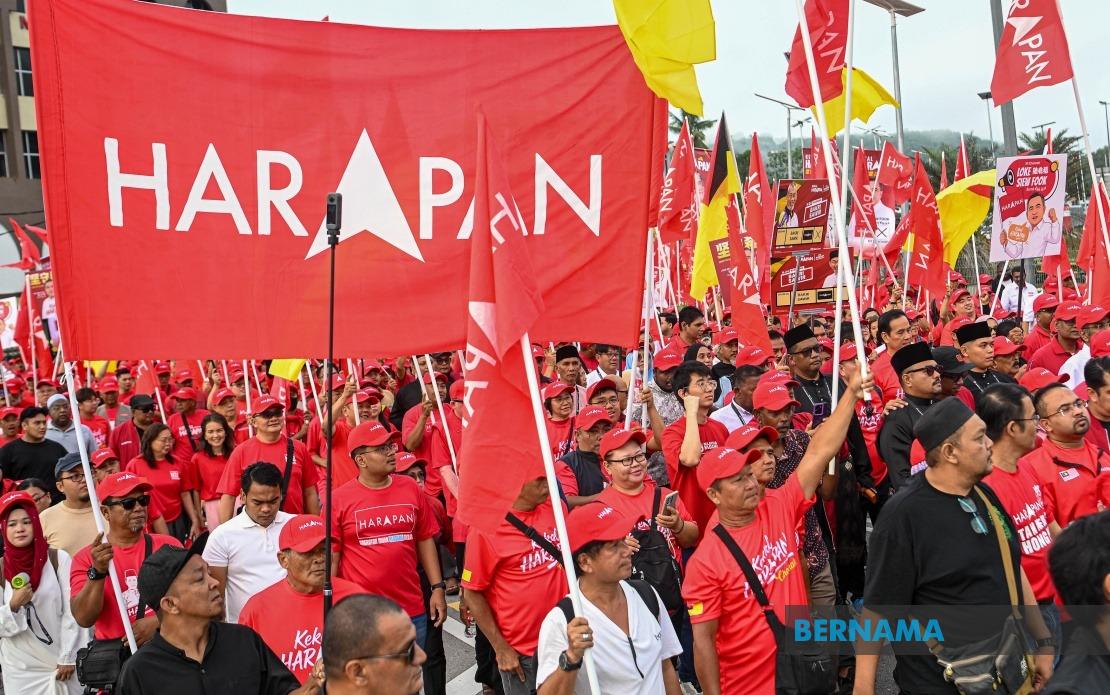
The 16th Negeri Sembilan State Election is shaping up to be closely contested, with nomination processes revealing three-cornered fights across three key state seats. Jelebu Parliamentary returning officer Abdul Rahim A Aziz made the announcement after completing nominations at Dewan Besar Kuala Klawang, setting the stage for an intensely competitive campaign in constituencies that will likely determine the state government's composition.
Pertang has emerged as a crucial battleground where incumbent Datuk Seri Jalaluddin Alias of Barisan Nasional will face challenges from two opposition camps simultaneously. His opponent from Pakatan Harapan is Mohd Umry Abdul Khois, while Bersatu has fielded Mohd Faizal Fadli Mohd Idrus to contest the seat. This three-way split complicates the traditional binary between the ruling coalition and the opposition, potentially reshaping voting patterns in this important constituency.
Jalaluddin's previous performance demonstrates the competitiveness of the seat. In the last state election, he secured 5,634 votes, defeating Perikatan Nasional's Amirudin Hasan by a margin of 2,844 votes. That substantial majority may provide him with some advantage, but the fragmentation of the opposition vote between Pakatan Harapan and Bersatu introduces unpredictable variables. Should either opposition coalition consolidate voter support effectively, the incumbent's position could become vulnerable.
The Sungai Lui state seat has garnered particular attention due to the personal dynamics among its candidates. Three former schoolmates are contesting the seat, a rare occurrence that adds an intriguing interpersonal dimension to what would otherwise be a straightforward political competition. Datuk Mohd Razi Mohd Ali represents Barisan Nasional, while Zainal Fikri Abd Kadir carries Pakatan Harapan's banner and Mazrulhisham Abd Mansor contests for Bersatu. The shared educational background between these candidates could influence campaign messaging and voter engagement in unexpected ways.
Klawang presents another three-cornered contest involving incumbent Datuk Bakri Sawir from Pakatan Harapan, who will defend his seat against Muhammad Adib Musa of Bersatu and Danni Rais of Perikatan Nasional. Unlike Pertang where the incumbent belongs to the ruling coalition, Klawang sees an opposition-held seat being challenged by rival opposition factions and the government, reflecting the complex political realignments occurring across Malaysia's political landscape.
These three-cornered fights represent a significant departure from traditional two-way contests between government and opposition. The emergence of Bersatu as a serious contender in multiple constituencies reflects the fragmentation that has characterised Malaysian politics since 2020. For voters, this multiplicity offers greater choice but also complicates decision-making, as strategic voting calculations become more complex when three viable candidates compete simultaneously.
For the Negeri Sembilan electorate, these contests will determine not merely which individuals represent their constituencies, but potentially which coalition controls state government. In a state where no single coalition commands overwhelming dominance, results across these three seats and others could prove decisive. The involvement of Bersatu across multiple constituencies suggests the party's strategy to establish itself as a significant player in peninsular politics beyond its strongholds.
The Election Commission has scheduled early voting for July 28, allowing certain voters to cast ballots before the main polling date. The official polling day is set for August 1, giving candidates and their supporters roughly two weeks for campaigning. This timeline is relatively compressed, requiring campaigns to mobilise supporters quickly while communicating their messages effectively across competing media channels.
For Malaysian political observers, these contests exemplify broader national trends. The persistence of three-way fights suggests that the bipolar political system that dominated Malaysian politics for decades has genuinely fractured. Neither Barisan Nasional nor Pakatan Harapan can assume automatic voter loyalty, and Bersatu's presence demonstrates that political realignments remain fluid and unpredictable. Negeri Sembilan's election will provide important indicators of voter sentiment heading into potential federal-level contests.
The outcomes in Pertang, Klawang and Sungai Lui will also carry implications for Kuala Lumpur's political establishment. If Bersatu performs strongly, it may bolster its negotiating position within broader political coalitions. Conversely, if established coalitions hold firm, it could suggest that voter preferences remain aligned with traditional political structures. These three constituencies thus serve as important windows into Malaysian electoral behaviour and the durability of political alignments in the post-2020 era.

