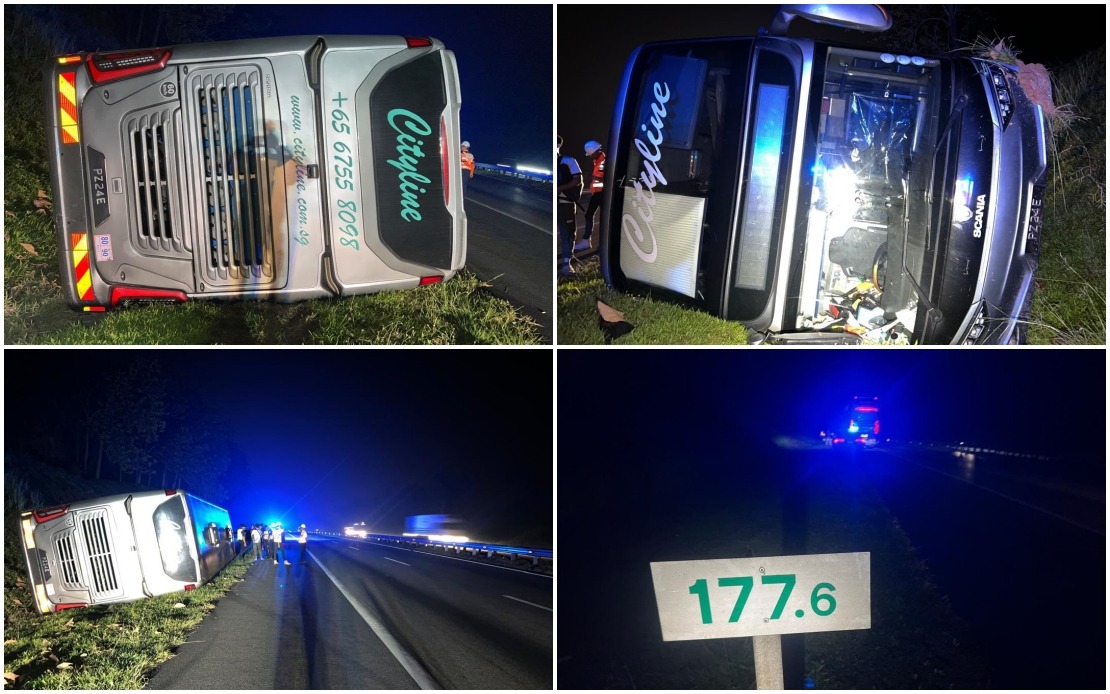
A tour bus carrying visitors from across the region crashed and overturned on the northbound carriageway of the North-South Expressway in Jasin on Monday morning, leaving three people injured and raising fresh concerns about highway safety. The incident happened at Kilometre 177.6 of the major expressway at approximately 5 am, affecting a coach that was heading toward Kuala Lumpur from Singapore with 12 passengers and crew on board.
Among those hurt in the accident was a 59-year-old Malaysian tour guide, a 62-year-old Singaporean tourist, and a 42-year-old British national, according to Jasin district police chief Supt Lee Robert. All three sustained injuries to their heads and legs, though authorities did not immediately disclose the severity of their conditions. They were conveyed to Jasin Hospital for immediate medical assessment and treatment, where staff could evaluate whether any required further specialist care.
Police investigations into the circumstances surrounding the mishap reveal that the tour bus encountered a critical moment when it approached a heavy goods vehicle traveling ahead of it on the expressway. The lorry had begun decelerating, presenting an unexpected hazard to the coach driver navigating the busy highway during early morning hours. In response to the slowing vehicle blocking his path, the bus operator made an evasive maneuver to prevent a collision, but the sudden steering input caused the coach to veer sharply toward the left side of the roadway.
Once the bus left the main traffic lane, circumstances deteriorated rapidly, and the vehicle lost control before rolling over. The overturning motion would have subjected passengers to sudden forces and potentially thrown them against interior surfaces, explaining the pattern of head and leg injuries sustained by the casualties. The accident underscores the particular vulnerability of coach passengers, who sit in elevated positions within large vehicles and face greater injury risks during rollovers compared to car occupants.
The early morning timing of the accident, occurring before dawn traffic typically builds on the expressway, suggests that visibility conditions may have been reduced or that the bus driver's reaction time to the preceding lorry's deceleration was constrained. Tour operators regularly schedule overnight journeys from Singapore to Kuala Lumpur to avoid daytime congestion and reach destinations during working hours, but these schedules can place drivers and passengers at risk during fatigue-prone hours.
Supt Lee Robert's statement confirming the vehicle's composition—including both a professional driver and a tour guide among the 12 occupants—indicates this was an organized tour group rather than independent travelers. The presence of multiple foreign nationals highlights the significance of the incident for cross-border travel in Southeast Asia, where coach services connect major cities throughout the region and serve as a vital transportation link for both tourism and commerce.
The North-South Expressway remains one of Malaysia's most critical transportation corridors, stretching over 800 kilometers and facilitating millions of journeys annually between the Thai border and Johor. Incidents involving tour buses on this route invariably attract scrutiny from transport authorities, insurance companies, and tour operators, all concerned with ensuring that safety protocols are properly implemented across the industry.
The circumstances of Monday's accident—where a defensive driving maneuver to avoid one hazard inadvertently created a more serious accident—reflect a dilemma faced regularly by professional drivers on congested expressways. While maintaining appropriate following distances and anticipating sudden braking from vehicles ahead are fundamental defensive driving principles, the execution of emergency evasive actions in large vehicles involves complex physics and requires split-second decision-making that cannot always prevent unintended consequences.
Police did not immediately announce findings regarding whether the bus driver's speed was excessive relative to prevailing conditions, whether visibility played a role, or whether the vehicle's mechanical condition contributed to the loss of control. These investigative details will likely emerge as authorities conduct a full inquiry into the accident, potentially informing whether traffic management improvements or specific driver training recommendations should be implemented.
For Malaysian tourism and transport sectors, incidents involving foreign nationals traveling within the country carry implications beyond the immediate human toll. Such accidents can influence international perceptions of travel safety, potentially affecting visitor confidence and tour bookings for Malaysia as a destination. The industry will be monitoring how efficiently authorities respond to the victims' needs and whether the investigation produces findings that enhance passenger safety protocols across the coach transport sector.

