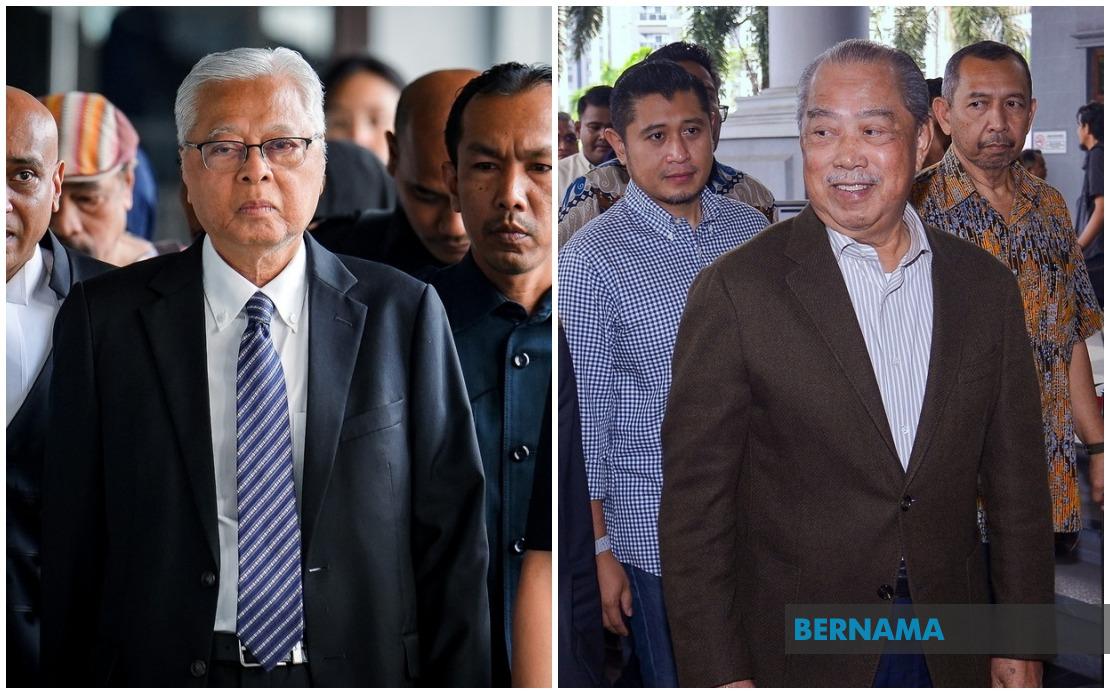
The convergence of three former prime ministers at the Kuala Lumpur Court Complex on a single day has created a moment of historical significance rarely witnessed in Malaysian judicial proceedings. Datuk Seri Najib Tun Razak, Tan Sri Muhyiddin Yassin and Datuk Seri Ismail Sabri Yaakob each attended separate court hearings, their simultaneous presence drawing extensive media attention and prompting extensive security preparations across the complex.
Veteran court reporter V. Anbalagan of Free Malaysia Today characterised the occasion as truly extraordinary, noting that his years covering the judiciary had never produced such a scenario. The simultaneous attendance of three former heads of government underscores the unprecedented legal challenges facing Malaysia's recent leadership, with each facing distinct and serious allegations ranging from financial misconduct to abuse of power. Anbalagan emphasised the historical weight of the moment, suggesting that such an alignment of circumstances may never recur in the nation's political and legal landscape.
For journalists covering the developments, the occasion presented both logistical challenges and editorial significance. Bernama TV news officer Siti Zanariah Nor Zin reflected on her sixteen years in journalism, describing the situation as exceptionally rare and likely the first instance of its kind in Malaysian media coverage. The staggered arrivals of the three former leaders and their legal teams, she noted, provided sufficient opportunity for media organisations to coordinate their reporting and dispatch timely updates to newsrooms. The orderly management of the court grounds external to the buildings allowed reporters and camera operators to monitor movements throughout the proceedings without incident or confusion.
Utusan Malaysia journalist Amirul Aiman Osman acknowledged the inherent challenges posed by covering three simultaneous proceedings, particularly given the physical demands of tracking multiple former prime ministers, their legal representatives and associated developments across different courtrooms. Despite the crowded conditions and intensity of activity, enhanced security protocols ensured that the day proceeded without disruption or confrontation. Osman's presence began before dawn, illustrating the dedication journalists brought to covering what many recognised as a watershed moment in Malaysian public life.
The court complex began filling from early morning as journalists, photographers and television crews assembled in preparation for the day's proceedings. The Kuala Lumpur Court Complex, typically a venue for standard legal business, transformed into a focal point for national attention as security personnel established comprehensive protocols to manage the gathering. Plainclothes officers, uniformed police and dedicated court security staff coordinated their efforts to maintain order whilst permitting legitimate media access to proceedings and reactions from the former leaders and their representatives.
Secure arrangements extended beyond the courtrooms themselves. An anonymous court official confirmed that personnel from Sentul district police headquarters and the Palace of Justice police collaborated on extensive preparations begun the previous afternoon. The coordination reflected the gravity authorities attached to managing the convergence of three former heads of state within the same venue. Between three and six distinct categories of security passes were issued to differentiate access levels for various groups, including general members of the public permitted to observe open court proceedings, accredited journalists covering events, and those accessing remote video-link facilities.
Security officer Nik Zainab Jusoh emphasised that extensive briefings held prior to the day ensured all personnel understood their responsibilities and remained vigilant throughout proceedings. Particular attention focused on the upper floors of the complex and areas immediately outside individual courtrooms, where congestion and security risks ran highest. Ground-floor operations remained comparatively settled and methodical, demonstrating the effectiveness of pre-emptive security planning in managing potential disruption. The disciplined atmosphere reflected preparations undertaken to anticipate challenges posed by the unprecedented gathering.
Najib's appearance centred on a civil action brought by 1Malaysia Development Berhad (1MDB) and its subsidiary, with proceedings before Judicial Commissioner Mohamad Redzuan Idrus concerning allegations involving USD5.64 billion. Muhyiddin faced seven separate charges before Judge Noor Ruwena Md Nurdin related to alleged abuse of power and money laundering associated with the Jana Wibawa programme. Ismail Sabri appeared before Judge Suzana Hussin to address charges of failing to declare substantial assets, specifically RM14.7 million in cash holdings, millions in diverse foreign currencies and quantities of precious metals.
The three separate proceedings represent distinct legal challenges emerging from Malaysia's recent political turbulence and the various controversies that have marked the transition through multiple administrations. Each case reflects different alleged misconduct spanning the spectrum from financial irregularities to governance failures, collectively illustrating the complex legal legacy of recent years. The simultaneous appearance underscores how deeply accountability questions have permeated Malaysia's highest political echelon, creating circumstances where former premiers find themselves navigating judicial scrutiny across multiple fronts.
Ismail Sabri's departure from the court complex at 11:43 am, after securing bail set at RM300,000 with one surety, provided a concrete endpoint to his participation in the day's proceedings. His release marked the resolution of one component within the broader historical moment, though Najib and Muhyiddin remained engaged with their respective proceedings. The managed departure of the former prime minister demonstrated how security and judicial protocols functioned effectively to process the complex logistics of the day.
For Malaysia's broader political and judicial institutions, the convergence represents a sobering reflection on governance accountability and the rule of law. The simultaneous presence of three recent national leaders before courts signals the extent to which Malaysia's political system has confronted questions of transparency and financial propriety. International observers viewing Malaysian developments may interpret the occasion as evidence of functioning judicial institutions capable of holding senior officials accountable, whilst domestic observers may perceive it as symptomatic of deeper institutional challenges underlying recent political cycles. The moment encapsulates the ongoing tension between Malaysia's commitment to democratic accountability and the complexity of prosecuting cases involving former heads of government.

