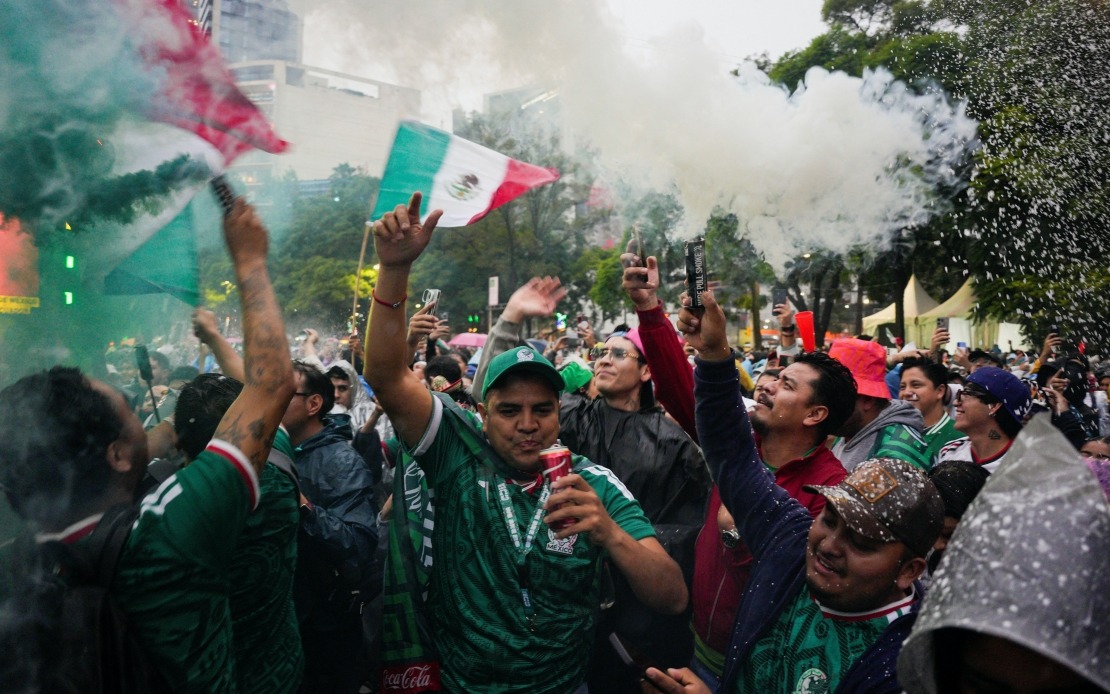
The joy of Mexico's World Cup advancement turned tragic in Mexico City on Tuesday evening when three people lost their lives during street celebrations that erupted following the team's convincing 2-0 victory over Ecuador at the Estadio Azteca. The deaths cast a sobering shadow over what should have been an unalloyed moment of national pride, prompting city officials to issue fresh appeals for responsible fan behaviour during major sporting events.
The Mexican national team's commanding performance secured their passage to the knockout rounds of the tournament, keeping alive their hopes of a strong campaign. Should Thomas Tuchel's England side overcome DR Congo on Wednesday, the two nations could meet at the same stadium on Sunday, adding further intensity to an already emotionally charged period for Mexican football fans. The prospect of such a high-profile encounter had clearly galvanised supporters, leading to spontaneous and exuberant celebrations across the capital.
The three fatalities—a 44-year-old man, a 19-year-old woman, and a 48-year-old woman—all succumbed to asphyxiation, according to the Mexico City public health authority. All three incidents occurred near the Paseo de la Reforma, the capital's most iconic avenue, which runs through the heart of the city and is a traditional gathering point for large-scale celebrations. The concentration of deaths in a single area suggests the celebrations may have created dangerously overcrowded conditions, though authorities have not explicitly stated this as the cause.
Mexico City's mayor, Clara Brugada, acknowledged the tragedy in a public statement, noting that emergency response teams attended multiple reports of unconscious individuals at different locations adjacent to Paseo de la Reforma. Despite the activation of all available medical protocols and the swift intervention of first responders, the three individuals could not be saved. The mayor's office has indicated it is maintaining contact with the families of the deceased to provide necessary support and assistance during this difficult period.
Brugada's public message emphasised the importance of celebrating sporting achievements in a manner that prioritises the safety and wellbeing of all participants. Her statement represents an official acknowledgement that while patriotic fervour and enthusiasm for national teams is understandable and valued, such emotions must be channelled in ways that do not endanger lives. The call for responsible celebration reflects a wider concern among public health and safety officials worldwide regarding crowd management at major sporting events.
This incident underscores a persistent challenge facing authorities in major cities across Latin America and beyond: how to facilitate the spontaneous expression of national pride without creating conditions that pose genuine risks to public safety. Mexico City, with a metropolitan population exceeding 20 million people, has experienced several crowd-related incidents in its history, making crowd management and safety protocols a matter of ongoing concern for municipal administrators. The concentrated geography of celebrations in central locations like Paseo de la Reforma creates particular challenges for police and emergency services tasked with maintaining order while allowing peaceful assembly.
From a regional perspective, the incident carries implications for Southeast Asian nations preparing for major sporting events. Malaysia, Indonesia, Thailand, and other regional powers frequently host international football matches and tournaments that generate intense public enthusiasm. The Mexico City tragedy serves as a cautionary reminder that proper crowd management infrastructure, real-time monitoring systems, and well-coordinated emergency response protocols are not luxuries but essential requirements for public safety during large-scale celebrations.
The Mexican Football Federation and tournament organisers may face increased scrutiny regarding whether adequate measures were in place to manage anticipated crowds in the hours following a major match. While spontaneous celebrations cannot be entirely prevented or controlled, the presence of mobile medical units, clearly marked evacuation routes, and coordinated communication between police and health services can significantly mitigate risks. Future matches involving Mexico in this tournament will likely see enhanced safety measures implemented in anticipation of similar celebrations.
For Mexican football supporters, the circumstances surrounding their team's qualifying victory present a complex emotional landscape. The achievement itself represents genuine progress and validates the hopes invested in the national team. Yet the loss of three lives during the celebrations inevitably colours the memory of this moment, serving as a stark reminder that the collective exuberance of millions of fans can sometimes carry unintended consequences. The challenge for civic leaders lies in finding ways to honour the legitimate desire for public celebration while implementing practical safeguards that prevent tragedy.
Moving forward, Mexico City officials will need to conduct thorough investigations into exactly what circumstances led to the three deaths. Whether the incidents resulted from overcrowding, structural failures, inadequate medical access, or other factors will determine what preventive measures can be implemented for future events. The deaths should not discourage public celebration of sporting achievements, but rather prompt a more sophisticated and safety-conscious approach to managing such events in densely populated urban environments.

