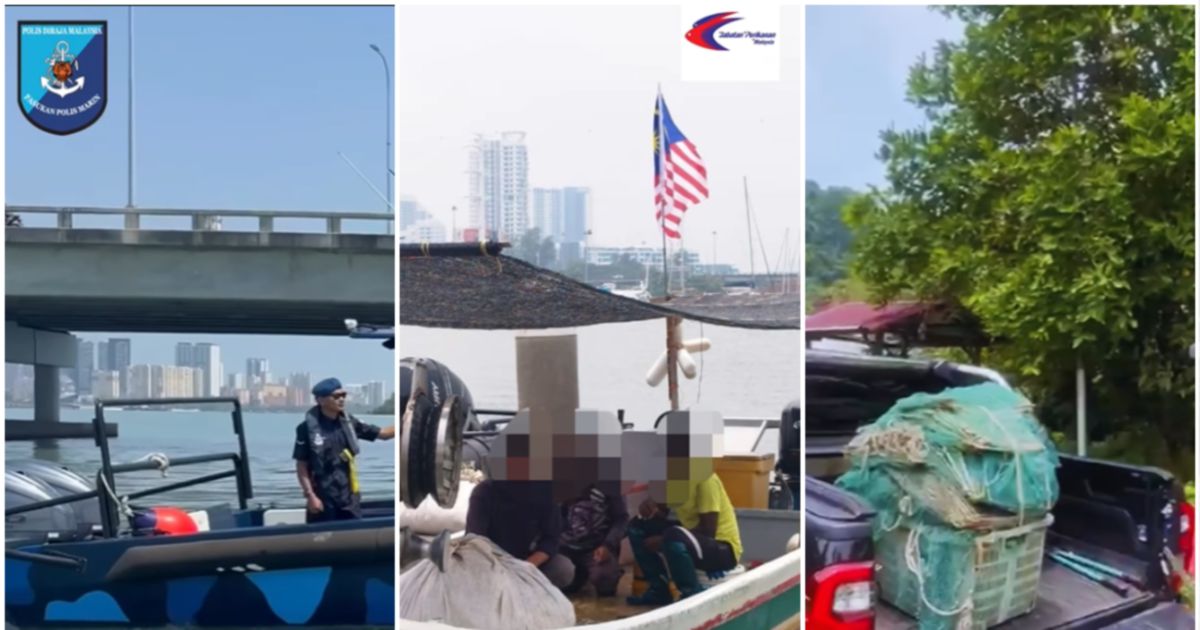
Authorities in Penang have stepped up their maritime enforcement efforts with the arrest of three individuals and the seizure of substantial fishing equipment during a coordinated operation in state waters. The combined value of the confiscated gear and vessel reached RM75,360, underscoring the scale of illegal fishing operations that continue to challenge coastal law enforcement agencies across the region.
The joint operation, which took place yesterday, involved multiple enforcement agencies working in tandem to intercept vessels engaged in unauthorized fishing activities. Such coordinated approaches have become increasingly common as maritime authorities seek to combat the persistent problem of illegal, unreported, and unregulated fishing that threatens both sustainable fisheries and the livelihoods of legitimate commercial and artisanal fishermen throughout Southeast Asia.
The arrested individuals are now in the custody of investigating officers who will determine the full extent of their involvement in the fishing operation. Authorities typically examine factors including vessel ownership, operating licenses, fishing ground permits, and equipment compliance during such investigations. The nature of charges these men may face will depend on which specific fisheries regulations or maritime laws they have allegedly violated.
Illegal fishing represents a significant enforcement challenge for Malaysian authorities, particularly in prolific fishing zones around Penang. The state's strategic location on the Strait of Malacca makes it a focal point for both legitimate maritime commerce and unauthorized fishing activities. Vessels engaged in poaching often employ sophisticated equipment and operate during night hours or in challenging weather conditions to evade detection.
The seizure of substantial equipment reflects the capital-intensive nature of modern fishing operations. Vessels, nets, sonar systems, and specialized gear represent considerable investments, making their confiscation a meaningful deterrent. However, the frequency of such seizures suggests that the potential profits from illegal fishing continue to attract operators willing to risk enforcement action and potential prosecution.
Penang's fisheries sector, which employs thousands of residents and contributes meaningfully to the state's economy, faces ongoing pressure from overfishing and resource depletion. Illegal operations exacerbate these challenges by removing fish stocks without regulatory oversight and without contributing to conservation efforts or local economic benefits. Legitimate fishermen often bear the consequences through declining catches and reduced income.
This enforcement action aligns with broader regional initiatives to strengthen maritime security and fisheries management. Southeast Asian nations, working through mechanisms like the ASEAN framework and bilateral agreements, have emphasized the importance of coordinated patrols and information-sharing to combat transboundary fishing violations. The involvement of multiple agencies in yesterday's operation demonstrates Penang's commitment to these collaborative approaches.
The investigation into this case will likely examine whether the operation involved organized criminal syndicates or was a smaller-scale violation. Trafficking networks associated with illegal fishing have become increasingly sophisticated, sometimes involving money laundering, corruption of officials, and connections to broader maritime crime. Understanding the structure of these operations helps authorities develop more effective prevention strategies.
Malaysian authorities have progressively strengthened penalties for fisheries violations in recent years, recognizing that inadequate consequences fail to deter determined operators. Beyond fines and equipment seizure, courts may impose imprisonment and vessel forfeitures. The severity of sentences has gradually increased to reflect the serious impact of illegal fishing on marine ecosystems and sustainable fisheries.
The recovery of RM75,360 in equipment provides temporary relief to state enforcement budgets, though such seizures rarely offset the broader costs of maintaining surveillance systems, patrol operations, and investigation resources. Many of the confiscated vessels and equipment ultimately undergo disposal or destruction, as rehabilitation for legitimate use often proves impractical or uneconomical.
Sustainability concerns surrounding Malaysia's fishing industry continue to drive enforcement priorities. Scientific research indicates that several key commercial species in Malaysian waters face population pressures from overfishing. Reducing illegal extraction is therefore essential not only for maintaining current fishing fleet viability but also for ensuring long-term ecosystem health and species recovery.
The three detainees will likely appear before the courts, where magistrates will determine bail conditions and preliminary charges. Convictions for fisheries violations can result in substantial penalties depending on the severity of the offense and the defendant's prior record. Successful prosecutions serve as important precedents that reinforce enforcement credibility among the broader fishing community.
Going forward, this operation underscores the persistent demand for enhanced maritime surveillance and intelligence-gathering capacity in Malaysian waters. Technological investments in radar systems, satellite monitoring, and vessel tracking infrastructure have improved detection rates, yet determining optimal resource allocation across multiple enforcement priorities remains an ongoing challenge for maritime authorities responsible for vast ocean territories.

