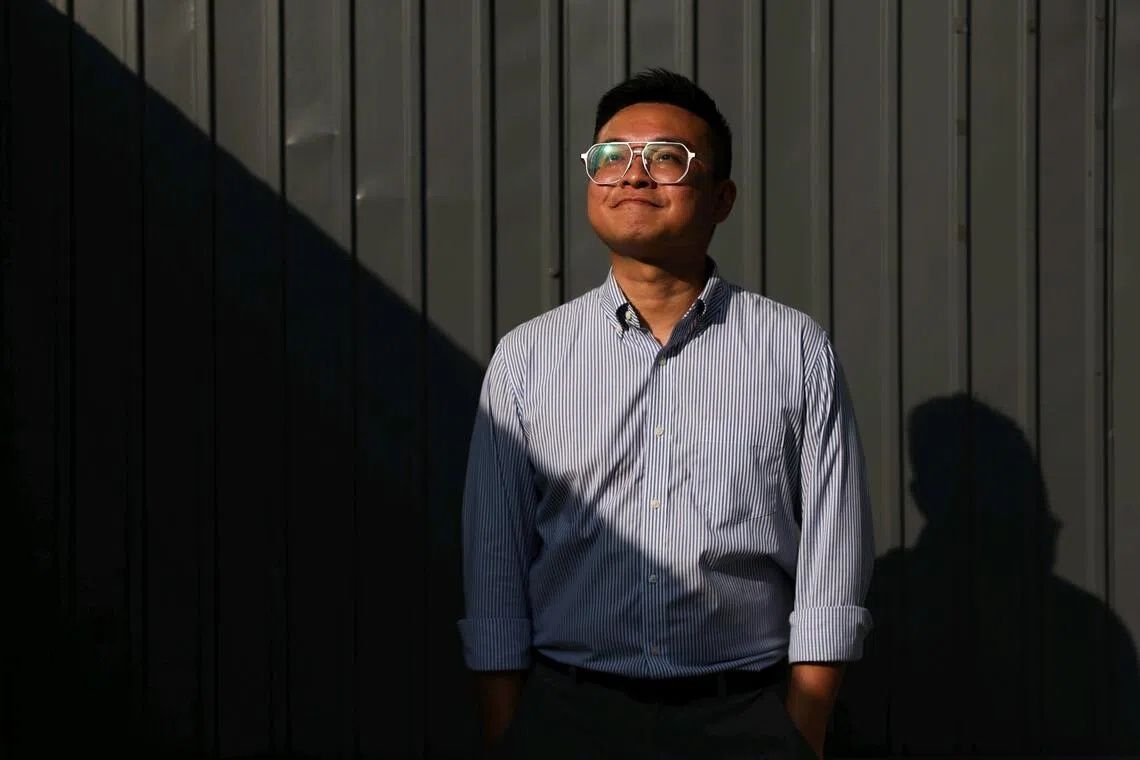
The respectable facade crumbled for Cornelyus Tan when authorities arrested him in 2022. For years, the 37-year-old had maintained what appeared to be an enviable professional life in marketing while struggling with a methamphetamine habit that secretly consumed him. His six-month detention at Changi Prison's Drug Rehabilitation Centre became a watershed moment, forcing him to confront a reality many in Singapore's educated classes prefer to keep hidden: addiction recognises no class boundaries. During his time in the facility, Tan encountered an unexpected cross-section of society – accomplished teachers, accomplished lawyers, successful bankers and other white-collar professionals wrestling with identical demons. As he reflected on this shared experience, Tan articulated a truth that challenges Singapore's meritocratic assumptions: "On paper, we look well. We are all very successful. But at the core of it, we had a common problem – the heart."
The statistics paint a striking picture of a shifting drug problem in Singapore. The number of inmates with tertiary education or higher qualifications housed in the Drug Rehabilitation Centre has surged dramatically, reaching 293 in 2025 compared with just 204 four years earlier in 2021. This cohort now represents approximately one in ten newly admitted detainees, climbing from 8.8 per cent in 2021. Their educational backgrounds span an impressively wide spectrum, encompassing polytechnic diplomas through to doctoral degrees. The scale of this trend cannot be dismissed as statistical noise; it represents a fundamental shift in the demographic profile of drug offenders that Singapore's law enforcement and rehabilitation institutions have grown increasingly invested in understanding.
While authorities have noted that those with tertiary qualifications remain proportionally under-represented within the overall Drug Rehabilitation Centre population compared to Singapore's general population, the upward trajectory merits serious consideration. The Central Narcotics Bureau has contextualised this trend partly as reflecting Singapore's broader educational advancement. Over the past decade, the proportion of residents aged 25 and above holding at least tertiary-level qualifications has expanded substantially, climbing from 42.9 per cent to 54.5 per cent. Within this framework, an increase in tertiary-educated drug offenders could be viewed as an inevitable consequence of demographic change. Yet this statistical interpretation glosses over a more troubling reality: highly educated individuals remain susceptible to addiction despite possessing educational and economic resources that might theoretically insulate them from substance abuse. The conviction of a medical doctor for drug use exemplifies how shocking these cases can feel within Singapore's society, where professional standing carries such cultural weight.
Counsellors working directly with drug offenders emphasise that addiction operates as a fundamentally democratic phenomenon, penetrating across educational, income and social strata with indiscriminate force. Gopal Mahey, a senior counsellor at the Centre for Psychotherapy, has observed firsthand that substance abuse does not confine itself to populations stereotypically associated with addiction – those lacking formal education, struggling with unemployment or marginalised socially. The constellation of factors driving this trend among educated professionals encompasses multiple vectors. The globalisation and expansion of the illicit drug market has made substances significantly more available than in previous decades, whilst the proliferation of synthetic drugs like methamphetamine has created new vectors for addiction previously less prevalent in Singapore's drug landscape.
Technology functions as perhaps the most transformative enabler of this shift. Where previous generations of drug users typically acquired illicit substances through pre-existing personal connections – family members harbouring addiction histories, longstanding friendships with habitual users, or neighbourhood dealers – the contemporary landscape has been fundamentally restructured. Tham Yuen Han, executive director of We Care Community Services, highlights how digital platforms have democratised access to drugs in ways that transcend traditional socioeconomic and geographic barriers. "Now with technology, you don't need those connections, because sometimes it just comes to you on social media," Tham explained, pointing to Telegram channels that openly peddle illicit substances. This technological disintermediation means that a young professional in a prestigious job can encounter drug suppliers with the same ease as they might scroll through other social applications, removing historical friction points that once protected educated populations.
Beyond mere accessibility, the Central Narcotics Bureau has identified peer influence, social media culture, and the glamorisation of drug use by entertainers as significant drivers of substance abuse among highly educated demographics. Exposure to more permissive drug cultures encountered through overseas travel and international connections further normalises experimentation among Singapore's professional classes. For many educated professionals, the initial appeal of drug use operates through a fundamentally different psychological calculus than for other populations. Rather than representing escape from poverty or desperation, substances become reframed as solutions to professional challenges and sources of competitive advantage. Tan's personal journey exemplifies this pattern: when a friend introduced him to methamphetamine at a house party in 2014, he was 25 years old, an arts college undergraduate with aspirations in fashion photography. The drug initially delivered what he characterised as a "Superman effect" – an adrenaline rush producing constant efficiency and happiness that seemed to unlock creative potential. His professional work received glowing reviews; a news outlet subsequently profiled him as a promising young photographer, and he attributed his creative breakthroughs to the drug's cognitive effects.
Methamphetamine ranks among the most commonly abused substances among tertiary-educated offenders, alongside cannabis, Ecstasy and heroin. For Tan and others like him, the substances operated not as expressions of rebellion or desperation but as implements of productivity and professional success. When physical consequences – dramatic weight loss, excessive perspiration – finally prompted him to quit in subsequent years, Tan managed to abstain. Yet in 2020, confronting intense professional stress as a regional marketing manager at an e-commerce firm, the familiar internal voice returned, whispering temptation: "Why not use? You know how it might help you." The relapse demonstrated how addiction among educated professionals operates through patterns of rationalisation that their professional confidence enables. Unlike populations struggling with obvious external barriers to recovery, educated professionals can construct narratives of controlled use and strategic implementation.
This psychological dimension distinguishes addiction among the highly educated from other populations in ways that complicate treatment and intervention. Samuel Chua, principal counsellor at the Institute of Mental Health's National Addictions Management Service, notes that well-educated professionals fundamentally mirror other addicts in their search for escape from pain and distress. Yet paradoxically, their education and professional accomplishments may create additional barriers to acknowledgement and recovery. Tham observes that highly educated individuals often possess what she characterises as an overconfidence in their capacity for self-control, rooted in genuine past successes in other life domains. This confidence breeds dangerous illusions that they possess unique capacity to regulate drug consumption that ordinary addicts lack. Tan developed an elaborate system of maintenance, utilising brief abstinence periods following comedowns to create an illusion of control and functionality. A former junior college teacher, identified as John to protect his privacy, similarly concealed his meth addiction for approximately six months whilst continuing his classroom responsibilities. He had encountered the drug at a social gathering in 2015, initially viewing it as a social lubricant facilitating connection with peers. As his addiction deepened and personal relationships deteriorated, he began missing classes, constructing increasingly implausible excuses when his reporting officer expressed concern. The gap between external professional performance and internal psychological disintegration grew wider until the structure inevitably collapsed.
For Malaysian readers and Southeast Asian professionals, Singapore's experience carries particular relevance. As the region's economies develop and professional classes expand, similar vulnerabilities likely emerge across neighbouring societies. The pathway from professional success to hidden addiction requires no special circumstances – merely the convergence of accessible drugs, digital supply networks, professional stress, and individual vulnerability. Singapore's response, emphasising rehabilitation rather than purely punitive approaches, offers a potential model for regional consideration. Yet the fundamental challenge remains: educational achievement and professional success provide no inherent immunity against the complex psychological mechanisms driving addiction. Understanding this reality, as Tan's public reckoning has illuminated, demands that Singapore and its regional peers reconceptualise drug abuse not as a problem confined to marginalised populations but as a challenge penetrating every demographic echelon.

