The streets of technology parks across Indian cities tell a story of a generation finding footholds in the artificial intelligence economy. Swarms of young professionals in their twenties crowd cafes during afternoon breaks, corporate identification badges swinging from their necks, while others log in from home on weekends to earn supplementary income by recording themselves performing mundane household tasks with iPhones mounted on their heads. This is the emerging reality of data annotation, a rapidly expanding sector that sits at the intersection of human labour and machine learning development. Unlike the coding positions that once promised lucrative careers to engineering graduates, data annotation demands less specialized training but growing volumes of human attention, creating an unexpected labour market that appears, for now, to match India's employment crisis with Silicon Valley's AI ambitions.
Data annotation represents a critical but unglamorous component of artificial intelligence development. Annotators serve as quality assurance specialists for machine-learning models, painstakingly examining thousands of video frames, images, and sensor readings to identify patterns, correct errors, and highlight scenarios that algorithms fail to recognize. Their work trains the AI systems that guide autonomous vehicles, control factory robots, manage retail inventory systems, and perform countless other tasks reshaping modern commerce and industry. The repetitive nature of the work—watching footage frame by frame, labelling objects, verifying AI predictions—requires patience and attention but not necessarily advanced technical credentials. This accessibility has transformed data annotation into an unexpected employment pathway for India's burgeoning cohort of young adults seeking stable income.
Objectways Technologies, headquartered in Karur, exemplifies this trend's scale. The firm employs 2,600 workers, with 300 new hires added within a single month, many of them recent graduates finding their first professional opportunity. Aiswarya Palaniswamy, a 25-year-old holding a master's degree in data analytics, joined Objectways last year and represents the typical profile: educated beyond the job's technical requirements but grateful for employment in an economy that cannot absorb graduates quickly enough. She and thousands like her watch footage from self-driving cars and humanoid robots, annotating how well artificial intelligence performs its intended tasks. What distinguishes Objectways' model is not merely the volume of hiring but the strategic location choice. Karur, a city of approximately 440,000 residents, offers lower operational costs than metropolitan centres while providing access to educated labour seeking better opportunities than agricultural or unorganized-sector work.
Compensation structures within the sector reveal the vast gap between formal office employment and freelance remote work. Objectways pays entry-level annotators between 210 and 260 US dollars monthly—equivalent to roughly 846 to 1,047 Malaysian ringgit—a salary that carries genuine purchasing power in smaller Indian cities though it would prove inadequate in metropolitan areas. The freelance component of the business operates on a fundamentally different economic model, offering 2.50 US dollars per hour for recorded footage provided remotely. This tiered compensation approach allows companies to access both committed full-time workforces in physical locations and flexible crowd-sourced labour globally, optimizing labour costs across markets. For Indian workers, even the lower freelance rates provide supplementary income that exceeds what many alternative gigs offer, creating an incentive structure that has attracted hundreds of thousands to the sector.
The employment challenge animating this sector's rapid expansion cannot be understated. Approximately 2 million Indians turn eighteen each month, a demographic wave that neither India's traditional private sector nor public employment schemes can adequately absorb. This reality forms the backdrop for political pressure on Prime Minister Narendra Modi's government, which has promised to lead India into a modernized, prosperous era. Recent protests, framed around education quality but rooted in frustration over limited skilled-job availability, forced the government to replace its education minister—a rare concession that underscores the urgency of the employment crisis. Data annotation jobs, while offering only incremental relief, address the immediate need for entry-level positions that require some education without demanding specialized credentials or years of training.
The Indian government views data annotation as a transitional opportunity rather than a permanent economic solution. S. Krishnan, leading the nation's information technology ministry, articulated a strategic vision positioning India to capture higher-value segments of the AI economy by leveraging its unique resources: 1.4 billion people capable of performing specialized tasks that machines cannot easily replicate. He cited examples including translation across India's multiple languages and remote patient monitoring in intensive care units—work currently performed by Indian companies for global clients. However, Krishnan cautioned against over-reliance on data annotation jobs that could evaporate as rapidly as previous generations of outsourced back-office work did. A 2025 report from a government think tank projects that artificial intelligence disruption could eliminate as many as 1.5 million information technology service positions, creating an urgent imperative to develop sustainable, higher-value employment alternatives rather than recreating the precarious conditions of earlier outsourcing booms.
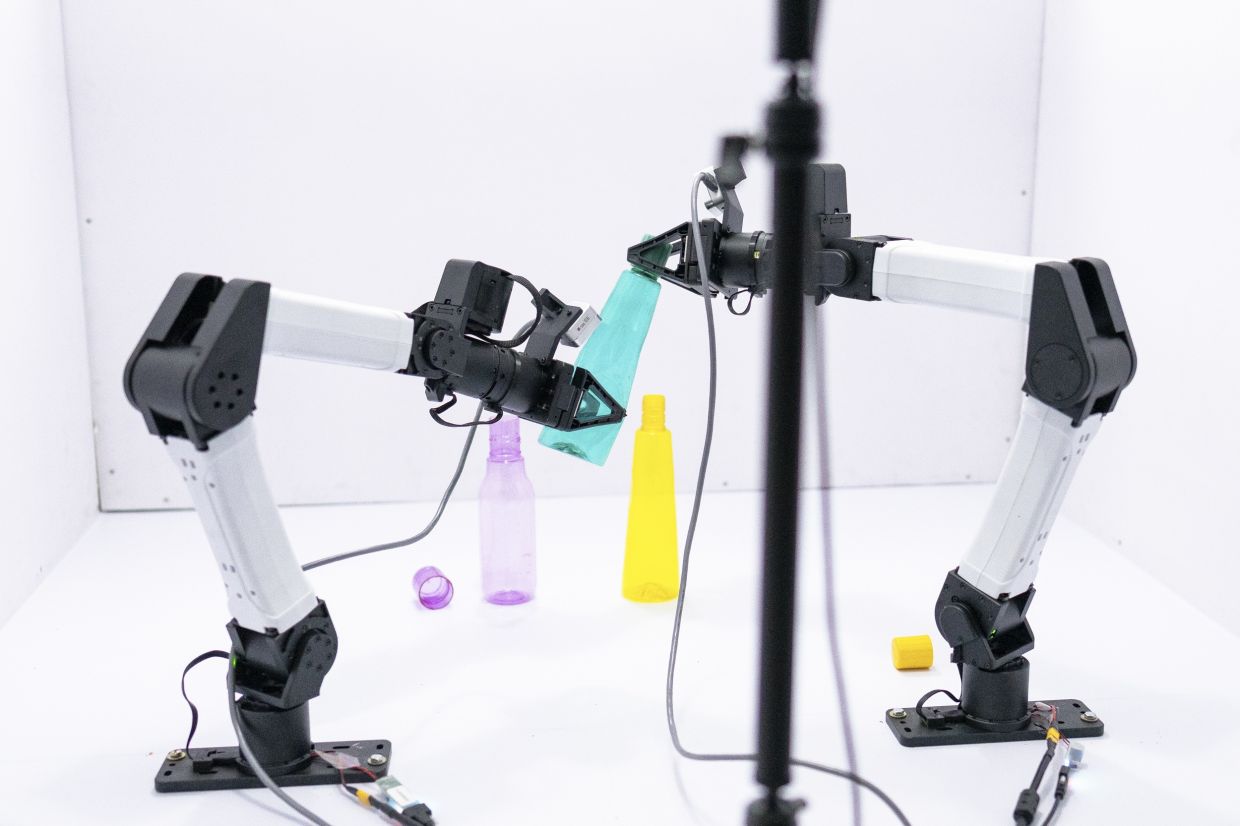
Objectways founder and CEO Ravi Rajalingam entered the data annotation field after experience streamlining lending operations through artificial intelligence implementation. He established the company in Karur in 2019, explicitly aiming to create employment for recent graduates in his hometown, with his wife hiring the initial twenty employees. His vision extended beyond merely processing data; Objectways invested in infrastructure including test kitchens, bathrooms, and bedrooms where workers operate robotic systems equipped with cameras, recording household tasks that train artificial intelligence to perform domestic work. Employees repeat actions like grasping objects, unscrewing containers, pouring liquids, and arranging food—seemingly simple tasks that require thousands of repetitions before algorithms achieve reliable performance. This hands-on component transforms data annotation from passive observation into active collaboration with robotics development, creating work that carries technical depth even if it does not require engineering degrees.
The company's expansion trajectory reveals both the sector's momentum and persistent constraints. Mohamed Afsar, a 29-year-old who has risen to oversee 600 employees across offices in Coimbatore, represents the internal advancement opportunities Rajalingam claims the company provides. Afsar describes the operation as immense and labour-intensive: 200 workers process seventy hours of video daily, yet this productivity falls far short of the thousand hours of footage arriving from clients every day. The arithmetic exposes a fundamental bottleneck—the volume of artificial intelligence training data continues expanding faster than the workforce processing it, creating both ongoing hiring opportunities and questions about whether human annotation can scale sufficiently or whether further automation of annotation itself will eventually compress the labour market. Hari Prasad, a 25-year-old engineer hired recently, captures the surreal nature of his work: training robots to perform tasks in a role he never anticipated when pursuing his engineering degree. His observation that society needs humans to train the machines that will eventually replace certain human functions highlights the peculiar transitional economy in which his generation works.
Projections suggest data annotation could contribute up to ten billion US dollars to India's economy by decade's end, a substantial figure that nevertheless appears modest compared to the broader artificial intelligence market or the scale of India's overall economic activity. Economists and policymakers remain unconvinced that data annotation alone will provide India with meaningful competitive advantage in the global AI race, particularly given that much of the work serves foreign companies developing products outside India's borders. The Modi government prefers that Indian companies develop their own artificial intelligence applications, creating domestic value chains and keeping economic benefits within the country. This preference creates tension between the immediate employment gains from outsourced data annotation and the longer-term goal of establishing India as an AI innovator rather than merely a service provider processing data for others' innovations. The distinction carries significant implications for India's economic trajectory and the sustainability of opportunities for the millions entering the labour market annually.

