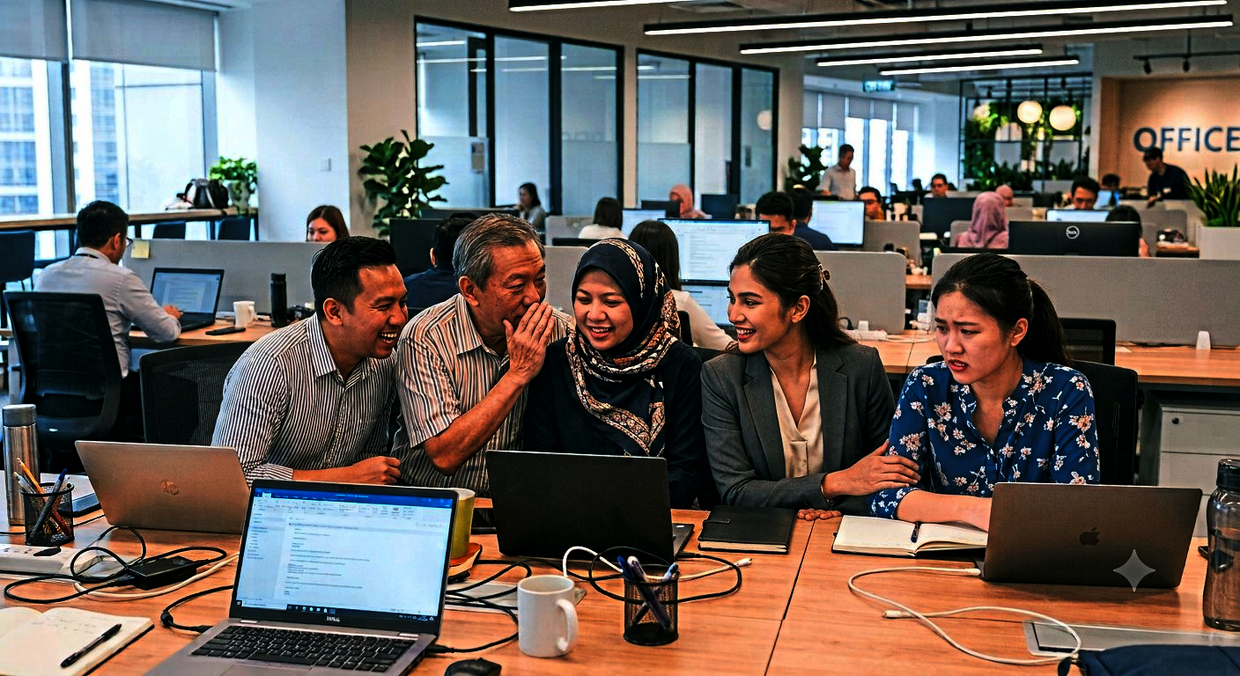
How many times have we found ourselves at a coffee table, in a family chat group, or scrolling through social media feeds when a conversation takes a darker turn? What begins as casual discussion subtly shifts into character assassination of someone absent from the room. Opinions calcify into accusations. Frustration hardens into judgment. By the time the exchange ends, we leave feeling something we didn't bring to the table: a weight of unease that lingers long after the words have been spoken. The Malaysian Mental Health Association (MMHA) regularly encounters patients struggling with anxiety, burnout, depression and loneliness, yet these struggles often trace back not to dramatic crises but to the accumulated damage of daily toxic interactions that few acknowledge or address directly.
The erosion of emotional well-being happens gradually, almost invisibly. We tend to fixate on major life stressors—job loss, relationship breakdown, serious illness—without recognizing that smaller, repeated wounds can be equally corrosive. Consider the effect of habitual gossip: even when we stay silent, a part of us becomes uneasy. We wonder, perhaps without conscious awareness, whether those speaking negatively about an absent colleague might say similar things about us when we leave the room. That fifteen-minute conversation lodges in our mind for days, creating a background hum of anxiety and eroding our sense of psychological safety within our own communities. The research supporting this observation is now clear: our social environments shape how secure and connected we feel, and toxic communication patterns directly influence our mental health outcomes.
Words function as architects of emotional climate. The tone in our homes, workplaces, friendships and online spaces determines whether we experience ourselves as safe, accepted and valued. When conversations become habitually negative, judgmental or cruel, they gradually deplete our reserves of peace and trust. This dynamic is particularly pronounced in cultures like Malaysia's, where extended family networks and tight-knit communities mean that negative atmospheres spread quickly and affect multiple generations. A family WhatsApp group built on criticism rather than support becomes a source of dread rather than connection. A workplace where every meeting involves finding fault becomes a place where people withhold their authentic thoughts and contributions.
It is crucial to distinguish between conversations that harm and conversations that challenge constructively. Avoiding difficult dialogue entirely is neither possible nor healthy. Honest disagreement strengthens societies by preventing consensus-without-thought. Constructive criticism improves institutions by identifying real problems. Meaningful dialogue deepens relationships by creating genuine understanding. The critical distinction lies in intent and effect: conversations that seek understanding and solution-building strengthen the fabric of relationships, while conversations designed primarily to judge, belittle or inflame corrode that same fabric irreparably. A person can disagree sharply with another's political views while still recognizing their humanity; this is the difference between dialogue and toxicity.
Cultural wisdom across generations has understood this principle long before modern psychology confirmed it. A careless remark spoken in moments can wound someone for years. This insight, embedded in proverbs and teachings across Malaysian, Indian, Chinese and Islamic traditions, reflects a profound understanding of how words shape character and community. Contemporary neuroscience and psychology have simply given us new language for something our ancestors knew intuitively: that the social environment we create through our communication patterns directly shapes human flourishing or suffering.
Consider the cumulative effect of environments built on fault-finding. When every discussion revolves around identifying mistakes—in parenting choices, personal appearance, political opinions, or life decisions—people absorb a corrosive message: that imperfection is intolerable and compassion is conditional. Under such conditions, people gradually stop speaking authentically. They curate their words carefully, afraid of judgment. They withhold their struggles, doubts and questions. The relationship or group that should provide support instead becomes a source of performance anxiety. This pattern is particularly damaging in family systems, where conditional acceptance creates long-term attachment wounds.
The Malaysian context adds particular layers to this challenge. Rapid urbanization and digital connectivity have transformed how conversations happen, creating new channels for toxic communication while sometimes eroding the face-to-face accountability that once constrained harmful speech. Social media platforms amplify outrage and spread negativity at unprecedented speeds. Yet simultaneously, Malaysia's diverse, multi-generational communities often gather in close physical proximity—family dinners, workplace events, neighborhood gatherings—where toxic atmospheres become inescapable. There is nowhere to step away from the ambient negativity.
Recognizing when a conversation has become toxic requires honest self-awareness. The warning signs include: Are we discussing someone who cannot defend themselves? Has the tone shifted from problem-solving to character judgment? Are we fueling each other's outrage rather than seeking understanding? Would we feel comfortable if the person being discussed could hear our words? Once we identify these patterns, sometimes the healthiest response is surprisingly simple and profound: we can choose to leave the conversation, both physically and psychologically. This is not avoidance of difficult dialogue but rather an act of self-protection and boundary-setting that models healthier communication for others.
The invitation to transform our everyday conversations is not naive idealism but pragmatic mental health practice. When we choose to speak with greater intentionality—asking clarifying questions before condemning, acknowledging complexity rather than reducing people to their worst moments, extending compassion even in disagreement—we change the emotional climate not just for ourselves but for everyone in our circles. In a country as interconnected and community-oriented as Malaysia, these small choices ripple outward in ways we may never fully witness. A colleague who experiences less judgment at work becomes more engaged and creative. A family member who feels genuinely heard becomes more open to others' perspectives. A neighborhood where conversation emphasizes connection over criticism becomes a place where people actually want to spend time.
The path forward requires both individual accountability and collective cultural shift. Individually, we might pause before speaking negatively about someone absent, or ask ourselves whether our words are building understanding or inflaming division. We might practice the discipline of speaking directly to someone about concerns rather than about them to others. We might model a different way of being in conversation—curious rather than certain, humble about our own blind spots, generous in interpreting others' intentions. Collectively, Malaysian communities—whether in homes, workplaces, schools, religious institutions or online spaces—might establish norms that protect the emotional safety of everyone within them. This is neither about enforcing artificial positivity nor suppressing legitimate conflict, but rather about channeling our communication toward genuine connection and growth rather than toward judgment and division.

