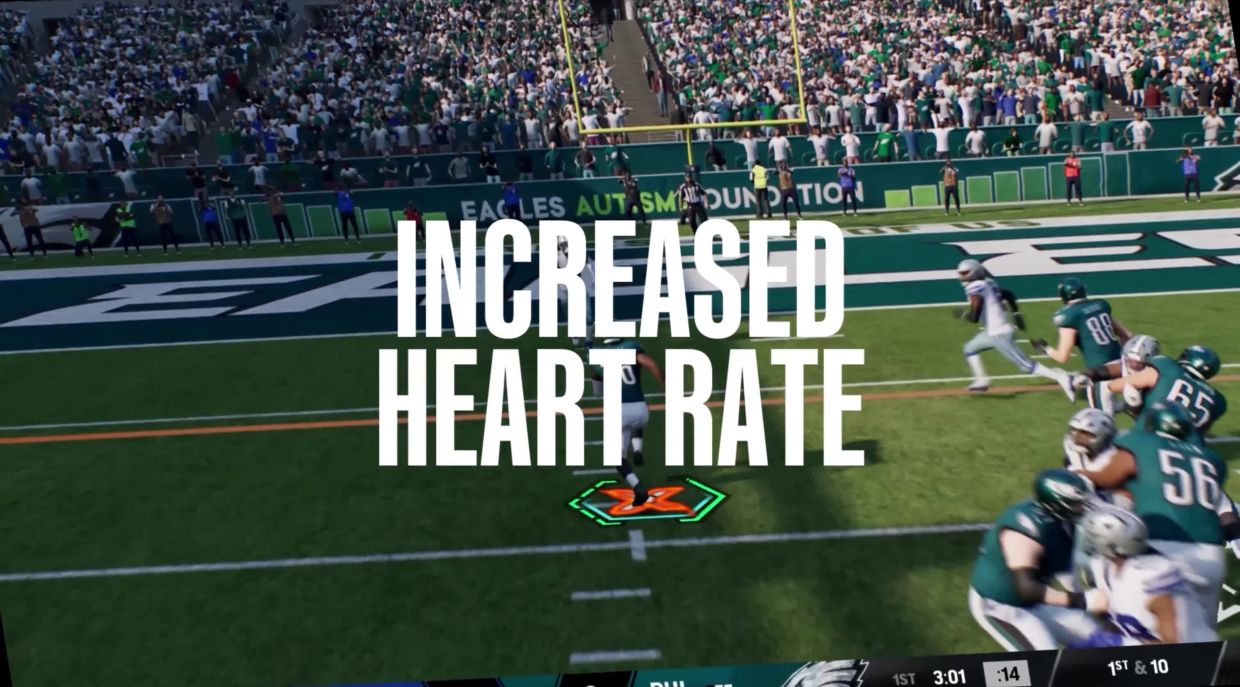
A linebacker's tackle sends New York Giants running back Cam Skattebo's head crashing to the ground in a routine play sequence. For the millions of casual gamers who play Madden NFL on console and PC, this collision passes without incident. But for those who have installed a freely available modification of the game, the outcome transforms into something far more uncomfortable: the screen distorts, vision blurs, ears ring with a high-pitched tone, the display shakes, and the player experiences simulated symptoms of concussion including nausea, light sensitivity, dizziness, headaches and shortness of breath. The modest reach of this modification—known simply as a mod—carries an outsized message about the relationship between entertainment, athletic realism, and public health awareness.
The Madden franchise, one of the most commercially successful sports gaming series in history, has become an unlikely battleground in the ongoing conversation about how American football addresses brain injuries. Electronic Arts, the publisher behind Madden, has maintained a conspicuous silence on the modification, declining to comment when approached. Yet the very existence of this player-created feature exposes a deliberate gap in the game's design: the complete absence of concussion mechanics from gameplay. This omission stands in sharp contrast to other injuries that regularly appear in matches, from ankle sprains that force difficult substitution decisions to the lingering physical consequences that persist across multiple games.
Chris Borland, a former linebacker who famously walked away from the NFL following his rookie season due to concerns about long-term brain injury, has praised the mod's intent to raise public consciousness. However, he has also pointed out a fundamental limitation in translating real-world neurological trauma into interactive entertainment. "It's really realism up to a point," Borland observed, questioning whether a visual and audio representation of concussion symptoms can truly capture the profound aftermath of such injuries. He wondered aloud whether any game feature could authentically convey the psychological and relational damage that follows a head injury, such as the irritability and relationship strain that many former athletes experience.
The timeline of concussions in Madden reflects broader shifts in how American sports culture has grappled with brain injuries. In versions from the 1990s, ambulances would appear to remove injured players from the field. Well into the 2010s, players who visibly clutched their heads in pain would undergo what appeared to be concussion assessment protocols. Yet by the end of the 2010s, concussion mechanics had vanished entirely from the game. This disappearance coincided with a period when the NFL faced intense scrutiny over its handling of head injuries, including the 2015 revelation that Hall of Fame linebacker Junior Seau had chronic traumatic encephalopathy, a degenerative brain condition associated with repeated head trauma. The league eventually settled a lawsuit brought by thousands of former players for over US$1.5 billion, acknowledging years of inadequate disclosure about brain injury risks.
Ben Utecht, a former tight end who retired from professional football in 2010 specifically because of concussion concerns, has articulated the competing pressures that likely influenced the decision to remove concussions from Madden. The NFL, according to Utecht, had little incentive to emphasise head injuries in any associated media because such visibility might discourage parents from encouraging their children to participate in youth and high school football. Yet Utecht has also argued that selective injury representation creates its own misleading message: if the game includes ankle injuries, shoulder strains, and knee ligament damage, then omitting concussions suggests they are somehow less serious or less worthy of realistic portrayal.
Documentation from NFL licensing reviews of Madden games reveals the complexity underlying these decisions. Each year, representatives from the league's licensing department examine the game to ensure what they term "quality control," and they maintain the authority to suggest modifications to Electronic Arts. According to a former league executive with direct knowledge of these discussions, the NFL and the game developer deliberated extensively about whether to include concussion evaluation sequences. The league reportedly wanted such mechanics to be incorporated with authenticity, recognising that in real matches, identical impacts to the head can result in concussions for one player but not another, making any universal algorithm inherently imperfect.
The real-world context of NFL concussions has only intensified in recent years. Last season saw 168 reported concussions across the league, up from 129 the previous year—an increase that the NFL attributed to rule changes that encourage more kickoff returns and thus create more contact opportunities. The league's response has included a formal sideline protocol requiring players suspected of concussions to undergo testing in an on-field blue tent before they can return to play. Yet video game designers face the challenge of translating this clinical process into entertaining interactive mechanics that neither trivialise the injury nor make gameplay tedious.
The concussion mod itself represents an extraordinary technical achievement: 9,000 lines of computer code designed to detect impact events in the game and trigger a cascade of disorienting sensory effects. The creators of this modification harbour an earnest hope that allowing gamers to experience, however briefly and imperfectly, the immediate symptoms of concussion might increase public awareness about the condition's seriousness. They believe that reaching the millions of Madden players—a demographic that encompasses casual fans, young people, and individuals who might never otherwise engage with concussion education materials—represents a significant opportunity for consciousness-raising about a public health issue that affects not only professional athletes but also youth and amateur players.
The personal story behind the mod's creation underscores why this issue matters beyond video game design conventions. Kristen Thomson Sheely, executive director of the Derek Sheely Foundation, was motivated to support this project because her son Derek died at age 22 after sustaining a catastrophic brain injury during a college football practice in 2011. Derek, a fullback at Frostburg State University in Maryland, had reportedly complained of a headache after an earlier head contact, only to be sent back onto the field by a coach who dismissed his concerns. During a subsequent seven-on-seven drill, Derek collided with a defensive back and walked to the sideline, where he collapsed within minutes and never regained consciousness. The resulting legal settlement, worth US$1.2 million, required the university to retire Derek's number and display it permanently on campus.
When players using the concussion mod complete their games, they encounter a memorialisation of Derek Sheely: his retired jersey number 40 unfurls across the screen, serving as a reminder that concussions represent not abstract statistics or design quandaries but tragic human loss. Thomson Sheely has expressed hope that this feature will reach audiences who would otherwise never encounter concussion education materials. The very popularity of Madden among young people, she noted, makes the mod a potentially powerful vehicle for awareness, capable of touching demographics far beyond the usual reach of formal public health campaigns or organisations dedicated to brain injury prevention.
The existence of this community-created modification raises uncomfortable questions about corporate responsibility and the relationship between entertainment and public health. Why should the burden of representing concussion realism fall to unpaid modders and grieving families rather than to the multi-billion dollar franchise itself? Electronic Arts has chosen silence rather than engagement, neither embracing the mod nor explicitly rejecting it. The NFL, meanwhile, maintains its complex balancing act: enforcing stricter concussion protocols on the field while seemingly preferring that the seriousness of these injuries remain visually absent from the entertainment products that promote and celebrate the sport.
For Malaysian and Southeast Asian audiences, this debate carries particular resonance as American football gradually expands its global footprint and as video gaming culture becomes increasingly influential in shaping young people's understanding of sports and injury. The decisions made by game designers and sports leagues about how to represent or conceal injury mechanics send implicit messages about which health risks matter enough to depict authentically. The Madden concussion mod represents an important grassroots challenge to those editorial choices, arguing that authentic representation might prove more socially responsible than comfortable omission.

