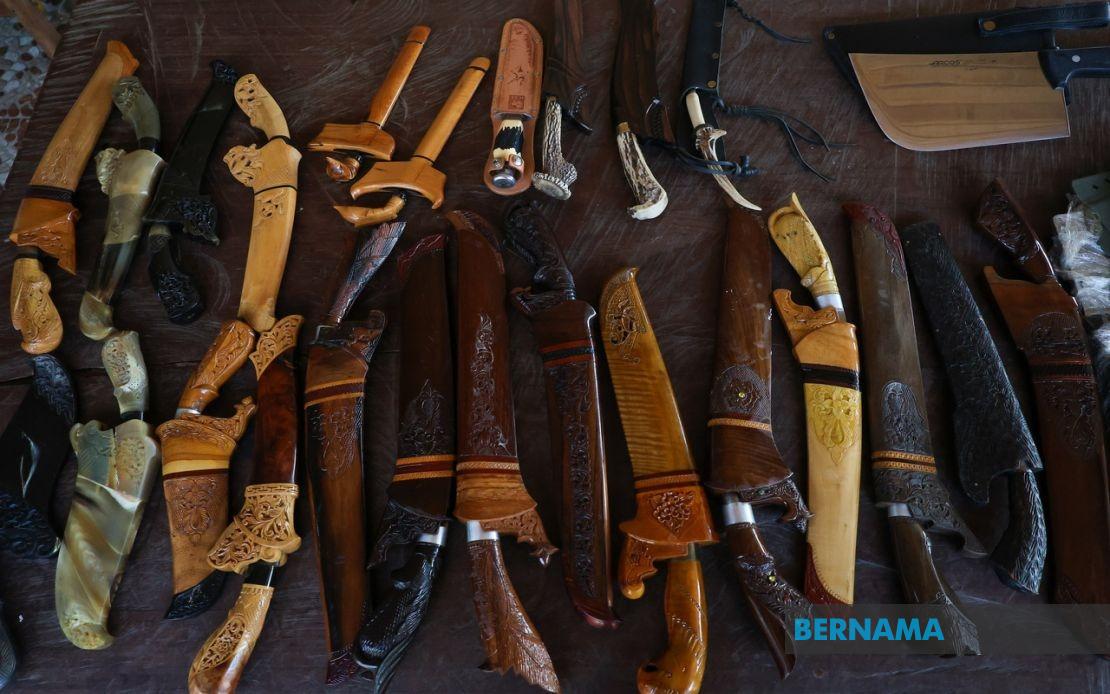
The bird-headed golok, an elegant variation of Malaysia's iconic machete, stands as a poignant symbol of Kelantan's eroding blacksmithing traditions. Master craftsmen who once perfected these blades have passed away with alarming regularity, taking decades of accumulated knowledge and artistic skill with them. Ahmad, a 71-year-old enthusiast, has become an unlikely guardian of this heritage, dedicating himself to preserving pieces that might otherwise fade into obscurity. His quiet crusade against cultural amnesia offers both hope and a sobering reminder of how fragile traditional crafts have become across Southeast Asia.
The distinctive bird-shaped hilt that gives the golok its character represents far more than decorative flourish. According to Ahmad, the design serves a practical purpose, providing a secure and comfortable grip during use, while simultaneously embedding layers of historical and artistic meaning. The bird motif itself carries references to the Petalawali bird figure that once adorned ancient boats commissioned by the Kelantan Sultanate, vessels that played crucial roles in royal and trade missions throughout the region. Each carved detail therefore connects users to centuries of maritime heritage and sultanate power, making the weapon as much a cultural artifact as a functional tool.
What makes Ahmad's perspective particularly valuable is his understanding that each handcrafted piece represents the maker's individual identity and signature. Unlike mass-produced weapons that roll off factory floors indistinguishable from one another, traditional goloks and keris carry the unmistakable mark of their creator. This uniqueness has paradoxically increased their value even as fewer people commission them. Collectors and heritage enthusiasts now recognise that when a master blacksmith passes away, their distinctive techniques and aesthetic sensibilities vanish permanently unless they have trained successors. Ahmad articulated this troubling reality recently, noting that craft knowledge dies with the craftsperson unless deliberately transmitted across generations.
Ahmad's journey into weapon collecting began roughly two decades ago through an entirely serendipitous friendship. While assisting a blacksmith companion with hilt and scabbard construction, he developed a genuine appreciation for the meticulous work involved. That initial hands-on exposure evolved into a consuming passion, transforming him from casual observer into dedicated preservationist. Over the intervening years, he has assembled a remarkable collection spanning more than 100 traditional and contemporary weapons, assessed at approximately RM20,000 in total value. His acquisitions showcase an impressively cosmopolitan reach, sourced from across Europe, East Asia, and North America, including pieces from Germany, Sweden, Denmark, England, the United States, Japan, China, Spain, and Portugal.
Within this collection lie treasures that exemplify the diversity of traditional weapon-making across cultures. A knife boasting a deer-antler hilt from Sarawak demonstrates the sophistication of indigenous East Malaysian craftsmanship, while a keris fashioned from black kemuning wood with golden kemuning wood ornamentation represents the pinnacle of Peninsular Malaysian artisanal technique. These objects tell stories of regional trading networks, cultural exchange, and the high esteem in which superior craftsmanship was historically held. They also serve as tangible reminders that Malaysia's weapon-making heritage was never isolated, but instead evolved through sustained contact with global traditions and materials.
Preservation of these artifacts demands constant vigilance and meticulous care. Ahmad maintains his collection in a dedicated cabinet, treating each piece as a museum-quality object rather than merely personal property. Every three months, he conducts thorough inspections, meticulously applying protective oil to blades to forestall rust and deterioration. This disciplined maintenance regime reflects an understanding that heritage objects require active intervention to survive, particularly in Malaysia's tropical climate where humidity and salt air accelerate decay. The effort involved underscores a sobering truth: cultural preservation cannot be passive or occasional, but demands regular, unglamorous labour.
Despite receiving enquiries from collectors and dealers willing to purchase individual items, Ahmad has resolutely declined all offers. His reasoning reveals a custodial philosophy rather than mercenary impulse: many pieces were created by blacksmiths who have since died, and their distinctive workmanship cannot be replicated by anyone living. To sell them would be to sever their connections to Malaysian heritage and scatter them across private collections where they would cease serving any public cultural function. This stance distinguishes Ahmad from mere accumulator or speculator, positioning him instead as a steward holding assets in trust for future generations.
The broader context of Ahmad's efforts becomes increasingly significant when considered against the regional decline in traditional craftsmanship. Across Southeast Asia, young people abandon apprenticeships in favour of modern service-sector employment that offers steadier income and less physical hardship. Blacksmithing, metalworking, and blade-smithing require years of training, physical strength, and demand-side knowledge that younger generations may not possess. The transmission chain breaks; knowledge vanishes. In Malaysia specifically, the concentration of remaining master craftsmen in Kelantan and scattered locations throughout Peninsular Malaysia suggests that within a generation or two, living practitioners may become extinct.
Ahmad's vision for the future refuses pessimism, however, recognising that innovation need not mean abandonment of tradition. He advocates for contemporary approaches to weapon-making that preserve the essential identity, artistry, and cultural values embedded in the craft, while potentially adapting materials, marketing, or methods to appeal to modern sensibilities. This position acknowledges that heritage cannot be frozen in amber; it must evolve to survive. Blacksmithing traditions might incorporate contemporary design elements, serve ceremonial or sporting purposes rather than warfare functions, or be transmitted through formal educational institutions rather than purely familial apprenticeship.
For Malaysian readers, Ahmad's work carries implications extending beyond nostalgic appreciation of historical artifacts. The vanishing of traditional craftsmanship represents an erosion of cultural identity and loss of knowledge systems that have sustained communities for centuries. Each extinct craft represents millions of hours of accumulated experimentation and refinement that will never be recovered. In an era of globalisation and cultural homogenisation, deliberate efforts to document, preserve, and transmit these traditions become acts of resistance against cultural flattening. Ahmad's quiet dedication suggests that such preservation need not depend on government funding or institutional support, though those would certainly help, but can begin with individuals who decide their cultural heritage merits their own sustained attention and resources.

