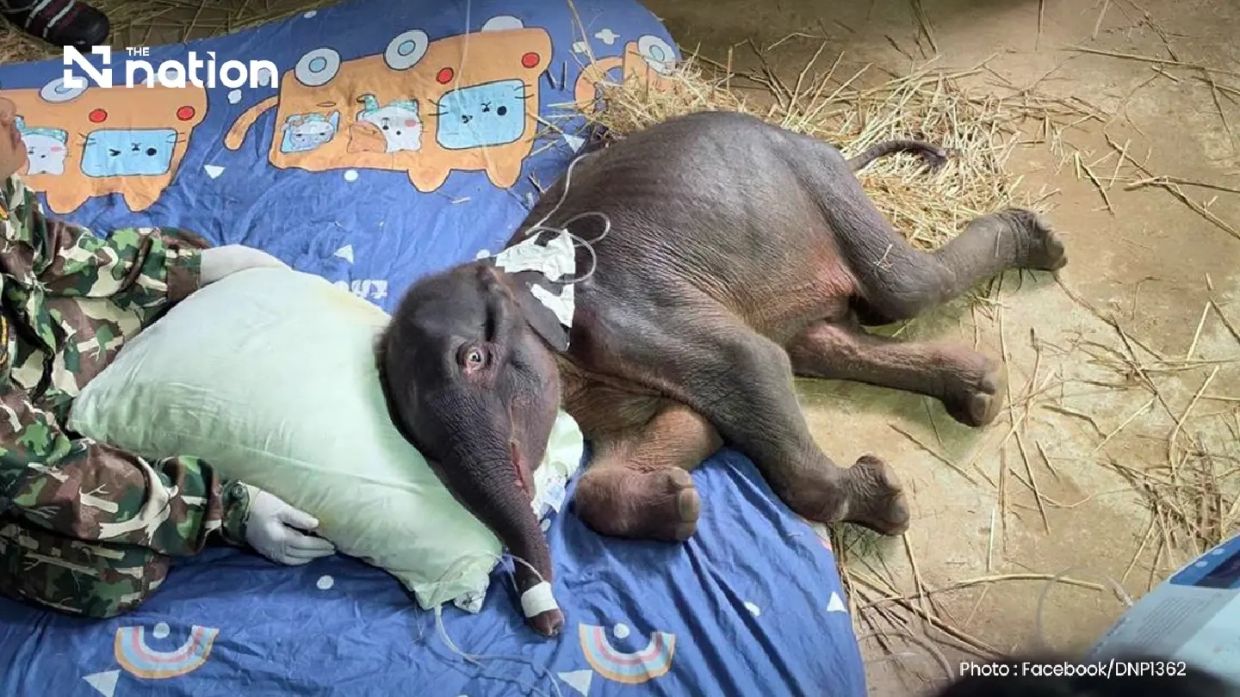
A young wild elephant that had captured the attention of Thai wildlife officials and local communities died early Tuesday morning at Sai Yok National Park in Kanchanaburi province, marking the tragic conclusion to a week-long rescue and care operation. The calf, known as Jiew Sai Yok, succumbed at approximately 2am after what veterinarians believe was acute kidney failure, according to an announcement by the Department of National Parks, Wildlife and Plant Conservation. The death has left the dedicated team of rescuers and medical professionals who fought to save the young elephant deeply grieving the loss.
Jiew Sai Yok's ordeal began when villagers discovered the distressed calf near the banks of Huai Mae Nam Noi on July 30. The elephant appeared weak and disoriented, abandoned in a remote, densely forested area that presented significant logistical challenges for any potential rescue. Local residents and officials coordinated a water-based rescue operation, using boats to navigate to the animal and bring it to safety. The initial assessment suggested the calf had been separated from its mother and the broader herd for approximately two days, a critical period during which the young animal would have missed the nourishment and protection essential for survival.
Following the initial discovery, rescue teams maintained an overnight vigil in hopes that the herd would return for the abandoned calf. During those long hours, observers listened to the young elephant calling out repeatedly for its mother, creating an emotionally charged scene that underscored the gravity of the situation. However, no response came from other elephants in the area, indicating that the calf's family group had either moved deeper into the forest or permanently abandoned it. This absence of the herd forced officials to take the unprecedented step of assuming complete responsibility for the animal's welfare.
A specialized veterinary assessment conducted on July 31 revealed the extent of Jiew Sai Yok's deterioration across multiple dimensions. The physical examination documented severe dehydration, multiple abrasions and blisters covering its body, and internal mouth lesions approximately the size of a 10-baht coin. The calf displayed signs of conjunctivitis caused by insect activity around its eyes, while also showing characteristic sores at the navel and decaying tissue across its trunk. Perhaps most telling were metabolic indicators visible in its bodily functions: deeply discoloured urine ranging from dark yellow to reddish hues suggested either active infection or profound dehydration, while loose, foul-smelling faeces pointed to gastrointestinal distress. The combination of these symptoms painted a picture of an animal in critical condition on multiple physiological fronts.
Transporting the distressed calf from the remote waterside location to proper medical facilities required substantial logistical coordination. Veterinary teams undertook a boat journey lasting one to two hours through challenging terrain, with the situation complicated by heavy rainfall that had elevated water levels throughout the region and increased the risk of dangerous forest runoff. Once the calf reached Sai Yok National Park headquarters, it was placed under intensive 24-hour care regimens designed to address its most pressing medical needs. The clinical environment provided controlled conditions and continuous monitoring that would have been impossible in the wild.
During its final night, medical staff implemented aggressive supportive care protocols including intravenous fluid administration and continuous oxygen supplementation to maintain vital functions. Despite these interventions, the calf's underlying condition continued to deteriorate gradually. It retained the capacity to consume milk at regular two-to-three-hour intervals, typically drinking between 350 and 500 millilitres per feeding, demonstrating some willingness to participate in recovery efforts. Yet concurrent symptoms persisted: the calf oscillated between periods of weakness and attempts to stand, while its gastrointestinal and urinary systems continued displaying concerning signs consistent with organ dysfunction.
The final moments unfolded in the early morning hours as the exhausted young elephant drifted into sleep around 2am on Tuesday. Despite the veterinary team's immediate implementation of full resuscitation procedures upon recognizing the calf's condition had become terminal, their efforts proved unsuccessful in reversing the trajectory of its illness. The peaceful passing, while perhaps a mercy given the calf's suffering, represented the conclusion of hopes that intensive intervention might salvage the animal's life. Preliminary findings from laboratory blood work suggested acute kidney failure as the primary pathological process, though veterinarians have noted the possibility of congenital abnormalities affecting internal organ systems that may have predisposed the calf to such acute deterioration.
The Department of National Parks has announced plans for a comprehensive necropsy examination and extensive laboratory testing of tissue samples to establish the definitive cause of death. These investigations will provide crucial insights into whether Jiew Sai Yok's demise resulted from acute failure of previously healthy organs, underlying birth defects, or a combination of factors including malnutrition and stress from separation from its mother. Such information could inform future protocols for rescue and rehabilitation of orphaned wild elephants, a scenario that occurs periodically as human settlement expands into wildlife corridors across Southeast Asia.
This incident underscores the complex challenges facing wildlife conservation in modern Thailand, where orphaned or injured animals increasingly fall under human care due to habitat fragmentation and human-wildlife conflict. The death of Jiew Sai Yok, despite best efforts by dedicated professionals, illustrates the limitations of rescue operations when animals arrive in severely compromised condition and potentially with pre-existing medical vulnerabilities. For the veterinary teams and park officials involved, the experience has reinforced both the importance of wildlife rescue infrastructure and the sobering reality that not all interventions can overcome the profound shock that separation from natural family units inflicts on dependent young animals.

