Thailand is preparing to launch a major procurement exercise this December, opening tenders for eight civil engineering contracts that will form the backbone of the second phase of the Thai-Chinese high-speed railway project. The contracts relate to the 357.12-kilometre section extending from Nakhon Ratchasima northeastward to Nong Khai, representing the continuation of a transformative infrastructure initiative aimed at connecting Bangkok to the northeastern border region. The overall investment commitment for this segment amounts to 341.35 billion baht, underscoring the financial scale and strategic importance of the undertaking.
Deputy Prime Minister Phiphat Ratchakitprakarn, who also holds the Transport Ministry portfolio, presided over the opening session of 2026 for the bilateral committee governing Thai-Chinese railway cooperation. His involvement signals the project's priority status within the current government's infrastructure agenda. Officials are currently finalizing the technical specifications and cost baselines that will form the basis for competitive bidding, while simultaneously progressing with land acquisition procedures—a typically protracted element of railway development across Thailand's diverse geography and land ownership patterns.
The timeline for this second phase reflects both the ambitions and challenges of large-scale infrastructure work in Southeast Asia. Construction is scheduled to commence in 2027, with completion targeted for 2031. This four-year construction window will be critical for maintaining momentum on a project that has already consumed significant planning resources and political capital. The completed corridor will feature five stations strategically positioned along its length, designed to serve regional hubs and facilitate economic integration across northeastern Thailand.
Progress on the first phase, stretching 250.77 kilometres between Bangkok and Nakhon Ratchasima, demonstrates the project's advancing maturity. This initial segment encompasses six stations and carries an investment value of 179.41 billion baht. Of the 14 civil works contracts underpinning this phase, two have reached completion, ten are currently under active construction, and two remain in procurement stages. The overall construction progress rate of 55.27% suggests the project remains on track despite the typical delays that plague large infrastructure works in Thailand and the region.
Specific sections of the first phase are entering their final stages. The Muak Lek and Lam Takhong tunnels, both substantial underground works under Contract 3-2, are nearing completion. Similarly, the Lam Takhong-Sikhio and Kut Chik-Khok Kruat sections under Contract 3-4 are approaching their finish. Two particularly critical urban sections are receiving accelerated attention: the Bang Sue-Don Mueang corridor under Contract 4-1 and the Ban Pho-Phra Kaeo section under Contract 4-5. These Bangkok-area routes require expedited processing to enable contract signing and construction commencement, reflecting the complexity and planning intensity of integrating high-speed rail into Thailand's densely populated capital region.
A notable operational decision has been made regarding the Bang Sue-Don Mueang section. The State Railway of Thailand, the national railway operator, will undertake the civil engineering works for this segment directly rather than through traditional contractor procurement. This arrangement may reflect both the technical sensitivities of this urban corridor and the desire to maintain state control over critical infrastructure components within the Bangkok metropolitan area. Such direct execution also potentially streamlines decision-making and reduces contractual complexity in a politically sensitive zone.
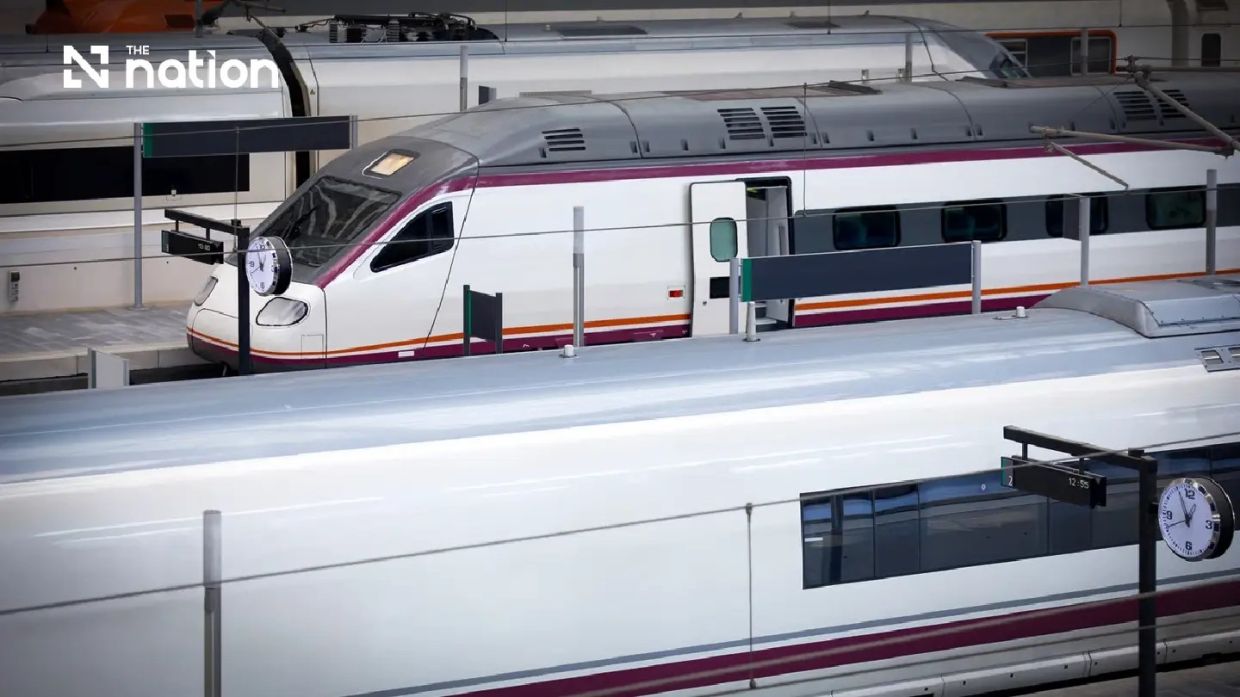
Beyond construction timelines, the project is advancing on parallel fronts that will shape its long-term operational character. The Rail Technology Research and Development Agency has prepared preliminary designs and colour schemes for the trains that will eventually operate across both phases of the network. These design selections carry significance beyond mere aesthetics; they are intended to establish the foundation for detailed engineering specifications and support the development of domestic production capabilities for rolling stock. This approach aligns with broader Thai industrial policy objectives of building local manufacturing capacity in high-technology sectors.
Administrative refinements continue to enhance project efficiency. The committee has decided to separate the construction of a railway crossing bridge within the first phase into a distinct contract award. This separation is designed to streamline procedural requirements and maintain schedule adherence—a pragmatic adjustment that reflects lessons learned from managing complex transport infrastructure across multiple contractors and jurisdictions. Such operational adjustments, though sometimes overlooked in headline coverage, often prove decisive in determining whether projects stay on track or accumulate the delays that plague many Southeast Asian infrastructure initiatives.
For Malaysia and the broader region, Thailand's high-speed rail expansion carries implications beyond its immediate borders. The Bangkok-Nong Khai corridor will ultimately enhance regional connectivity, potentially facilitating trade flows and tourism across Southeast Asia's northeastern corridor. The project represents substantial commitment to modern transport infrastructure at a time when regional governments are competing to position themselves as logistics and transit hubs. Thailand's dual-phase approach—completing the Bangkok-Nakhon Ratchasima section while preparing the northeastern extension—demonstrates a methodical strategy for managing large capital expenditures across multiple budget cycles.
Deputy Prime Minister Phiphat emphasized that the initiative transcends mere transportation functionality. He framed the project as a mechanism for improving overall mobility while simultaneously catalyzing economic expansion across regions currently at the periphery of Thailand's primary economic zones. The emphasis on accessibility and safety standards suggests an intention to position the railway as more than infrastructure—as a tool for inclusive development and regional balancing. For a country frequently challenged by regional inequality, such rhetoric carries genuine strategic weight, even as implementation will ultimately determine whether promises of broad-based economic benefit materialize.

