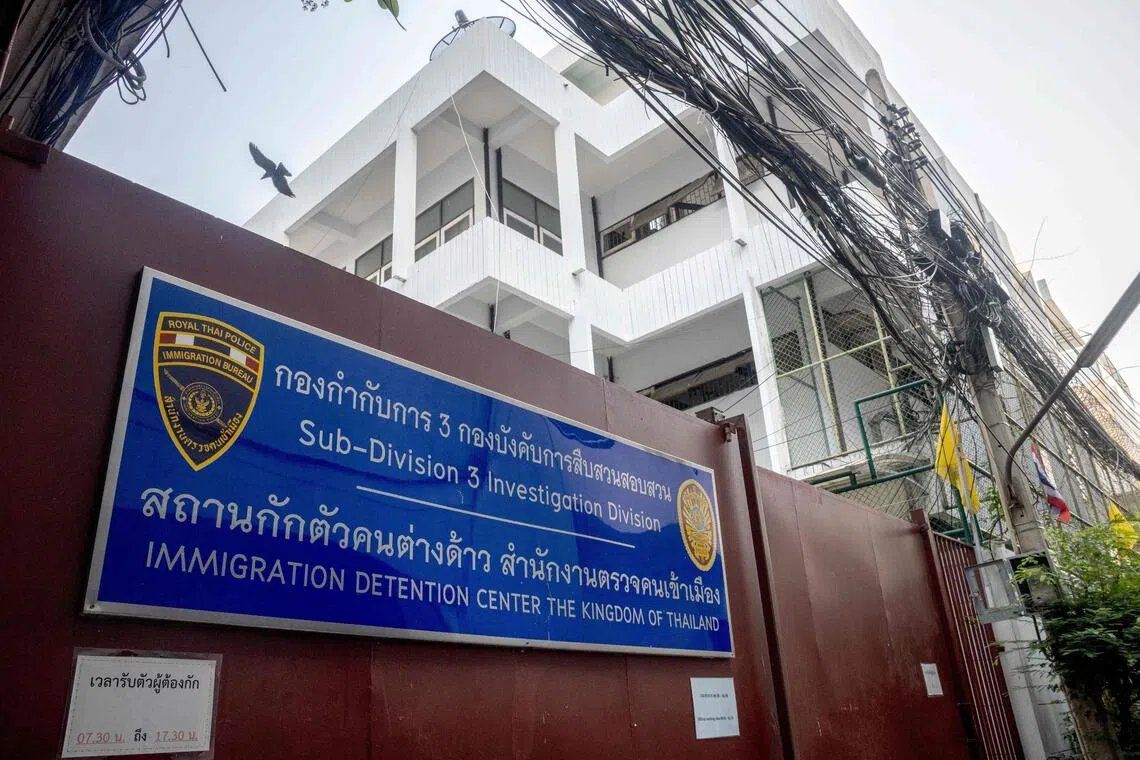
Thailand has formalized its approach to removing foreign nationals who break the law or threaten public order, with Prime Minister Anutin Charnvirakul signing the Prime Minister's Office Regulation on Deportation B.E. 2569 on August 26. The regulation, published in the Royal Gazette on August 27 and effective from August 28, establishes streamlined procedures designed to accelerate deportation decisions and improve coordination between government agencies handling such cases.
The new framework reflects a careful balancing act between Thailand's position as a major tourist and business destination and its commitment to maintaining domestic security and social stability. The regulation explicitly acknowledges that Thailand welcomes foreign visitors and investors who comply with local laws, recognising the vital economic contributions of the approximately 4 million foreign nationals currently residing in or regularly visiting the kingdom. However, it also signals Bangkok's determination to tackle increasing concerns about foreign criminals exploiting legal loopholes, working illegally, or entering the country under false pretences.
Under the regulation, the Interior Minister gains expanded authority to order the deportation of any foreign national who has completed a prison sentence for one of six specified categories of offences. These include unlawful entry or overstaying, illegal employment, unauthorised business operations under the Foreign Business Act, document forgery, and any crime carrying a minimum five-year prison sentence. The regulation also covers individuals who acted as principal offenders, instigators, or supporters in connection with these offences, potentially broadening the net to include those involved in criminal enterprises without being the primary perpetrator.
A notable innovation in the regulation is its accelerated case-management system. The Department of Corrections must notify the Interior Ministry's Permanent Secretary at least 15 days before a foreign prisoner's release, providing detailed information including the individual's name, nationality, and full case records. This advance notice window allows authorities to prepare deportation paperwork in parallel with a prisoner's sentence completion, eliminating delays that previously arose from sequential processing. Similarly, where a court suspends a sentence or imposes only a fine, the Office of the Judiciary must immediately alert the Permanent Secretary, ensuring no eligible cases slip through administrative cracks.
The regulation introduces significant humanitarian safeguards, requiring that deportation decisions account for Thailand's international legal obligations, particularly regarding protection from torture, cruel treatment, and enforced disappearance. Foreign governments or international organisations can submit requests within seven days of a deportation order to receive the individual in their own territory or a third country, provided they cite legitimate safety concerns and agree to bear all associated costs. The deportee must also provide written consent to such transfers, preventing coercive relocations. This framework aligns Thailand with international norms while preserving the country's sovereignty in deportation decisions.
For deportees unable to be safely returned to their country of origin, the regulation establishes a clear hierarchy of alternatives. Individuals are normally sent to their country of nationality; if nationality cannot be established, they return to the country where they last resided before entering Thailand. Third-country placements must be completed within 30 days, with the Interior Minister able to grant up to two additional 30-day extensions. Should arrangements fail within this timeframe, standard repatriation procedures apply. This timeline prevents the indefinite detention of deportees awaiting placement, a chronic problem in several Southeast Asian nations where immigration limbo can trap individuals in detention facilities for years.
The regulation's provisions on deportation expenses and cost-sharing represent a pragmatic recognition that Thailand's resources are finite. The Interior Ministry is tasked with establishing deportation cost rules in consultation with the Finance Ministry, with third countries bearing expenses for any agreed transfers. This approach incentivises countries to accept their nationals swiftly rather than imposing financial burdens on Thailand. Any disputes arising from the regulation's implementation will be referred to the Interior Minister, whose decision remains final, centralising authority and eliminating prolonged legal contestation that might further strain detention systems.
For Malaysia and other Southeast Asian nations, Thailand's regulatory changes carry implications for cross-border enforcement cooperation and prisoner transfers. The acceleration of deportation procedures could influence how foreign nationals convicted in Thailand seek asylum or refuge elsewhere in the region, potentially creating pressure on neighbouring countries' immigration systems. Malaysian businesses operating in Thailand should ensure strict compliance with employment and licensing regulations, as the new framework makes deportation of company executives or key staff a more immediate prospect following conviction.
The regulation also reflects broader regional trends toward tougher immigration enforcement and liability for employment of undocumented workers. Thailand's move to systematise deportation procedures may encourage other ASEAN nations to strengthen their own frameworks, creating a more coordinated regional approach to migrant management. However, human rights advocates have raised concerns about whether the streamlined process adequately protects vulnerable deportees, particularly trafficking victims who may have been coerced into illegal activities. Thailand's inclusion of humanitarian safeguards addresses some concerns but will require vigilant implementation to ensure protections are not circumvented by overzealous officials seeking to minimise administrative burden.

