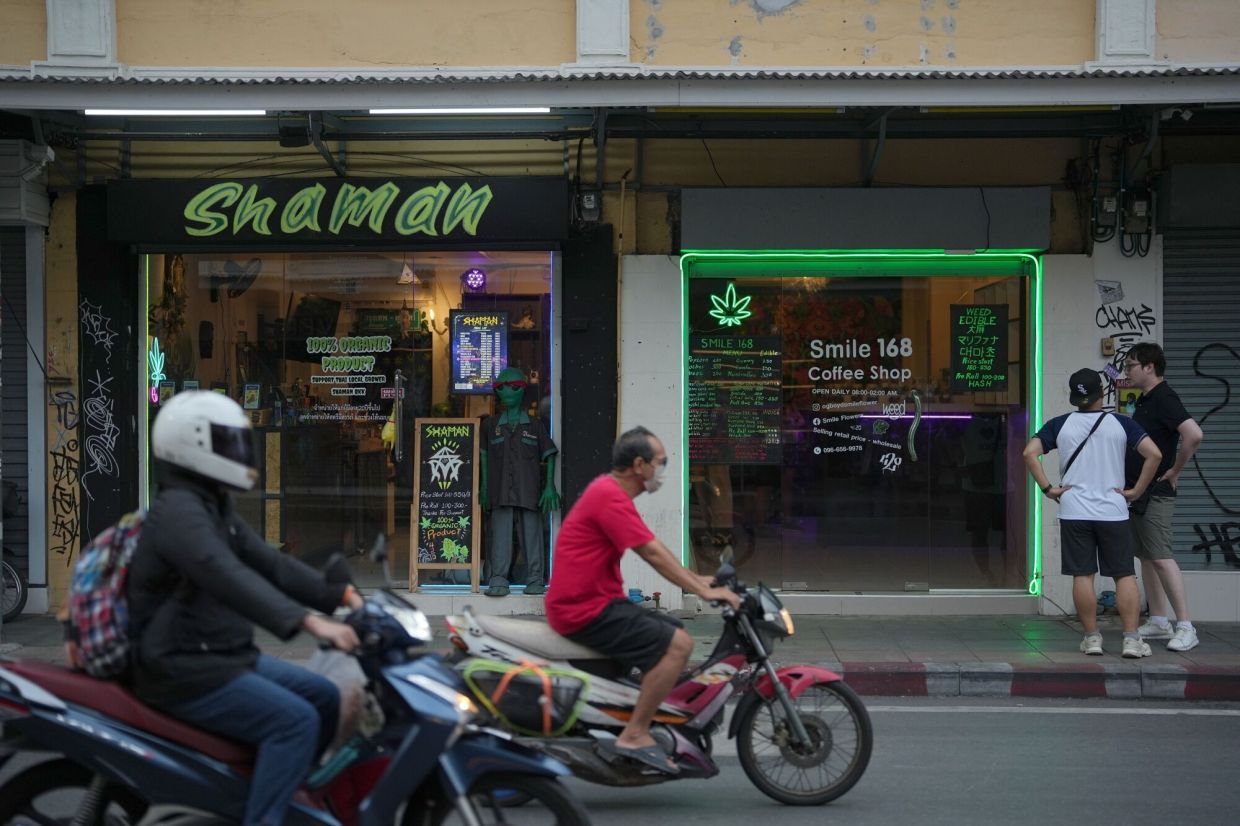
Thailand's Public Health Minister Pattana Promphat has accelerated efforts to implement a comprehensive regulatory framework governing cannabis, signalling the government's determination to transform the country's permissive approach into one centred strictly on therapeutic applications. The proposed Cannabis and Hemp Control Act, which has already undergone public consultation, represents a fundamental shift in how the nation manages this increasingly complex policy area. The legislation reflects mounting concerns among Thai officials about the uncontrolled proliferation of cannabis businesses that have operated largely without meaningful oversight since the plant was decriminalised several years ago.
The core rationale behind the new framework centres on establishing cultivation controls and tightening the supply chain from production through distribution. The Bhumjaithai Party, which has championed cannabis policy within the coalition government, has repeatedly affirmed its position that medical cannabis constitutes the sole legitimate use case. Under the current legal architecture, which relies on the Act on the protection and promotion of herbs alongside multiple ministerial directives, cannabis sales and extraction are regulated but cultivation remains unmonitored. This gap has created vulnerabilities that authorities now seek to close through comprehensive legislative reform.
One of the most pressing challenges facing regulators involves the estimated 6,000 cannabis retail outlets operating with expired or non-existent licences across Thailand. Since 2023, approximately 18,000 outlets have opened under the existing regulatory regime. However, roughly one-third of these saw their three-year licences expire at the end of 2023, and only about 1,500 renewed their authorisation. Officials project that another 6,000 licences will expire during 2026 and 2027, creating a cascading compliance problem that threatens to undermine the government's regulatory agenda if left unaddressed.
To combat this proliferation of unlicensed operators, the Ministry of Public Health is implementing a technologically sophisticated enforcement strategy centred on GPS-based tracking and electronic licensing. The Department of Thai Traditional and Alternative Medicine has published a comprehensive online register of all properly authorised outlets, complete with their precise GPS coordinates and licence expiration dates. This transparency mechanism serves dual purposes: legitimate operators can demonstrate their compliance, while unregistered shops become immediately identifiable as illegal establishments. Officials can now distinguish between regulated businesses and clandestine operations with unprecedented precision, enabling rapid enforcement action.
The legislative proposal carries significant implications for how cannabis reaches consumers, particularly through the introduction of stricter penalties for violations and mandatory medical supervision at dispensing points. Pattana Promphat has indicated that properly registered outlets must transform into medical facilities where licensed physicians oversee all dispensing activities. This requirement essentially converts cannabis retail into a healthcare function rather than a commercial one, fundamentally altering the operational model that has developed in recent years. The doctor-supervised model also enables authorities to identify suspicious purchasing patterns, such as repeated large quantities supplied to a single individual, which could indicate diversion toward recreational or black-market use.
Transnational cannabis trafficking represents another significant concern driving the regulatory overhaul. Although cannabis remains legal in Thailand, it retains narcotic status across many neighbouring countries and beyond. Thai authorities have identified cases where counterfeit licences facilitated illegal exports, prompting the government to transition entirely to electronic licensing systems that provide enhanced verification capabilities. The Department of Thai Traditional and Alternative Medicine has coordinated closely with Thai Customs and Airports of Thailand to monitor outbound shipments. While officials acknowledge that particularly large-scale smuggling operations may occasionally evade detection, the electronic licensing system and customs coordination represent meaningful barriers to casual trafficking.
The enforcement infrastructure being assembled to implement this framework involves unprecedented coordination across multiple agencies. The Ministry of Public Health has authorised a substantial expansion in the number of inspectors qualified to conduct raids and make arrests, recruiting personnel from police forces and local administrative organisations to reach tens of thousands of enforcement officers nationwide. This distributed enforcement capacity contrasts sharply with the capacity constraints that have allowed unlicensed outlets to operate with relative impunity in recent years. The coordinated approach acknowledges that centralised enforcement cannot feasibly monitor thousands of retail locations simultaneously, so decentralisation becomes essential to effective regulation.
The legislative process itself reveals important nuances about how cannabis policy evolved within Thailand's political framework. The draft Cannabis and Hemp Control Act completed public consultation in early June but did not reach parliamentary deliberation in the current session, suggesting possible disagreement within government or the need for additional refinement. Minister Pattana has also raised the possibility that cannabis could eventually be reclassified as a controlled narcotic, though this would likely fall under the Ministry of Justice's purview rather than the Public Health Ministry. Such reclassification would represent a dramatic policy reversal and presumably would only occur if the current medical regulatory framework demonstrably failed to prevent recreational use or public health problems.
For Malaysia and other Southeast Asian nations observing Thailand's cannabis regulation experiment, the Thai approach offers instructive lessons about the practical challenges of implementing permissive drug policies within a region where neighbouring countries maintain strict prohibition. Thailand's experience demonstrates that once a substance is decriminalised, rapid commercialisation occurs in the absence of robust legal frameworks. The proliferation of 18,000 outlets, most operating without proper oversight, illustrates how quickly markets develop when regulatory architecture lags behind policy change. Thai officials' efforts to reimpose control through GPS tracking and medical facility requirements represent corrective measures intended to recover regulatory authority after initial permissiveness created a fragmented operating environment.
The Cannabis and Hemp Control Act also illuminates broader regulatory questions about how countries can distinguish between medical and recreational cannabis use when both derive from identical plant material. Thailand's solution—requiring physician supervision and monitoring for suspicious purchasing patterns—emphasises procedural and medical gatekeeping rather than product-based restrictions. This approach assumes that appropriate professional oversight can reliably distinguish legitimate therapeutic use from recreational consumption. Whether this assumption proves valid during implementation will significantly influence other Asian jurisdictions considering their own cannabis policy frameworks, making Thailand's regulatory experiment an important regional bellwether.

