Thailand is preparing a calculated diplomatic manoeuvre: it plans to signal to the incoming Trump administration that steep American tariffs could jeopardise one of Washington's most longstanding security partnerships in Asia. The Thai government intends to include a warning about potential military cooperation reductions in its counterproposal during reciprocal trade negotiations set to resume later this month, according to officials briefed on the matter who requested anonymity given the sensitive nature of the discussions.
The threat, while broadly framed, carries real weight. Thailand could reconsider its participation in critical joint military activities if tariff increases inflict substantial economic harm on the kingdom's export-dependent economy. This marks a notably rare moment when Bangkok is explicitly tying its security commitments to trade outcomes—a departure from decades of compartmentalising these relationships. The move reflects growing Thai frustration with Washington's protectionist stance and desperation to avoid the worst economic consequences of the Trump administration's aggressive tariff regime.
Thai officials are operating from a position of considerable trade exposure. The kingdom recorded a US$51.4 billion trade surplus with the United States last year, making it highly vulnerable to retaliatory tariff measures. Thailand sits among dozens of nations scrambling to secure better trade terms after Washington imposed a 12.5 per cent tariff on most exports under Section 301, a contentious American trade law ostensibly designed to address unfair trading practices but widely viewed as a blunt instrument for imposing Washington's will on trading partners.
Bangkok's negotiating strategy has so far combined carrots and sticks. On the positive side, Thailand has offered significant concessions: eliminating tariffs on selected American products and adopting US standards for imports of beef, lamb and alcoholic beverages. These offers attempt to demonstrate flexibility and a willingness to accommodate American concerns. Simultaneously, as the Trump administration expands investigations into manufacturing overcapacity—a particular concern in sectors where Thailand competes directly with American producers—Bangkok is hoping these goodwill gestures will cushion the blow of potential further tariff increases.
Yet the military dimension of this negotiation reflects Thailand's recognition that it possesses an asset of genuine strategic value to Washington. Thailand remains one of only two formal US treaty allies in Southeast Asia, alongside the Philippines, a distinction that has anchored American military presence and influence throughout mainland Southeast Asia for generations. This privileged alliance status gives Bangkok leverage that most other trading partners lack, and Thai officials appear determined to exercise it, however delicately.
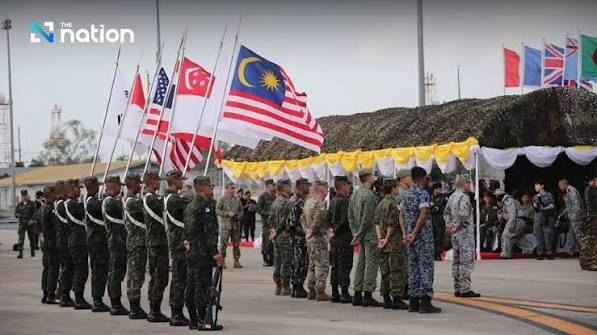
The cornerstone of this security relationship is Cobra Gold, the annual multinational military exercise that Washington describes as the largest of its kind in mainland Asia. The 2024 iteration alone drew approximately 8,000 personnel from 30 participating nations, underscoring the exercise's significance as a platform for regional security cooperation and American military engagement with allies across the Indo-Pacific. Threatening to curtail or withdraw from Cobra Gold is therefore not a hollow gesture—it touches something Washington genuinely values.
Thailand's Defence Ministry spokesman Surasant Kongsiri attempted to downplay the emerging strategy, stating he could not verify the proposal and suggesting that negotiations would more likely focus on enhancing cooperation rather than conditioning it on trade outcomes. His carefully measured response hints at the political sensitivity within Thailand itself, where military and defence establishment figures may worry that explicit linkage between defence and trade could damage the longstanding security relationship or invite criticism from Washington.
Commerce Minister Suphajee Suthumpun has been more open about the government's overall approach. Last month, she publicly argued that Thailand merits more favourable trade treatment precisely because of the countries' strategic alliance, invoking both the Treaty of Amity and Thai direct investment in the United States as additional reasons for preferential consideration. She characterised the ongoing negotiations as a whole-of-government effort deliberately involving the foreign and defence ministries, not merely trade technocrats, signalling that Bangkok is deploying its entire diplomatic toolkit.
Thailand's negotiating target remains the 19 per cent tariff rate discussed under an earlier framework, a threshold the government hopes to establish as the ceiling for any new arrangements. Simultaneously, Bangkok has pledged to accelerate legislation prohibiting imports of goods manufactured using forced labour, an attempt to address one of Washington's stated concerns about unfair trading practices while potentially defusing some of the moral arguments undergirding American protectionism.
Historically, the US-Thai alliance has demonstrated resilience despite periodic strains. When Thailand experienced its 2014 military coup, Washington scaled back Cobra Gold and suspended various military engagements in response to democratic concerns. However, over subsequent years, defence cooperation was gradually rebuilt and normalised, suggesting that both countries possess mechanisms to weather political turbulence without abandoning their fundamental security partnership. That history may partly explain why Thai officials believe they can invoke military cooperation as leverage without permanently damaging the relationship.
The Pentagon's public position reinforces this calculus. During a visit to Bangkok last week, Undersecretary of Defense Elbridge Colby met with Thai Permanent Secretary for Defense General Tharapong Malakam and publicly reaffirmed what he described as the renewed strength of the US-Thai alliance. This messaging, whether coordinated with Thai signals about trade or not, suggests Washington remains committed to the relationship's military dimensions even as trade tensions escalate.
For Malaysia and other Southeast Asian nations watching these negotiations unfold, the Thai strategy offers an instructive case study in how regional powers might leverage their strategic importance to defend economic interests against unilateral American trade actions. The outcome of the Thailand-US talks could establish precedents for how other Asian allies navigate similar pressures, making these negotiations consequential far beyond Bangkok's borders. As the region confronts a more assertive Washington, Thailand's willingness to explicitly link defence and trade may signal a broader recalibration of how Southeast Asian nations approach their relationships with the United States.

