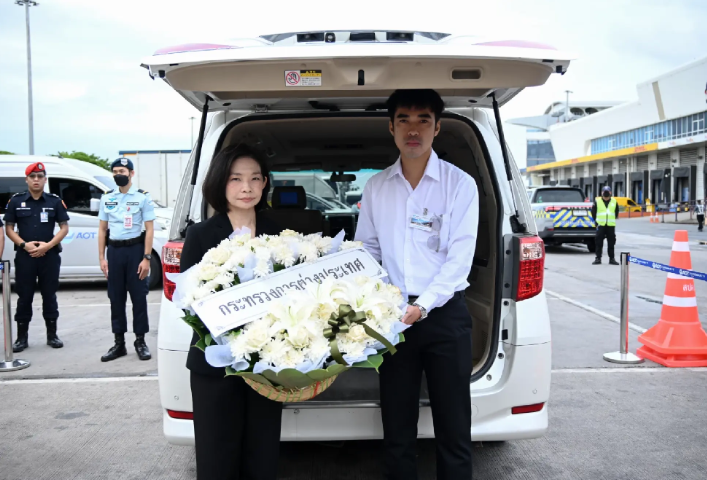
Thailand's Ministry of Foreign Affairs has completed the repatriation of travel content creator Bavorntat Pengsuk, widely recognized across Southeast Asia under his YouTube channel name 'Hlun Solo', following his death in the Georgian capital of Tbilisi on 14 July 2026. The 27-year-old vlogger's return marks the conclusion of a coordinated diplomatic effort involving Thai embassies, Georgian authorities, and the deceased's family to ensure proper handling of the case and expedited administrative procedures.
Jaithai Upakarnitikaset, director-general of the Department of Information serving as Foreign Ministry spokesperson, announced the successful repatriation on Thursday, 6 August. Deputy Prime Minister and Foreign Minister Sihasak Phuangketkeow had delegated Prathuangtip Sirivithes, acting director-general of the Department of Consular Affairs, to coordinate the reception and handover of Bavorntat's remains upon arrival in Thailand, ensuring senior-level government involvement in the sensitive matter.
The Royal Thai Embassy in Ankara maintained an active role throughout the process, sustaining regular communication with Bavorntat's family members, Georgian government agencies, and other relevant officials from the moment notification of his death was received. This diplomatic engagement proved essential in navigating the complex legal and administrative requirements governing international repatriation cases, particularly when foreign nationals pass away abroad.
Recognizing potential procedural bottlenecks, the Thai Embassy dispatched personnel directly to Tbilisi to investigate circumstances surrounding Bavorntat's death and accelerate repatriation arrangements. Embassy staff also engaged with Georgian officials to address earlier administrative delays that had complicated the process, demonstrating the diplomatic pressure sometimes necessary to expedite such sensitive international matters involving loss of life.
Bavorntat's prominence within the travel content creation community across Southeast Asia lent additional urgency to official efforts. Travel vloggers command substantial followings throughout Thailand and neighboring countries, making cases involving their welfare matters of public concern beyond typical consular situations. His death and subsequent repatriation attracted significant attention within online communities that had followed his documented journeys.
Upon arrival in Thailand, the family arranged for comprehensive forensic examination of the remains to be conducted domestically. This measure ensures thorough investigation into medical causes of death while allowing the family direct access to findings and maintaining the deceased's dignity throughout the investigative process. Forensic analysis conducted within Thailand also facilitates coordination between family members, Thai medical authorities, and relevant government agencies.
Following completion of medical and administrative procedures, Bavorntat's body will be transported to Somdet district in Kalasin province, his hometown in northeastern Thailand's Isan region. Kalasin, located roughly 400 kilometres from Bangkok, is a relatively quiet provincial area where Bavorntat maintained family connections despite his celebrity status achieved through international travel content creation.
The transport to his hometown enables the family to conduct traditional Buddhist funeral ceremonies according to local customs and religious practices observed in the Isan provinces. These rituals typically span multiple days and involve monastic participation, family gatherings, and community involvement—practices deeply embedded in Thai Buddhist culture that provide meaningful closure and honor the deceased within their ancestral community.
Bavorntat's death represents a tragic loss within Thailand's growing digital content creation industry, which has produced numerous internationally recognized personalities through platforms like YouTube. Travel vloggers particularly occupy a unique space in the digital economy, often building loyal audiences across multiple countries through their documentation of authentic experiences and cultural exploration. His passing underscores the risks that content creators sometimes face while pursuing compelling material in unfamiliar international locations.
The Foreign Ministry's handling of this case reflects Thailand's broader commitment to protecting its citizens abroad and ensuring dignified treatment of deceased nationals. The relatively swift coordination between the Royal Thai Embassy, the Department of Consular Affairs, and Georgian authorities demonstrates functional diplomatic channels for managing emergency situations affecting Thai citizens in foreign countries.
For Malaysian and broader Southeast Asian audiences, this case illustrates the practical realities facing digital content creators who build careers around international travel. The dangers inherent in constantly moving between countries and exploring unfamiliar environments deserve consideration alongside the professional opportunities such work presents. Bavorntat's story serves as a sobering reminder of vulnerability even for well-known personalities enjoying apparent success and freedom through their chosen careers.
The incident also highlights how modern diplomatic services have evolved to accommodate emerging demographics, including young content creators whose international prominence can elevate cases to senior government attention. Traditional consular affairs handling now frequently involves managing repatriation for individuals whose primary occupation involves digital media creation—a category barely existing a decade ago but now sufficiently prevalent to warrant routine diplomatic consideration.

