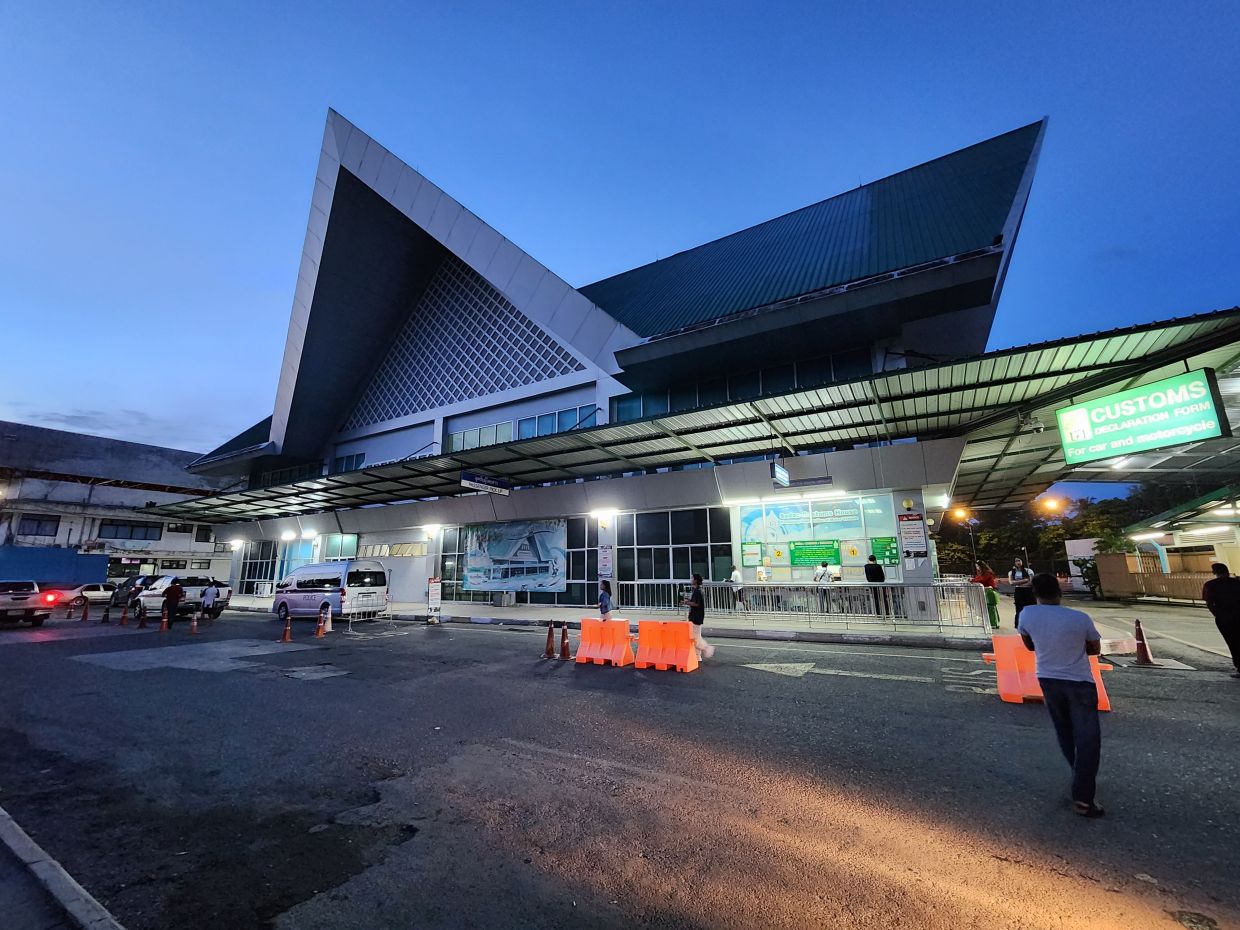
Thailand's government has moved to deepen economic ties with Malaysia through infrastructure development, approving the establishment of a new permanent border checkpoint that will formally operate from July 11. The cabinet decision, announced on Tuesday in Bangkok, reflects both nations' commitment to streamlining cross-border commerce and people movement across their shared frontier in an increasingly competitive regional economy.
The newly designated Sadao checkpoint will replace the existing crossing point, shifting operations to a location between boundary markers 23/9 and 23/10. This geographical repositioning represents a strategic recalibration of how Thailand and Malaysia manage their land border, which has historically served as a vital conduit for bilateral trade and regional connectivity. Operating hours will extend from 05:00 to 23:00 daily, providing a substantial window for commercial and passenger traffic to traverse the frontier.
Thailand's government has signaled its intent to treat this infrastructure upgrade as more than mere bureaucratic adjustment. Government spokesperson Ratchada Thanadirek outlined a comprehensive support framework, with multiple agencies tasked to accelerate construction of roads feeding into the checkpoint and eliminate existing traffic congestion on the Thai side. The coordination reflects recognition that physical infrastructure alone cannot deliver the anticipated economic benefits without accompanying investments in complementary transportation networks.
Logistical facilitation forms a core pillar of the initiative. Authorities have committed to establishing shuttle services and working closely with Songkhla province, which oversees the southern border region, to monitor implementation progress. This multi-agency approach suggests Thai policymakers understand that successful border crossing operations require sustained attention to operational details, from vehicle flow management to facility maintenance, rather than reliance on opening-day enthusiasm.
Beyond physical logistics, Thai officials are prioritizing information dissemination to prepare the business community and local populations for the transition. Ratchada emphasized that relevant agencies will conduct targeted communication campaigns designed to build comprehension among private enterprises, commercial operators, and residents regarding routing options, customs processes, and immigration procedures. Such preparatory work proves essential in border regions where stakeholder confusion or misinformation can disrupt initial operations and undermine confidence in new systems.
The border crossing initiative sits within a broader diplomatic context. Thai Prime Minister Anutin Charnvirakul plans an official visit to Malaysia on July 9-10, just days before the checkpoint's inauguration, at the invitation of Malaysian counterpart Anwar Ibrahim. This timing underscores the political significance both governments attach to the infrastructure project and suggests coordinated messaging around bilateral relations.
During his Malaysia visit, Anutin will engage discussions encompassing a draft joint statement designed to establish cooperation frameworks across multiple domains. Border development and regional connectivity form explicit pillars, but the bilateral agenda extends into security cooperation targeting transnational crime—a persistent challenge in Southeast Asia's land borders where smuggling, human trafficking, and other illicit activities exploit porous or inadequately monitored crossing points. Enhanced coordination between Thai and Malaysian law enforcement aims to address these phenomena through improved information sharing and joint operations.
Economic partnership discussions will emphasize food and energy security, reflecting contemporary regional priorities. Both Thailand and Malaysia depend on cross-border supply chains for agricultural products, processed foods, and energy resources. Strengthened connectivity facilitates more efficient distribution networks while potentially enabling joint approaches to price stability and supply disruption resilience—concerns that have intensified following global commodity market volatility and geopolitical disruptions to energy supplies.
For Malaysia, the new checkpoint offers practical benefits beyond symbolic gestures of neighborly cooperation. Improved border infrastructure reduces transit times for Malaysian goods accessing Thai markets and beyond, enhancing competitiveness for Malaysian exporters in regional supply chains. Thai manufacturing sectors reliant on Malaysian raw materials or components likewise benefit from streamlined customs clearance and reduced transportation costs. Tourism flows, particularly backpackers and budget travelers crossing between the two countries, will experience reduced friction points.
The initiative carries implications for Southeast Asian regional integration broadly. ASEAN member states consistently emphasize infrastructure connectivity as foundational to deepening economic cooperation, yet progress often lags behind rhetoric. Thailand and Malaysia's proactive border crossing upgrade demonstrates that bilateral action on connectivity can proceed despite broader regional coordination challenges, potentially spurring similar initiatives elsewhere across the bloc.
Thailand's emphasis on government facilitation of trade through customs procedure clarity and immigration streamlining signals recognition that modern border management requires balance between security objectives and commercial fluidity. Excessive bureaucratic complexity deters legitimate cross-border activity and pushes commerce toward informal channels, whereas overly permissive approaches create security vulnerabilities. The coordination framework outlined by Thai officials attempts this calibration.
Stakeholders in Malaysian logistics and manufacturing sectors will monitor implementation closely. Early operational performance of the Sadao checkpoint will establish precedent for how Thai-Malaysian border infrastructure can function when both governments commit resources and attention. Success could validate investment in similar upgrades elsewhere along their frontier, while operational difficulties would temper enthusiasm for further initiatives. The checkpoint thus functions as both practical infrastructure and political test case for bilateral commitment to regional integration.
Ultimately, the new Sadao checkpoint represents convergence between infrastructure modernization and strategic partnership. For Malaysian participants in cross-border commerce and tourism, it promises tangible reduction in transaction costs and travel friction, while symbolizing both governments' intention to position their relationship as anchor for broader Southeast Asian stability and prosperity.

