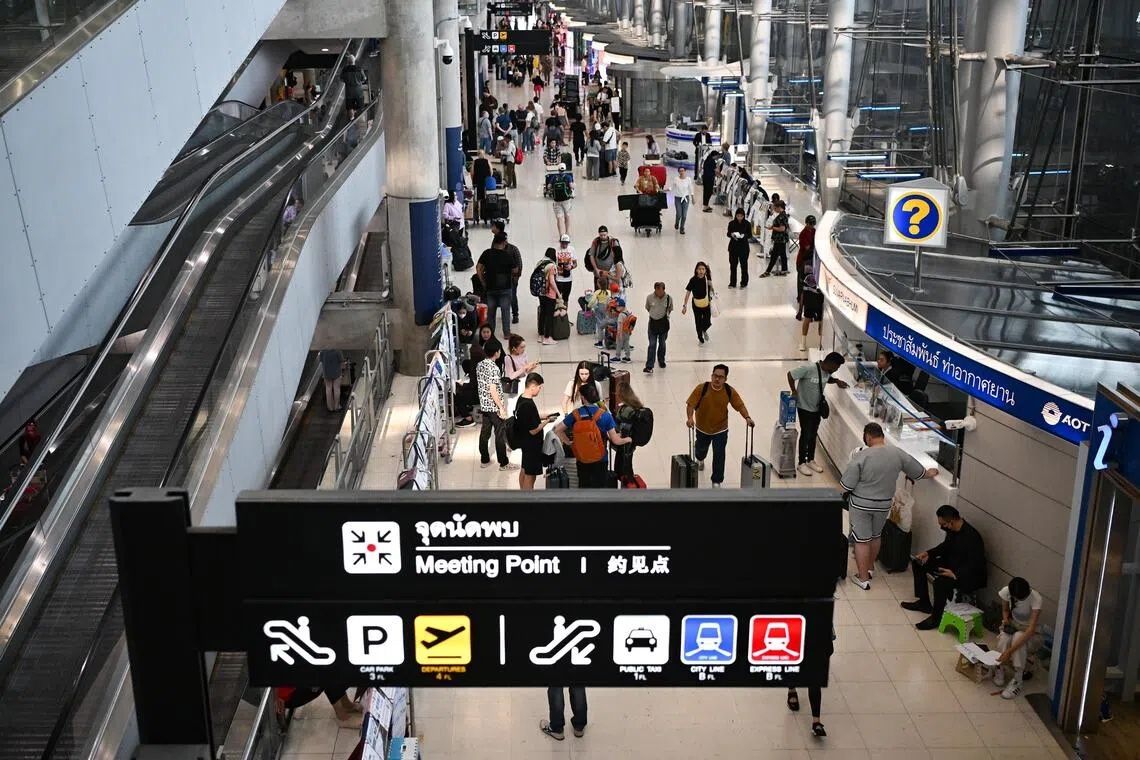
Thailand is poised to significantly streamline immigration procedures at its busiest airport by opening automated passport gates to travellers from 31 additional nationalities before the end of August, a move that could transform the arrival experience for regional visitors heading to Southeast Asia's tourism powerhouse. The expansion of the auto-gate system at Suvarnabhumi Airport has been formally approved in principle by Thailand's Immigration Bureau, with Deputy Government Spokesperson Lalida Persvivatana confirming that the scheme now awaits final administrative sign-off. The initiative addresses mounting congestion at an airport that processes roughly 190,000 passengers daily during peak tourism months, with international arrivals alone reaching approximately 70,000 per day.
The practical challenges facing Thailand's primary international gateway are substantial. During the busiest afternoon hours—between 1pm and 5pm—the immigration facilities must absorb between 5,000 and 6,000 passengers per hour, creating bottlenecks that can frustrate even the most patient traveller. For Southeast Asian visitors, who represent a significant portion of Suvarnabhumi's traffic, extended queues at immigration represent an unnecessary friction point in their arrival experience. The expansion comes at a time when Thailand is actively competing with neighbouring countries to attract and retain international tourist spending, making operational efficiency at the airport a strategic priority rather than merely a convenience measure.
The scope of the expansion underscores the magnitude of Thailand's tourism operation. When the automated gate system reaches full capacity, the scheme is expected to make approximately 6.5 million additional passengers eligible to use the self-service gates annually, alongside roughly 900,000 holders of specific long-term visa categories. Lalida emphasised that once fully operational, approximately 53 per cent of all arriving passengers should be capable of clearing immigration via the automated system, effectively halving the manual processing workload. This represents a fundamental shift in how Thailand manages its international border traffic and reflects growing global investment in biometric and automated border control infrastructure.
The rollout will proceed methodically rather than in a single activation, with implementation phased according to operational readiness across three critical dimensions: availability of sufficient equipment to handle the volume, security protocols to prevent misuse or fraud, and completion of the necessary biometric data capture infrastructure. Notably, first-time visitors will still require in-person biometric registration—fingerprints and facial recognition—even if they subsequently qualify for automated gates. This hybrid approach balances efficiency with the security imperative that governments face when managing international arrivals, particularly given Thailand's role as a major transit hub for the region.
The airport's infrastructure expansion extends well beyond immigration processing. Deputy Prime Minister and Commerce Minister Suphajee Suthumpun, alongside Tourism and Sports Minister Surasak Phancharoenworakul and other senior officials, visited Suvarnabhumi to oversee discussions about comprehensive improvements to passenger facilities. The delegation identified the need to expand waiting areas and transit zones, recognising that an airport's capacity is determined not merely by immigration channels but by the total throughput of its physical infrastructure. Long-term planning is also underway to accommodate future growth, suggesting Thailand anticipates continued expansion of international visitor numbers and is positioning itself to handle that growth without service degradation.
The government's framing of this initiative reveals an important strategic mindset. Lalida stressed that the objective transcends simply shortening queues; rather, officials explicitly aim to craft an arrival experience that feels seamless, rapid and reassuring from the moment international visitors disembark their aircraft. For Malaysia and other regional economies, this Thai initiative serves as a reminder that tourism competitiveness increasingly depends on operational excellence at borders. A traveller's first impression upon arrival—whether they navigate immigration smoothly or endure lengthy delays—influences their perception of an entire country and shapes their willingness to return.
Thailand's tourism recovery and growth remain robust. Between January 1 and July 18 of this year, Thailand welcomed approximately 17.36 million foreign tourists, indicating that the post-pandemic rebound has solidified and international visitation continues expanding. This volume necessitates the infrastructure and procedural innovations now underway. For Southeast Asian nations competing for similar tourist dollars—including Malaysia, Vietnam, Indonesia and the Philippines—Thailand's investment in frictionless border procedures represents a competitive move that others may feel compelled to match. The region's tourism landscape is becoming increasingly sophisticated, with travellers comparing not only destinations and attractions but also the ease of actually reaching those destinations.
The automated gate expansion carries particular relevance for Malaysian travellers, who represent a substantial and growing portion of Suvarnabhumi's passenger base. Malaysian citizens visiting Thailand for business, leisure or transit benefit directly from expedited processing, and conversely, Malaysian operators in tourism, hospitality and commerce benefit when their customers enjoy hassle-free arrivals. The initiative also has implications for Malaysian airports and tourism authorities, who may face pressure to implement similar systems to remain competitive. Airlines serving the Bangkok-Malaysia routes—among the region's busiest corridors—will likely experience improved turnaround times and enhanced passenger satisfaction metrics if immigration processing becomes significantly faster.
Implementation success will depend substantially on technical execution and staff training. Biometric data systems must function reliably at scale, security protocols must prevent gaming or fraud, and immigration staff must effectively guide first-time visitors through mandatory registration processes. The phased approach suggests Thailand recognises these complexities and is avoiding the common pitfall of over-promising on implementation timelines. Border automation projects across Asia have shown that early teething troubles are common, but properly executed systems deliver sustained efficiency gains. Thailand's explicit deadline of end-August indicates serious commitment, though actual completion may extend beyond that target depending on unforeseen technical or bureaucratic challenges.
Broader implications for the region merit consideration. Thailand's focus on streamlining international arrivals reflects a larger trend of Southeast Asian nations recognising that tourism infrastructure and border efficiency constitute crucial economic assets. As competition for high-value international visitors intensifies, countries that offer smoother entry experiences will capture disproportionate market share. Malaysia's airports and immigration authorities should evaluate whether comparable automated systems merit investment, particularly at Kuala Lumpur International Airport, which serves a similar role as Thailand's primary international gateway. The expansion at Suvarnabhumi essentially raises the regional benchmark for what international tourists should expect when arriving in Southeast Asia.

