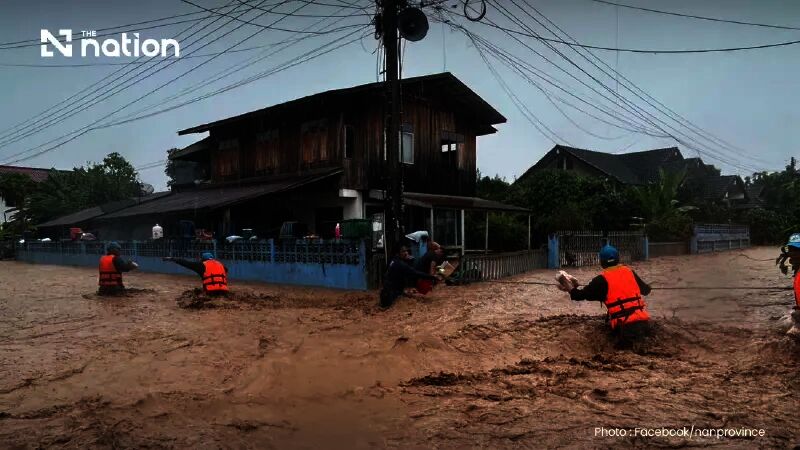
Thailand's government has formally designated Nan province in the north as a disaster zone in response to severe weather conditions that have unleashed flooding across the region, with authorities simultaneously elevating alert levels in two neighbouring provinces as a precautionary measure. The declaration came after persistent heavy downpours inundated communities, severing critical transport links and necessitating the evacuation of residents from vulnerable locations, according to an official statement released on Wednesday, August 19.
Despite being on an official visit to Australia, Prime Minister Anutin Charnvirakul has remained engaged with the unfolding crisis, directing a comprehensive mobilisation of government resources and military personnel to support relief and rescue operations. Government spokesperson Rachada Dhnadirek conveyed the Prime Minister's instructions to coordinate response efforts across all relevant agencies, ensuring a swift and unified approach to the disaster management challenge. This remote oversight demonstrates the gravity with which Thailand's leadership views the weather emergency affecting its northern territories.
The Prime Minister has specifically mandated the rapid deployment of response teams and heavy excavation equipment to areas facing the greatest risk, with operational strategies focused on preventing water accumulation in historically flood-prone zones. The directive reflects a proactive stance aimed at intercepting disaster before it fully materialises in vulnerable communities. Rachada underscored that Anutin's immediate priorities centre on safeguarding the most susceptible population segments, notably elderly citizens, patients with severe mobility constraints, young children, and inhabitants of high-risk geographic zones susceptible to water-related hazards.
To enable more effective crisis management, authorities have prioritised conducting rapid damage assessments across affected regions while intensifying surveillance of meteorological patterns and water levels. This intelligence-gathering approach permits officials to issue timely public warnings should rainfall volumes escalate beyond safe thresholds, allowing residents adequate preparation time. The emphasis on life preservation and personal safety reflects lessons learned from previous natural disasters in the region and represents a shift toward prevention-focused disaster governance.
The flooding threat extends well beyond Nan province, with regional meteorologists and disaster officials cautioning residents across northern, north-eastern, and central Thailand to remain vigilant against multiple water-related hazards throughout the week. Alerts specify particular concerns regarding sudden flash flooding triggered by localised cloudbursts, water runoff from elevated terrain, and the possibility of hillside collapses in areas with compromised soil stability. These multi-faceted risks underscore the complexity of weather-related disaster management in Thailand's diverse topography.
Deputy Prime Minister Yodchanan Wongsawat, who holds operational responsibility for northern flood response coordination, has issued urgent instructions to provincial governors overseeing Nan, Phayao, and Lamphun to activate comprehensive flood preparedness protocols immediately. The directive signals that government leadership views these three provinces as forming a contiguous risk zone requiring integrated response planning. Rather than treating each jurisdiction independently, the coordinated order suggests recognition that weather systems and water flows often transcend administrative boundaries.
The Thailand Meteorological Department's seasonal forecast for August had previously alerted relevant authorities to expect thunderstorm activity, concentrated heavy precipitation in localised areas, and gusty wind conditions throughout the month. These atmospheric predictions provided advance warning that conditions could deteriorate into scenarios conducive to flash flooding, excessive surface water runoff, and the breaching of river banks where water levels approach or exceed capacity. Such meteorological intelligence forms the foundation for strategic resource positioning and evacuation planning.
For Malaysian and Southeast Asian observers, Thailand's flooding situation carries regional significance, particularly as monsoon patterns can affect multiple nations simultaneously or in succession. The Thai government's declared approach—combining rapid damage assessment, preventive water management, vulnerable population prioritisation, and cross-provincial coordination—offers a functional model for disaster response that emphasises life safety above property protection. The engagement of military resources alongside civilian emergency services demonstrates recognition that flooding at this scale requires capabilities beyond traditional civilian infrastructure.
The situation highlights the ongoing vulnerability of Southeast Asian nations to extreme weather events, a challenge that climate scientists increasingly attribute to evolving atmospheric conditions. Thailand's positioning of heavy machinery and response teams before incidents fully develop reflects a strategic shift from reactive to anticipatory disaster management. For residents of vulnerable communities across the region, such preparedness offers meaningful protection, yet the frequency and intensity of these weather events underscore the need for longer-term climate adaptation strategies and infrastructure resilience improvements across Southeast Asia.

