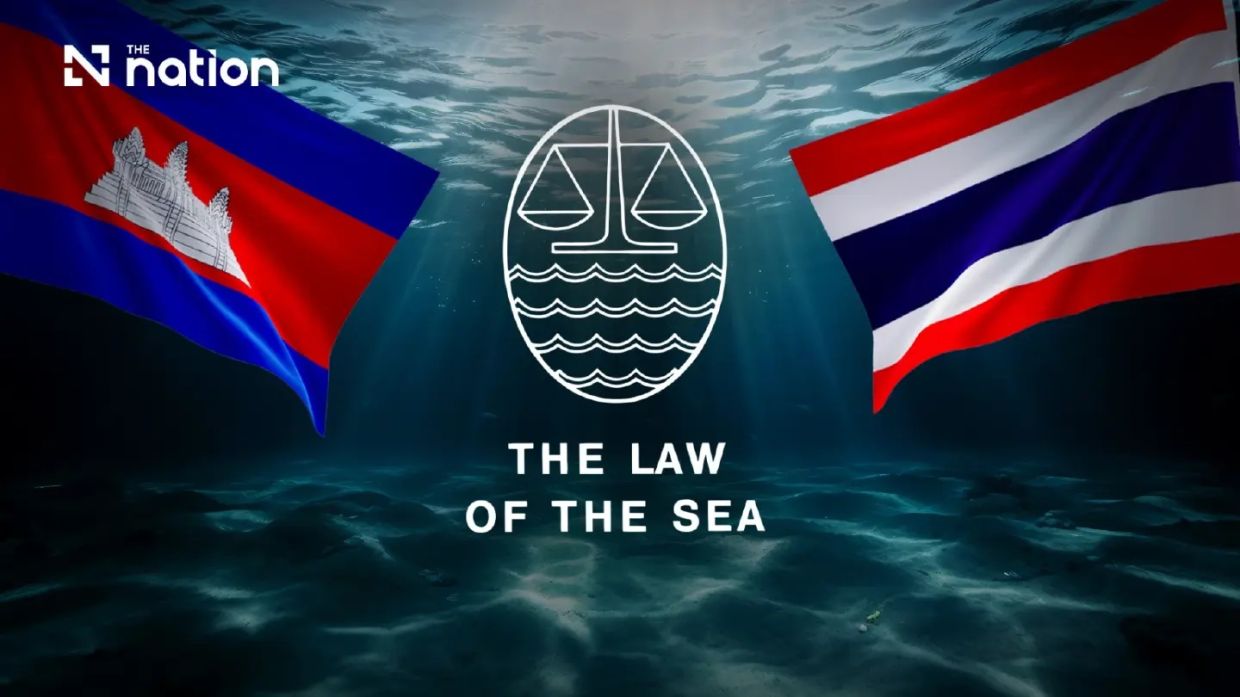
Thailand and Cambodia are advancing towards constituting a five-member conciliation panel under the United Nations Convention on the Law of the Sea, yet fundamental disagreement persists over whether the mechanism should tackle maritime boundaries in isolation or simultaneously address the commercial development of offshore hydrocarbon reserves in the contested waters between them. The procedural progress masks a deeper strategic divide rooted in each nation's distinct energy security calculations and timeline pressures.
Both nations have now appointed their conciliators and are working towards selecting a neutral fifth member to chair the commission. Thailand designated German jurist Rüdiger Wolfrum and South African legal scholar Albert J. Hoffmann, each of whom previously presided over the International Tribunal for the Law of the Sea—Wolfrum from 2005 to 2008 and Hoffmann most recently from 2020 to 2023. Cambodia selected Danish diplomat Peter Taksøe-Jensen, who notably chaired the Timor-Leste-Australia conciliation under the same Unclos framework, and French international law specialist Jean-Marc Thouvenin. The calibre of these appointees underscores the technical sophistication both countries are bringing to what remains a politically charged dispute.
The two governments originally set July 19 as the deadline for the four conciliators to jointly identify and accept a chairperson, but have now extended this to August 14 at the recommendation of the conciliators themselves. This extension reflects the genuine difficulty in identifying an individual who commands the confidence of both Bangkok and Phnom Penh while possessing the requisite combination of expertise in international law, maritime boundary delimitation, and diplomatic acumen. Thailand has articulated clear criteria: the chair must demonstrate recognised authority in these domains, absolute impartiality, and genuine familiarity with the contours of Thai-Cambodian relations.
Crucially, the Unclos conciliation mechanism differs fundamentally from court proceedings. The commission will not render a binding verdict but instead will investigate the dispute, hear submissions from both parties, and ultimately recommend approaches for their consideration. This consultative, non-judicial character means that any settlement remains contingent upon voluntary agreement between Thailand and Phnom Penh. The Timor-Leste-Australia precedent—which produced a maritime treaty establishing permanent boundaries—demonstrates that the mechanism can succeed, yet success hinges on political will from both sides.
Cambodia's urgency in pursuing this process has been sharpened by the global energy crisis triggered by regional instability and disruptions around the Strait of Hormuz. The Cambodian Ministry of Mines and Energy, under Minister Keo Rottanak, has publicly stressed that these developments have elevated energy security from an abstract policy concern to an immediate strategic imperative. Although Cambodia presently derives substantial electricity from hydropower and increasingly from solar installations, government planners view access to fossil-fuel reserves as essential for sustaining industrial expansion and economic competitiveness over the coming decades.
The geological stakes are substantial. The disputed maritime zone encompasses approximately 26,000 to 27,000 square kilometres and is believed to hold between 11 and 12 trillion cubic feet of natural gas alongside significant crude oil deposits. Analysts have assigned notional valuations to these resources reaching as much as US$300 billion, though such figures remain speculative given the absence of detailed commercial exploration. These numbers, while uncertain, have focused political attention on the question of how—and with whom—Cambodia might develop these assets. Major international energy firms, including TotalEnergies, have demonstrated interest but have not committed to specific investment programmes pending a clear resolution of the maritime boundary question.
Keo has warned that the energy majors operate within strict economic windows. International companies increasingly view fossil-fuel projects initiated after a certain date as financially unviable given the shifting energy transition landscape and capital constraints. He cautioned that further delays in resolving the maritime dispute risked allowing that investment window to close entirely. Cambodia therefore views the Unclos conciliation not merely as a mechanism for settling a territorial disagreement but as a pathway towards capturing substantial revenue flows and fostering industrial development before global investment appetite for hydrocarbons contracts further.
Thailand, by contrast, has adopted a markedly different conceptual framework for the conciliation process. Bangkok insists that the commission's mandate should be restricted to maritime boundary delimitation and any associated continental-shelf questions. The Thai government, with Foreign Minister Sihasak Phuangketkeow articulating this position, maintains that discussions concerning joint development arrangements or resource-sharing formulas would be premature and potentially counterproductive. Thailand's reasoning emphasises that the boundary and the precise geographical extent of any overlapping claim must first be definitively established through legal analysis before subsidiary commercial questions can be meaningfully addressed.
This Thai position reflects deeper concerns about sovereignty and negotiating leverage. By resisting coupling boundary delimitation with resource-sharing frameworks, Thailand preserves maximum flexibility over future energy arrangements and prevents what it may view as Cambodia's use of commercial incentives to secure more favourable maritime boundary outcomes. The Thai delegation has appointed Deputy Prime Minister and Foreign Minister Sihasak as the government's agent in the proceedings, with the ambassador to Kuwait serving as deputy agent, signalling high-level political oversight. Bangkok's stance that territorial integrity and national interest must remain paramount throughout reflects a reluctance to link security questions with commercial negotiation.
Cambodia's contrary position—seeking to address both boundary delimitation and resource-development frameworks within a single conciliation process—stems from a conviction that bundling these issues increases the likelihood of a comprehensive settlement acceptable to both parties. From Phnom Penh's perspective, building agreement on resource sharing provides mutual economic benefit and creates positive incentives for flexibility on purely territorial dimensions. Cambodia's appointment of an experienced diplomat who has previously navigated similar multi-dimensional maritime disputes suggests strategic sophistication in pursuing this integrated approach.
The conciliation process, once fully constituted, will typically require approximately twelve months, though the parties may mutually agree to extend this timeline if circumstances warrant. The commission will examine the dispute, consult both governments, and consider applicable frameworks under international and maritime law before submitting its recommendations. Neither country is bound to accept these recommendations, meaning any eventual settlement requires explicit agreement from both Bangkok and Phnom Penh. This consensual requirement, while ensuring that any outcome reflects genuine accommodation of both parties' interests, also means that fundamental disagreements about the conciliation's proper scope could prove more than merely procedural obstacles.
For regional observers and Southeast Asian states with maritime interests, the Thailand-Cambodia conciliation carries implications beyond the immediate dispute. The success or failure of this Unclos mechanism will establish a precedent for how regional powers address overlapping maritime claims, particularly in zones containing significant hydrocarbon resources. Malaysia and Vietnam, both engaged in complex boundary negotiations of their own, will monitor how Bangkok and Phnom Penh navigate the tension between securing territorial outcomes and capturing commercial benefits. The conciliation also occurs against a backdrop of shifting global energy politics, where the narrowing window for fossil-fuel investment intersects with extended geopolitical competition for resource control in Southeast Asia. The outcome will thus influence not only bilateral Thai-Cambodian relations but broader patterns of maritime governance and energy access across the region.

