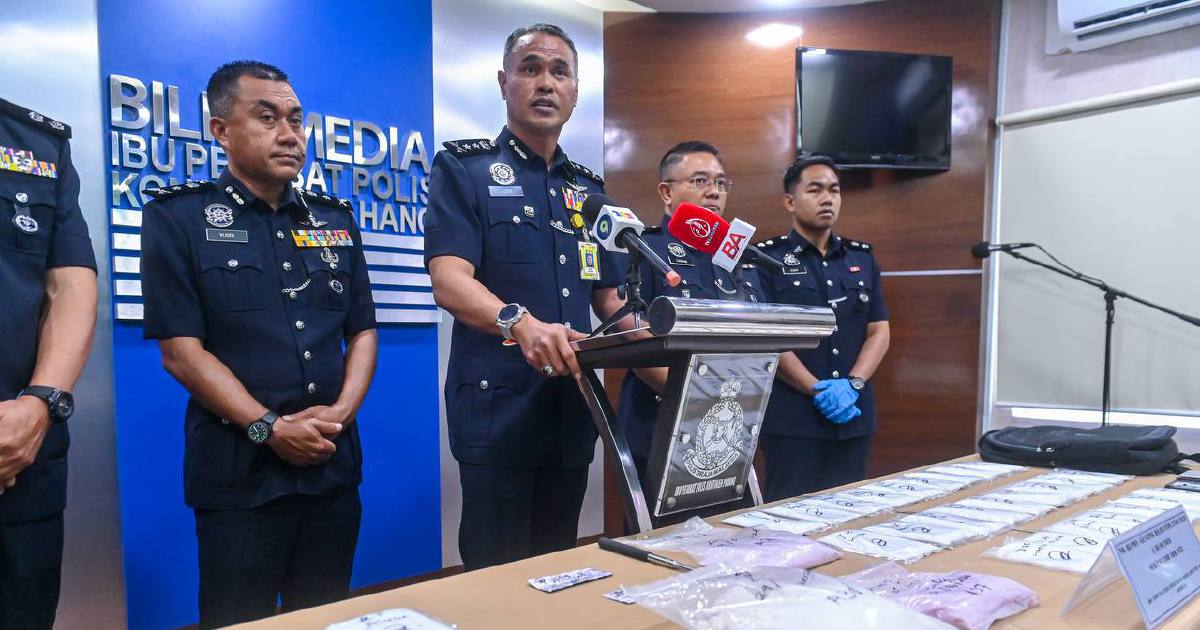
Drug enforcement authorities in Pahang have made a significant seizure following the arrest of a Thai woman and her Malaysian partner in the Bentong district, uncovering what investigators believe was an active narcotics distribution network. The pair was apprehended in Genting Permai during an operation that yielded contraband worth approximately RM728,000, marking another blow against organised trafficking in the region.
According to initial investigations, the couple had allegedly been functioning as couriers for a larger drug syndicate for the preceding three months, ferrying narcotics across routes in the area. The specifics of their operational structure—including how shipments were received, distributed, and to which markets they were destined—remain under active investigation by enforcement officers, who are treating the case as part of a broader criminal network.
The Bentong location holds particular significance in Malaysia's drug enforcement landscape. The district, situated in the western reaches of Pahang near Selangor's border, has historically been identified by authorities as a transit corridor for contraband moving between states. Genting Permai and surrounding areas have featured in previous narcotics cases, suggesting these regions warrant intensified monitoring and intelligence operations.
The arrest underscores the role of foreign nationals in Malaysia's drug trafficking ecosystem. Thai citizens have been encountered repeatedly across Malaysian drug-related cases, reflecting broader patterns of cross-border criminal networks that exploit regional connectivity. The involvement of a local partner points to collaboration between international operators and domestic facilitators—a structural feature that complicates interdiction efforts and requires coordinated law enforcement responses.
The monetary value assigned to the seized drugs provides insight into the scale of operation being dismantled. A haul exceeding RM700,000 represents substantial inventory, suggesting the syndicate possessed either significant upstream access to supply or had accumulated stock for distribution across multiple retail points. The calculation methodology—whether based on street value, wholesale rates, or official appraisals—typically influences how authorities publicly communicate seizure magnitudes.
Three months of alleged courier activity raises questions about detection protocols and the interval between suspected criminal activity and intervention. Law enforcement agencies across Malaysia maintain surveillance networks and intelligence channels designed to identify such operations, but the duration noted in this case indicates either recent acceleration of monitoring capabilities or that investigation had been underway before the enforcement action materialised.
For Malaysian readers, this arrest carries implications regarding domestic security and substance abuse trajectories. Courier networks represent critical vulnerability points in drug supply chains, and disrupting these pathways can reduce local availability and drive up street prices—factors that influence both public health outcomes and criminal economics. The region's geography makes it particularly susceptible to such operations, as proximity to other states facilitates rapid redistribution.
The case also highlights ongoing cooperation between Malaysia's anti-narcotics agencies and international law enforcement bodies. Given that one suspect holds Thai nationality, the investigation may involve coordination with Thai authorities regarding the origins and destinations of narcotics flows. Such intelligence-sharing has become increasingly sophisticated across ASEAN nations, though gaps and coordination challenges persist.
Beyond the immediate arrests, this incident contributes to broader understanding of how transnational criminal organisations structure their operations in Southeast Asia. By employing mobile couriers and rotating personnel, syndicates can insulate leadership while maintaining distribution networks. The arrest of operational-level actors typically yields valuable intelligence about higher echelons, though dismantling actual supply chain architecture requires sustained, multi-agency effort.
The detained pair face anticipated charges under Malaysia's Dangerous Drugs Act, which carries severe penalties including lengthy imprisonment and, for serious trafficking offences, capital punishment. The severity of the contraband quantity suggests prosecutors will pursue charges reflecting the gravity of the alleged crime, likely pushing beyond mere possession toward trafficking and conspiracy allegations.
From a regional perspective, this operation signals that Malaysian enforcement agencies maintain capability and focus on narcotics interdiction despite competing security priorities. The Bentong district operation demonstrates that systematic intelligence work and targeted enforcement can still identify and disrupt active trafficking networks. However, the existence of such operations over sustained periods also underscores the persistent challenge posed by regional demand, permeable borders, and the adaptability of criminal enterprises.
As investigations deepen, authorities will likely explore connections between the arrested couple and broader syndicate architecture, including potential linkages to other cases or networks. Intelligence derived from interrogations and forensic analysis of the seizure could inform future operations and shape resource allocation in identified vulnerability zones. The outcome of this case will contribute to the evolving understanding of how narcotics trafficking functions in Peninsular Malaysia's transitional zones.

