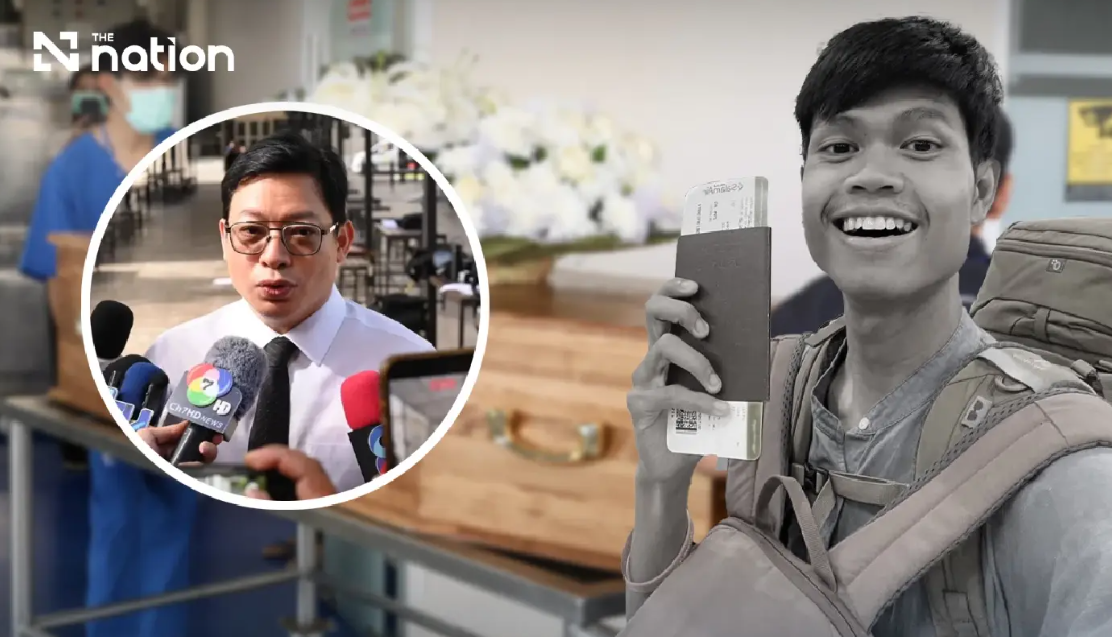
The death of prominent Thai travel vlogger Bawornthat "Hlun Solo" Pengsuk, who collapsed in Georgia, appears to stem from cardiac and circulatory dysfunction according to initial post-mortem examination findings released Thursday. The Central Institute of Forensic Science under Thailand's Ministry of Justice disclosed these preliminary conclusions after Pengsuk's remains were repatriated and examined by Thai medical specialists, though investigators deliberately refrained from drawing definitive conclusions pending completion of more rigorous laboratory analysis.
Associate Professor Dr Worawee Waiyawut, deputy director of the forensic institute, cautioned that the present findings do not preclude involvement of toxic substances or chemical compounds. The distinction carries significant weight for the Pengsuk family, whose representatives have consistently emphasised that toxicological screening represents a central component of their quest to understand the circumstances surrounding the 27-year-old content creator's sudden passing. The international dimension of the case—with preliminary examinations conducted in Georgia before the body's return to Thailand—has complicated the investigative process and heightened family concerns about information gaps.
The Georgian medical examination, completed before the body's transfer to Thailand, found no evidence of physical trauma, assault marks, or skeletal fractures. Pathologists detected no abnormalities affecting organs other than the heart itself, suggesting that if toxins played any role, they targeted the cardiovascular system specifically rather than causing systemic organ failure. This observation aligns with some medical literature on substance-induced cardiac events, though specialists have emphasised that numerous conditions—ranging from undetected genetic cardiac abnormalities to acquired inflammation of heart muscle tissue—can produce similar post-mortem findings.
The examination process has highlighted the complexity of determining cause of death across international borders. Georgian authorities provided minimal documentation to the family, furnishing only a death certificate without specifying cause and retaining organ samples and DNA material without clarifying intended testing protocols. This opacity has left the Pengsuk family with substantial unanswered questions and motivated their decision to request comprehensive Thai forensic evaluation. Somsak "Mos" Butsri, Pengsuk's elder brother and family spokesperson, expressed frustration at the lack of transparency from Georgian officials and emphasised the family's determination to obtain complete information through independent analysis.
Thai forensic specialists have indicated that definitive conclusions require extensive additional laboratory work. Cardiac tissue analysis will examine the heart muscle for signs of inflammation, scarring, or structural defects that might explain sudden failure. Genetic testing may reveal hereditary cardiac conditions that predispose individuals to sudden death, a particularly important consideration given public health concerns in Southeast Asia regarding undiagnosed familial arrhythmias and cardiomyopathies. The duration required for these tests remains uncertain, with the Ministry of Justice simultaneously coordinating with Georgian authorities to obtain copies of their own laboratory results and comparative analysis.
The possibility of sudden unexplained nocturnal death syndrome—a condition historically associated with young males in Southeast Asia, particularly Thailand—has circulated in public discussion but lacks official confirmation. The Butsri family has explicitly noted that such theories remain speculative without supporting clinical evidence. This distinction matters considerably, as sudden unexplained death during sleep often carries no obvious external indicators, making it difficult to distinguish from cardiac events triggered by undetected infections, metabolic disturbances, or toxic exposure without sophisticated testing.
The family's emphasis on toxicological investigation reflects both specific concerns and broader uncertainty. Pengsuk maintained an active travel vlogger lifestyle, documented on social media platforms, making his health status and potential exposures difficult to reconstruct comprehensively. His brother acknowledged that Pengsuk did not routinely discuss medical matters with family members, leaving open the possibility of undisclosed health conditions. The loss of personal belongings—retained in Georgia except for his passport—further complicates efforts to retrace his final days and identify potential environmental or consumable substances he may have encountered.
The repatriation process itself underscores the practical challenges Southeast Asian families encounter when death occurs abroad. Georgian authorities' retention of biological samples without clear communication to next-of-kin exemplifies common cross-border complications. Thailand's own forensic infrastructure, though professionalised and capable, operates within a system dependent on voluntary information-sharing from foreign governments. The Ministry of Justice's coordination efforts may require weeks or months to produce comparative results, a timeline that conflicts with the family's cultural obligations and funeral customs.
Traditional considerations now intersect with modern medical investigation in ways that create scheduling tensions. The Pengsuk family intends to transport the body to Pengsuk's home province of Kalasin for customary funeral rites following completion of Thai post-mortem procedures, anticipated by Friday. Yet the family remains uncertain how Pengsuk's elderly grandmother—whose primary concern centres on bringing her grandson home—will respond emotionally upon seeing the deceased. This emotional dimension, easily overlooked in clinical narratives, reflects the profound personal impact of unexplained death within families.
The unresolved nature of Pengsuk's death carries implications beyond his individual case. Young Thais and Southeast Asians engaging in content creation and travel professions increasingly face similar risks across borders, yet standardised protocols for cross-national death investigation remain underdeveloped. Pengsuk's case illustrates how gaps in international medical communication can leave families without answers and how relatively sudden cardiac events in young adults often escape diagnosis until post-mortem examination. For Malaysian and regional audiences following this case, it underscores the importance of medical screening for individuals with active lifestyles and the value of maintaining accessible health records when travelling internationally.

