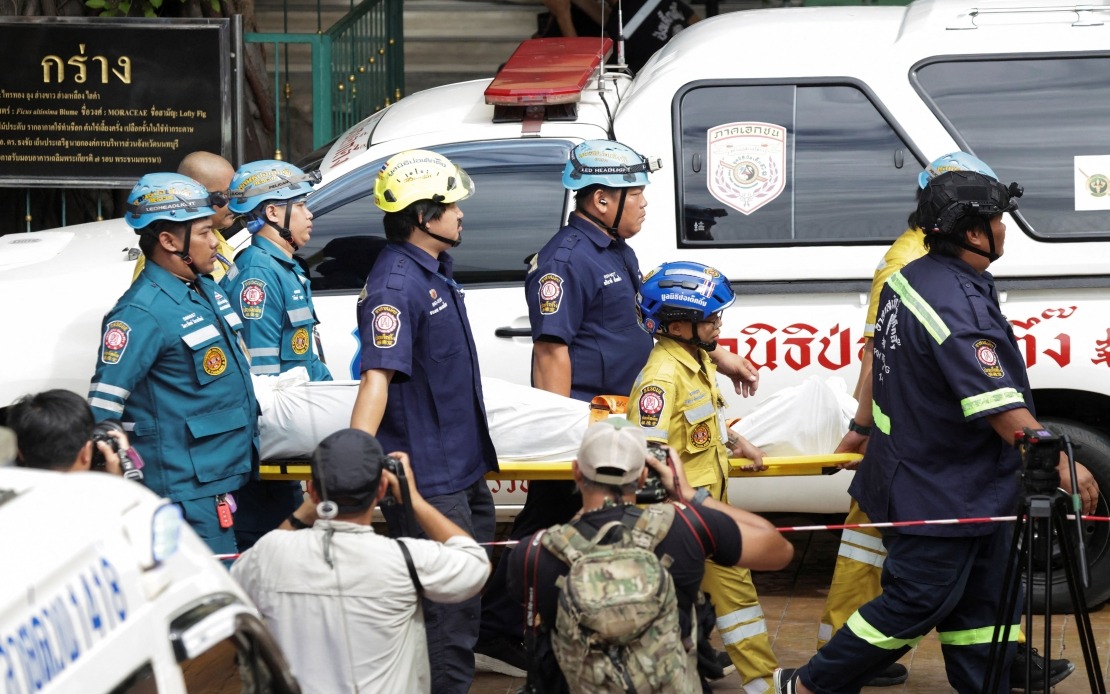
A student suspected of perpetrating a mass shooting at a school in Thailand's Nonthaburi province on Friday morning allegedly murdered his grandparents at their home before proceeding to carry out the attack that claimed six lives. The incident has shocked the region and raised fresh concerns about firearm access and school safety across Southeast Asia, echoing patterns of violence seen in neighbouring countries grappling with similar tragedies.
According to Lieutenant General Trairong Piwpan, Deputy Inspector-General of the Royal Thai Police, preliminary findings indicate the suspect discharged his weapon 26 times before arriving at Debsirin Nonthaburi School. Officers later discovered the bodies of both his grandfather and grandmother inside the family residence located in Bang Bua Thong district, each bearing fatal gunshot wounds to the head. The gruesome discovery provided the first clue that the school assault may have been preceded by a domestic tragedy within the family unit.
During their investigation at the scene, authorities recovered a 9mm handgun along with 34 additional rounds of ammunition that were not loaded into magazines. Investigators are still working to establish the chronological sequence of events and determine the precise timing between the killings at the grandparents' home and the subsequent school attack. Such forensic and timeline reconstruction remains crucial to understanding the psychological state and motivations of the suspect at various points during the violent spree.
The shooting at Debsirin Nonthaburi School erupted around 10 in the morning, transforming an ordinary school day into a scene of chaos and tragedy. The attack claimed the lives of three educators and three students, marking one of Thailand's most deadly school shootings in recent memory. The violence extended beyond fatalities, leaving 15 additional victims injured—a toll that underscores the indiscriminate nature of the gunfire and the speed with which tragedy unfolded within the school premises.
Investigators confirmed that the suspected gunman was also found dead at the school, though authorities have not publicly disclosed whether he was killed by responding officers or took his own life. This detail remains significant in understanding how the incident concluded and whether the suspect was apprehended or perished during his assault. The death toll among both perpetrator and victims illustrates the catastrophic human cost of such incidents and the profound impact on the institution and broader community.
The case has prompted Thai authorities to intensify efforts to comprehend what drove the student to such extreme violence. Establishing clear motive remains a critical investigative objective, as does reconstructing the full sequence of events across multiple locations and time periods. Police acknowledge that understanding why the suspect targeted both his family members and his school community could provide invaluable insight into prevention of similar tragedies in the future.
For Malaysian observers, the incident serves as a sobering reminder of vulnerabilities that transcend borders in the region. Thailand's experience reflects broader challenges facing Southeast Asian nations regarding firearm regulation, mental health support systems, and threat assessment protocols in educational institutions. While Malaysia maintains stricter firearms laws than Thailand, school safety remains a concern that policymakers and educators across the region continue to address through institutional protocols and training.
The tragedy also highlights the intersection of familial violence and mass casualty incidents, a pattern that criminologists have identified globally. The fact that the suspect allegedly killed intimate family members before attacking his school community suggests potential warning signs that may warrant greater attention to early intervention systems. Schools and communities in Southeast Asia might benefit from enhanced protocols for identifying students exhibiting signs of severe distress or behavioural changes that could precede violence.
Thailand's recurring struggles with gun violence have prompted ongoing debates about firearm licensing, storage requirements, and enforcement mechanisms. Unlike some neighbouring nations with comparatively stricter controls, Thailand's approach to civilian gun ownership has faced criticism from advocates concerned about public safety. Each significant incident reignites these discussions and prompts officials to reconsider existing regulations and their implementation.
The incident at Debsirin Nonthaburi School represents far more than a single tragedy; it reflects systemic challenges that demand multifaceted responses across law enforcement, education, mental health, and policy domains. Regional cooperation and information-sharing regarding threat assessment and prevention frameworks could enhance collective security. As Thailand's authorities conclude their investigation, the broader Southeast Asian community watches closely, mindful that lessons learned from this tragedy may prove vital to preventing similar violence elsewhere in the region.

