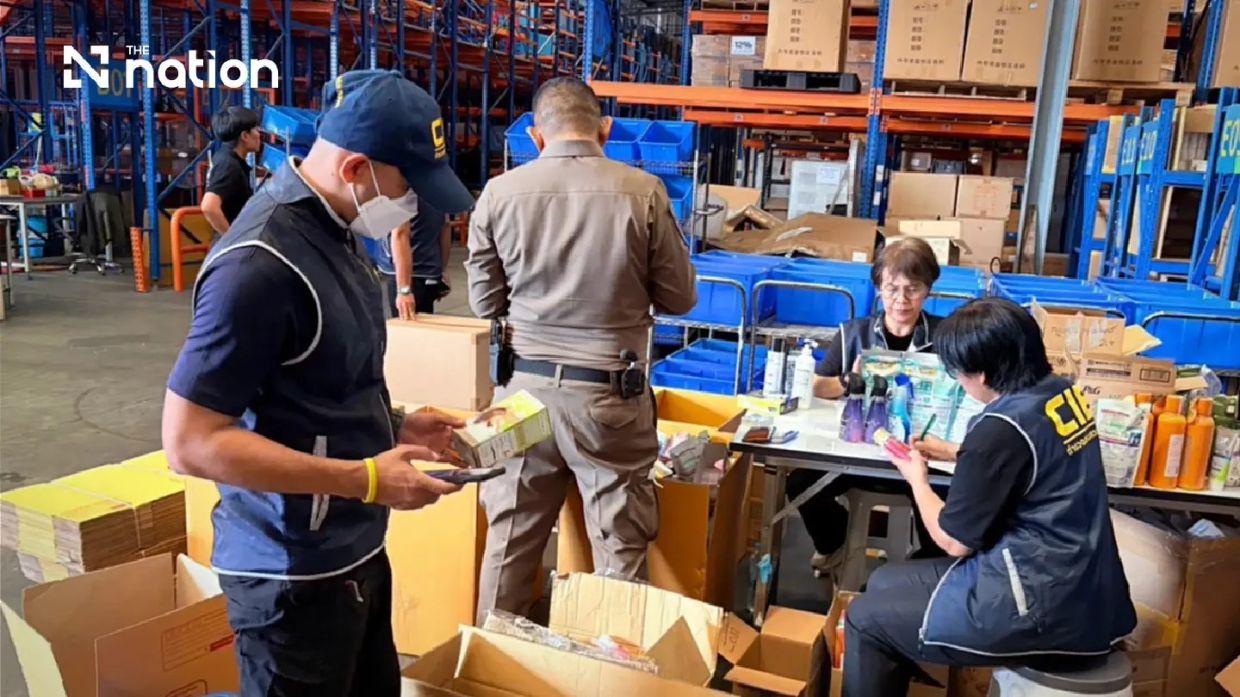
Thai police have dismantled a major distribution hub for unapproved Japanese consumer products, seizing 83,483 items valued at over 8.34 million baht from a warehouse in Bang Phli district, Samut Prakan province. The operation, conducted on Thursday by the Consumer Protection Police Division under the direction of Pol Maj Gen Kongkrit Lertsittikul, targeted a storage and logistics facility that had been serving online merchants across various digital platforms while circumventing mandatory safety and regulatory frameworks.
The confiscated merchandise comprised 116 different product types, predominantly cosmetics, dietary supplements, and medicinal preparations imported directly from Japan. What distinguished these items as contraband was not their origin or inherent quality, but their failure to comply with fundamental Thai import requirements. Each product lacked the requisite Thai-language labelling, had not undergone mandatory safety assessments, and possessed no certification from relevant government authorities. This regulatory vacuum meant consumers purchasing through online channels had no assurance regarding ingredient safety, authenticity, or appropriate usage instructions.
The warehouse operation represented a sophisticated grey-market enterprise that had operated largely undetected for more than four years. Initially functioning as a simple storage facility for imported goods, the business had evolved into a comprehensive logistics hub offering packing and labelling services to online retailers. The scale of daily operations was substantial: approximately 200 to 300 items were processed for shipment each day, with the warehouse charging between 10 and 12 baht per box for packing services. This model generated consistent revenue while deliberately avoiding the bottleneck of regulatory compliance that legitimate importers must navigate.
The investigation origins trace to mounting consumer complaints about online platforms hawking cosmetics, supplements, medicines, and hazardous household products without proper Thai-language labelling or ingredient disclosure. Police investigators methodically tracked product provenance and discovered that most items derived from Japanese imports that had bypassed standard certification procedures. The warehouse's role became evident: it functioned as the critical nodal point where unvetted foreign products were repackaged and distributed to dozens of online sellers, effectively amplifying the scale of potential consumer harm across the digital marketplace.
For Malaysian and Southeast Asian readers, this case illuminates a persistent vulnerability in regional e-commerce ecosystems. Online platforms offer convenience and competitive pricing, yet their borderless nature and rapid transaction volumes create enforcement challenges for even well-resourced regulatory bodies. The Thai warehouse model could readily be replicated elsewhere in the region, with similar facilities operating in port cities or logistics hubs that service multiple countries. The 8.34 million baht valuation suggests substantial profit margins, providing economic incentives for operators to persist despite legal risks.
The products in question carry genuine health ramifications extending beyond mere regulatory technicalities. Unapproved cosmetics may contain prohibited substances, heavy metals, or undisclosed allergens that trigger severe dermatological reactions. Dietary supplements lack verified potency claims and may harbour contaminants or dangerous adulterants. Medicines without proper labelling invite dosing errors and adverse drug interactions, particularly hazardous for vulnerable populations including children and elderly consumers. Thailand's regulatory framework exists precisely to prevent such scenarios, yet the warehouse operation had operated for years partly because detection mechanisms struggle with the opacity of online commerce.
The legal response encompasses multiple statutes reflecting the complexity of cross-boundary regulatory violations. Defendants face prosecution under Thailand's Cosmetics Act, Food Act, Drug Act, and Hazardous Substances Act. These diverse charges acknowledge that the seized products spanned multiple consumer safety domains, each requiring separate regulatory oversight. The Cosmetics Act governs appearance and skincare products, the Food Act addresses supplements and nutritional items, the Drug Act manages medicinal preparations, and the Hazardous Substances Act regulates potentially dangerous household goods. This multi-statute approach suggests prosecutors intend robust legal action against those responsible for orchestrating the distribution network.
The investigation's success depended on conventional police work culminating in court-approved warehouse inspection. Officers gathered sufficient preliminary evidence to persuade judges to authorize the raid, a threshold that prevented premature action based on mere suspicion. This procedural rigour, while sometimes appearing cumbersome, protects against arbitrary enforcement and establishes documented chains of custody essential for prosecution. The case now proceeds to Sub-Division 4 of the Consumer Protection Police Division, whose investigators specialise in commercial consumer fraud cases and understand the regulatory landscape in depth.
Beyond immediate prosecutions, this case highlights systemic weaknesses in online marketplace governance throughout Southeast Asia. E-commerce platforms facilitate transactions between millions of buyers and sellers daily, yet responsibility for product vetting remains ambiguous. Should platforms conduct mandatory compliance verification for all merchants? Should government agencies maintain real-time surveillance capacity for online transactions? These questions lack consensus answers across the region, even as cross-border commerce grows exponentially. Thailand's response demonstrates one enforcement strategy—targeting distribution hubs—but prevention requires platform accountability mechanisms and consumer awareness.
The warehouse raid carries implications for legitimate Japanese exporters whose reputations depend on product integrity. Unauthorised imports bearing Japanese brand identities or mimicking established product ranges create counterfeiting dynamics that damage industry credibility. Japanese manufacturers invest in regulatory compliance globally, yet unauthorised distribution channels undercut those efforts and create competitive disadvantages. This dynamic encourages legitimate companies to cooperate with authorities, recognising that effective enforcement ultimately protects their market position and brand equity.
For Southeast Asian consumers navigating online marketplaces, this case underscores fundamental risks accompanying digital shopping convenience. Products offered through established platforms sometimes originate from unvetted supply chains lacking transparency. Consumers purchasing cosmetics, supplements, or medicines online should scrutinize seller credentials, verify product authenticity through manufacturer websites, and exercise particular caution with items priced significantly below official retail levels. The warehouse raid represents police success in disrupting one criminal network, yet countless similar operations may continue operating across the region's digital commerce infrastructure, exploiting regulatory gaps and consumer trust.

