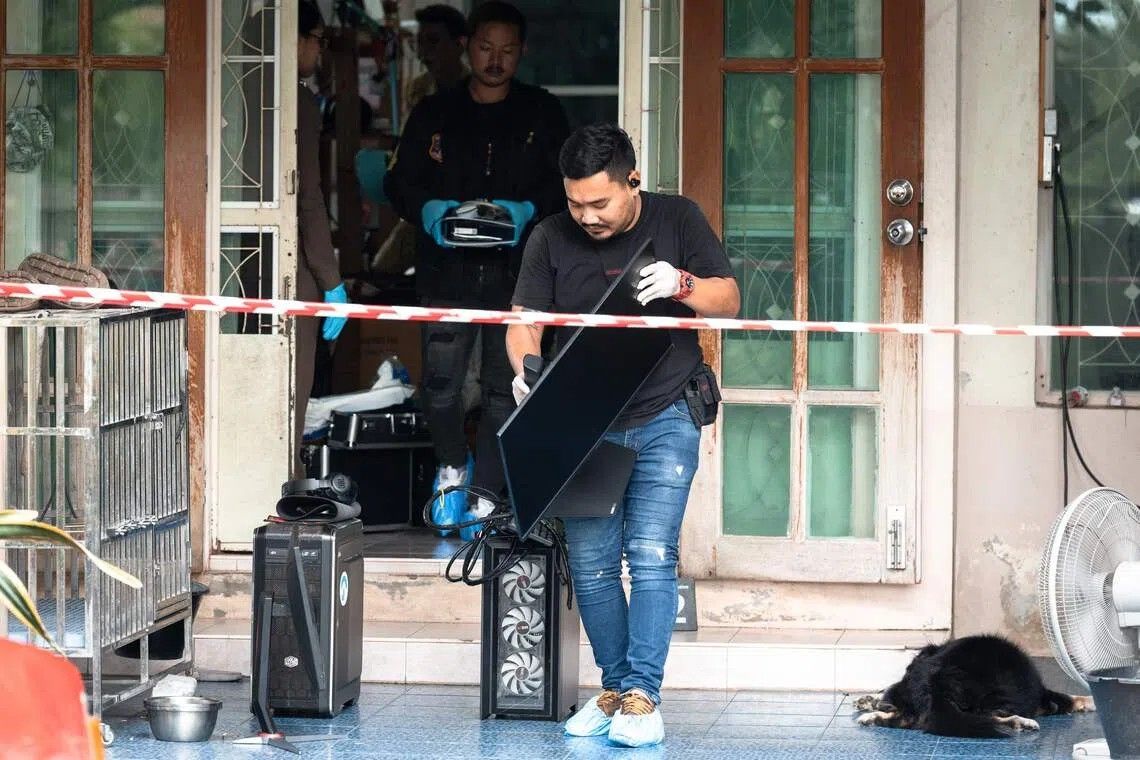
Police in Thailand are scouring the digital records of a 14-year-old suspect in the shooting at Debsirin Nonthaburi School, where investigators discovered searches for information about school shootings in the United States dating back to late July. The probe into the August 7 incident is attempting to identify potential motivations behind the violence, with authorities examining multiple aspects of the teenager's life and online behaviour as they construct a timeline of events leading to the attack.
Investigators believe the boy shot and killed his grandparents at their home in Bang Khu Rat subdistrict, Bang Bua Thong district, before proceeding to the school where gunfire erupted later that morning. Officers and forensic teams discovered the elderly couple's bodies after entering the property, where the front door had been secured from the outside. The sequence of events suggests the teenager departed the residence following the deaths and travelled to the educational facility, though authorities are still working to establish precise details of his movements throughout the morning.
Wattana Yichin, commissioner of Provincial Police Region 1, personally oversaw inspections of the grandparents' residence as part of the ongoing investigation. The thoroughness of this high-level involvement underscores the gravity with which Thai law enforcement is treating the case, recognising both the shock value of the incident and the need for meticulous forensic and circumstantial analysis. The examination of the crime scene has provided crucial evidence regarding the sequence and nature of the killings.
Digital forensics have revealed that the suspect engaged in online searches related to violent subject matter throughout late July and into early August. Computer analysis found evidence of gaming sessions involving titles with violent content, alongside specific searches about school shootings occurring in the United States. Preliminary findings indicate these searches were conducted approximately one week before the August 7 incident, establishing a concerning timeline of escalating interest in similar violent events.
However, law enforcement has been careful to avoid drawing definitive causal links between the teenager's online consumption and his actions. Investigators emphasise they have not yet concluded that either the video games or search history directly motivated or caused the attacks. Instead, authorities are pursuing a broader investigative approach, examining multiple potential contributing factors including interpersonal dynamics at school and the boy's overall psychological state and social circumstances.
According to information provided by the suspect's uncle, the teenager had resided with his grandparents since early childhood and spent substantial portions of his time engaged in computer gaming. The relative characterised the boy as predominantly reclusive, maintaining limited social connections and spending most of his time at home rather than participating in typical peer group activities. Notably, the uncle reported observing no clear warning signs, disputes within the household, or obvious manifestations of psychological distress in the period immediately preceding the violence.
The grandfather, now deceased, held legal registration for the firearm used in the shooting, according to police documentation. This detail raises questions about weapon security and household gun storage practices that may become central to understanding how the teenager gained access to the lethal instrument. Authorities have focused their inquiry on establishing a complete sequence of events and identifying whatever combination of circumstances, if any, contributed to the tragic outcome.
Thananyaporn, 60, the younger sister of the deceased grandfather and an aunt to the student in question, has provided family perspective on the boy's upbringing and household dynamics. She corroborated the account that he had been raised by his grandparents following his parents' separation, emphasising the strong emotional bonds between the three family members. She noted that his grandfather would transport him to and from school daily, and that his grandmother worked as an educator while his grandfather, a retired bank manager, maintained a gentle approach to child-rearing.
The aunt's recollections paint a picture of a quiet, polite adolescent who existed somewhat on the margins of typical teenage social life. She described how he neither maintained a peer group nor engaged in the outdoor activities common among his age cohort, instead preferring the isolation of home-based computer activities. The family characterisation emphasises how little forewarning anyone close to him had regarding his capacity for such extreme violence, adding to the apparent inexplicability of the tragedy from those who knew him best.
Thananyaporn expressed deep conviction that the incident could not have stemmed from family conflict, given the profound closeness binding the three household members together. Her testimony suggests that any explanation for the teenager's actions must look beyond immediate domestic discord or obvious signs of family instability. This assessment complicates the investigative picture, as it suggests law enforcement must examine school-related stressors, underlying psychological disturbance, or influences from his digital environment rather than conventional domestic violence indicators.
The Thailand shooting represents a disturbing addition to documented incidents of youth gun violence intersecting with internet-facilitated pathways to information about similar crimes. For the Southeast Asian region, where gun ownership remains relatively restricted compared to countries like the United States, such an incident raises concerns about how unrestricted online access to documentation of international mass shootings may influence mentally vulnerable young people. The investigation's findings regarding the teenager's specific searches and online consumption patterns will carry implications for understanding how digital content crosses borders and shapes behaviour among isolated adolescents with access to firearms.
Police have signalled that their investigation continues with methodical examination of the evidence and circumstances. The focus on establishing a clear sequence of events and identifying contributing factors reflects a law enforcement approach seeking to understand not merely what happened, but why it happened and what combination of access, psychology, environment, and information consumption culminated in violence. As the case develops, Thai authorities will need to balance investigative findings with broader implications for school safety, gun security, and digital literacy in an increasingly connected region where the vulnerabilities of isolated youth can be magnified by unrestricted access to information about violence elsewhere in the world.

