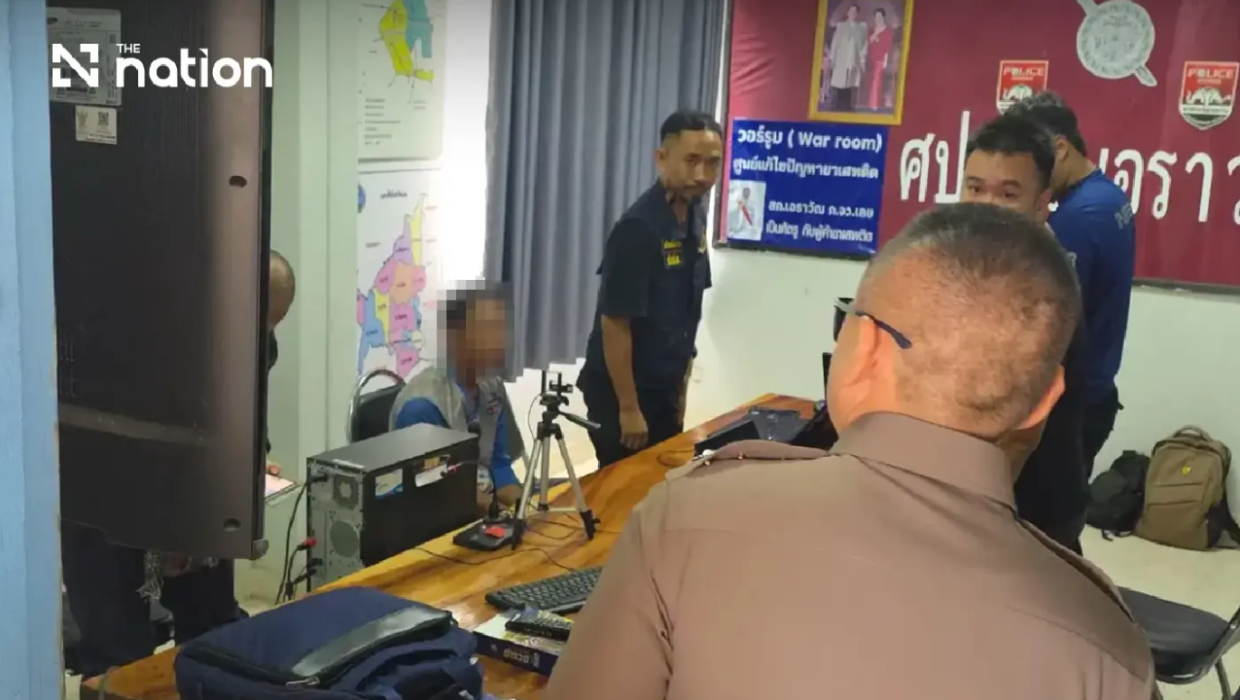
Thai police have widened their investigation into an alleged international narcotics trafficking operation following the arrest of a Thai Airways flight attendant in Melbourne, leading authorities to detain a married couple in Loei province who are believed to have played a crucial role in the supply chain. The operation represents a significant interdiction effort by Thai law enforcement working in coordination with Australian counterparts to dismantle what authorities describe as a sophisticated cross-border drug movement scheme.
The investigation originated with the arrest of a flight attendant, identified in Thai media reports as Mina, who was apprehended at Melbourne Airport after Australian police discovered approximately one kilogram of heroin concealed within her luggage. Rather than treating the case as an isolated incident, Thai police and related agencies recognised this interception as evidence of a structured network and immediately launched parallel inquiries to trace the origins and organisational structure of the alleged operation. This coordinated approach between Thai and Australian law enforcement proved critical in identifying the domestic links within Thailand's borders.
On Thursday, July 2, investigators from Chiang Khan Police Station, working alongside officers from the Office of the Narcotics Control Board and other specialised units, conducted searches in That subdistrict of Chiang Khan district in Loei province targeting individuals named Athit, 43, and Thatsaphon, 42. When the suspects were not located at their registered address in Pak Tom subdistrict, authorities learned the pair had travelled to work in the rubber-tapping industry in Erawan district, requiring a coordinated search effort across multiple locations.
Police tracked Athit to Wat Tham Pha Mak Ho temple in Wang Saphung district, where he was engaged in roof repairs. Upon detention and questioning at Erawan Police Station, authorities reported that Athit confessed to being paid to dispatch parcels to Bangkok on six separate occasions. According to police records, three parcels were sent via a parcel service operating in Chiang Khan, two originated from Ban That in That subdistrict, and one was dispatched from Erawan district. The consistent pattern of shipments suggests a well-established operational routine rather than ad-hoc activity.
Financial records obtained during the investigation indicated that Athit received 8,000 baht, approximately US$240, per parcel delivery from a Lao national coordinating the scheme. The most recent parcel in this series was allegedly sent on June 28, 2026, indicating active ongoing operations at the time of police intervention. This modest per-delivery compensation suggests Athit may have occupied a relatively low-level position within the larger trafficking hierarchy, serving as an unwitting or complicit conduit rather than a decision-maker.
Thatsaphon, identified as a Lao national and Athit's wife, was subsequently detained after police discovered a black Mitsubishi Triton pickup bearing Loei registration parked in a rubber plantation within the Pha Nang-Pha Koeng area of Erawan district. When questioned at Erawan Police Station, Thatsaphon denied any knowledge of or involvement in the alleged smuggling activities. Her arrest raises questions about the level of awareness or participation among family members in the household, a common investigative focus in transnational trafficking cases where spouses may unknowingly facilitate operations or maintain plausible deniability.
Both suspects have now entered the formal questioning process administered by the Office of the Narcotics Control Board, with investigators indicating their intention to expand the case beyond the immediate detainees. Authorities are actively seeking to identify individuals who ordered the shipments, provided financial support, or assisted in logistics and coordination. This widening of the investigative net reflects a strategic approach to dismantling the entire network rather than addressing only the low-level operatives who executed individual transactions.
The ONCB secretary-general characterised the case as emblematic of contemporary transnational drug trafficking methodologies, particularly the deliberate utilisation of individuals at various operational levels to fragment the supply chain and obscure accountability. By distributing specific tasks among numerous participants, trafficking organisations seek to ensure that no single person possesses complete knowledge of the operation, thereby reducing the impact of individual arrests. The ONCB highlighted the critical importance of cooperation between Thai and international law enforcement agencies in successfully tracing these complex networks and identifying connection points across borders.
The agency has pledged to escalate investigation efforts and pursue prosecutions against all individuals implicated at every level of the alleged operation, from street-level couriers to organisational leaders. Beyond individual cases, the ONCB is committed to strengthening institutional cooperation with foreign authorities to intercept transnational shipments, disrupt established trafficking routes, and eliminate the financial mechanisms that sustain these networks. This two-pronged enforcement and prevention strategy aligns with Thailand's broader government policy on drug suppression, reflecting a recognition that international trafficking cannot be effectively countered through unilateral domestic action alone.
For Malaysia and the broader Southeast Asian region, this case underscores the persistent vulnerability of the area to organised narcotics trafficking. The involvement of a Thai Airways flight attendant illustrates how commercial aviation is exploited as a smuggling conduit, a particular concern for Malaysia given Kuala Lumpur International Airport's status as a major regional hub. The use of couriers recruited from economically disadvantaged areas and the involvement of cross-border networks suggest similar operational patterns likely exist across the region. The Thai investigation's success in identifying domestic links demonstrates the importance of regional cooperation and information-sharing protocols that Malaysian authorities can leverage in their own interdiction efforts and intelligence operations.
The case also highlights the vulnerability of neighbouring Lao nationals in trafficking operations, suggesting possible organised crime networks operating across Lao-Thai borders. For Malaysia, which shares maritime borders with Thailand and faces its own transnational trafficking pressures, the lessons from this investigation—particularly regarding the systematic exploitation of low-wage workers and the compartmentalised structure of modern trafficking organisations—are directly applicable to local enforcement strategy and border management initiatives.

