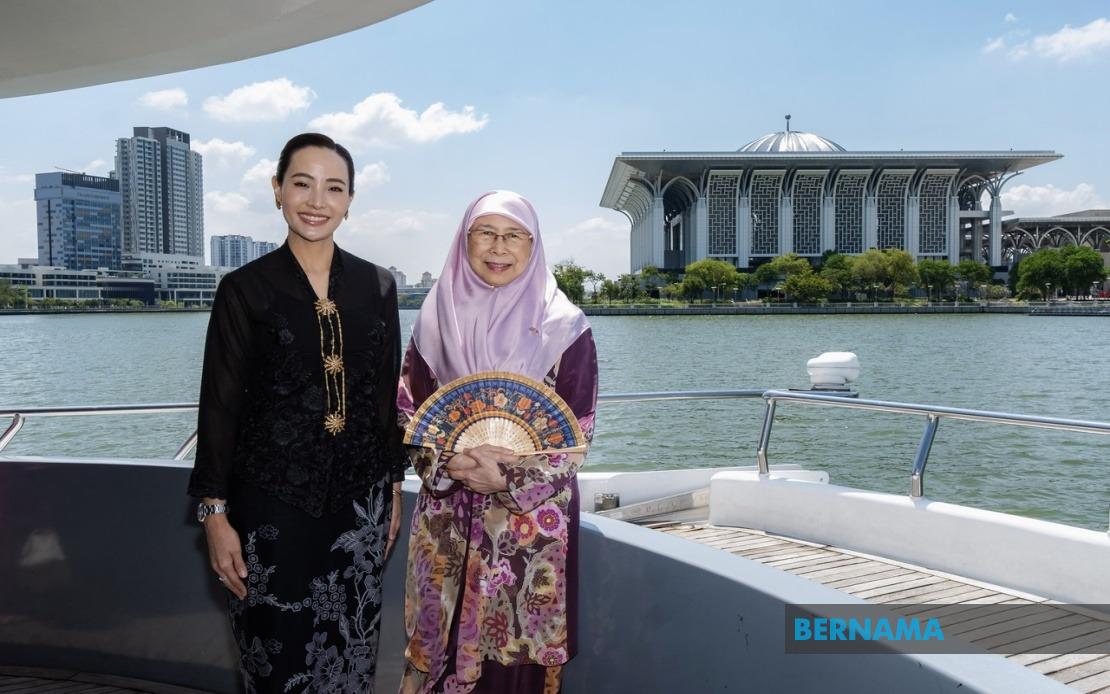
Thailand's First Lady Thananon Charnvirakul experienced a tranquil afternoon on Tasik Putrajaya on Thursday, gliding past the architectural and administrative gems that define Malaysia's federal territory. The leisurely 45-minute cruise offered her expansive vistas of the meticulously planned capital, a destination that increasingly attracts regional dignitaries keen to understand Malaysia's governmental vision and urban design philosophy. Her hosts ensured the visit struck the right balance between ceremonial formality and relaxed diplomacy, a hallmark of Southeast Asian state visits that extend beyond conference tables.
Upon her arrival at approximately 12.10 pm, Thananon was received by Datuk Seri Dr Wan Azizah Wan Ismail, wife of Prime Minister Datuk Seri Anwar Ibrahim. The gesture underscored the personal dimensions of bilateral engagement, where spousal participation signals heightened respect and commitment to deepening institutional relationships. Minister in the Prime Minister's Department (Federal Territories) Hannah Yeoh's presence reinforced official endorsement, reflecting the significance accorded to the Thai delegation within Malaysia's governance hierarchy. Throughout the cruise, Thananon and Dr Wan Azizah engaged in animated conversation, their interaction conveying the informal rapport that often undergirds formal state relations and creates space for candid dialogue on mutual concerns.
Thananon's visit forms part of a broader two-day official sojourn undertaken by her husband, Thai Prime Minister Anutin Charnvirakul, who touched down in Malaysia earlier that day. Both were welcomed with ceremonial protocols befitting senior state visitors at the Bunga Raya Complex of Kuala Lumpur International Airport, signalling Malaysia's commitment to honouring the guest nation's head of government. The itinerary, punctuated by Putrajaya's scenic offerings, demonstrates how administrative capitals have evolved beyond functional centres into diplomatic stages where relationships are cultivated through shared experiences and cultural appreciation.
This expedition marks Anutin's inaugural official visit to Malaysia following his reappointment to the premiership in March 2026, a development that carries particular significance for bilateral relations. The timing suggests both nations recognise the importance of reinforcing ties at the leadership level after Anutin's return to office. Malaysian officials appear keen to reset engagement parameters and demonstrate continuity in the strategic partnership, ensuring Thailand's new governmental chapter commences with reaffirmed commitments to existing frameworks and emerging collaborative opportunities. The invitation itself, extended by Anwar, conveys Malaysia's intention to position itself as a reliable, forward-looking partner within the Thai leadership's diplomatic calculations.
The visit articulates a shared Malaysian and Thai commitment to strengthening bilateral bonds forged over decades of interaction. Beyond ceremonial pleasantries, both governments are actively exploring expanded cooperation across sectors of genuine mutual benefit. Putrajaya's curated showcase during the cruise implicitly communicates Malaysian aspirations in urban governance, sustainability, and administrative modernisation—areas where Thailand may identify lessons or partnership opportunities. The lakeside setting, with its symbolic representation of ordered development and environmental consciousness, provides a backdrop for discussing governance philosophies that transcend borders.
Regional observers recognise that Thailand-Malaysia relations occupy a distinctive space within Southeast Asian architecture. Both nations share maritime boundaries, overlapping economic interests, and complex historical relationships that demand sophisticated diplomatic management. High-level visits from current leaders represent opportunities to address outstanding issues, particularly in areas such as border security, cross-border trade facilitation, and people-to-people exchange. Anutin's presence at the invitation of Anwar underscores mutual respect between democratic leaderships navigating comparable governance challenges and regional positioning imperatives.
Putrajaya's role as a diplomatic destination reflects broader strategies by both Malaysia and other Southeast Asian capitals to leverage their administrative centres as soft power instruments. The carefully orchestrated tour of landmarks communicates narratives about national vision, developmental achievements, and forward-looking governance models. For Thai officials observing their delegation's reception, the experience conveys Malaysian hospitality and institutional sophistication. Conversely, Malaysian hosts gather intelligence about Thai priorities and leadership styles, information invaluable for calibrating subsequent diplomatic engagements.
The cruise itself exemplifies how modern state visits incorporate leisure and relationship-building alongside formal obligations. Rather than confining interaction to conference rooms and official dinners, including unstructured moments on the water allows genuine rapport to develop. Such settings facilitate candid conversations unlikely in rigid ceremonial contexts, enabling leaders' spouses and ministerial delegations to explore common ground beyond prepared remarks and official agendas. Dr Wan Azizah's participation as Anwar's representative extends Malaysia's diplomatic reach through influential women in governmental ecosystems, a practice increasingly recognised as strategically valuable.
Looking forward, Anutin's visit and its constituent activities signal both governments' determination to translate bilateral goodwill into concrete outcomes. Subsequent bilateral meetings and joint statements will likely address trade expansion, connectivity initiatives, and regional security cooperation. The symbolic importance of the Putrajaya visit lies less in its immediate practical outcomes than in its messaging: that Malaysia views Thailand's leadership transition positively and seeks deepened engagement under Anutin's stewardship. For Thai audiences, the reception communicates Malaysia's stability and continued commitment to regional partnerships despite any domestic political shifts.

