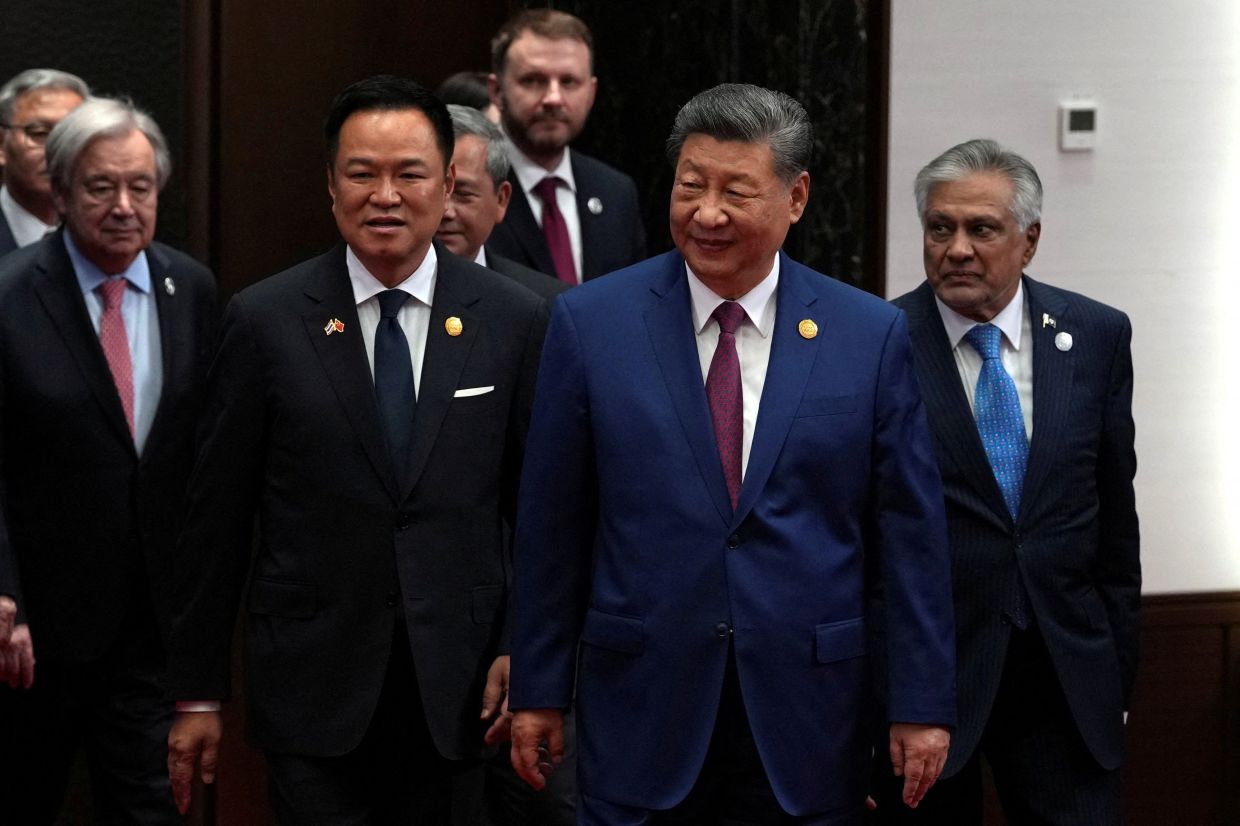
Thai Prime Minister Anutin Charnvirakul continued his unconventional approach to regional diplomacy this week by performing a song at a formal state lunch in Beijing, serenading Chinese Premier Li Qiang with a rendition of a classic Teresa Teng composition. The performance, which took place on Monday during the Thai leader's official visit, underscores an increasingly distinctive diplomatic strategy that emphasises personal connection and cultural exchange over traditional protocol. Video footage released by Anutin's office captured the moment the Thai Prime Minister sat beside the Chinese Premier, microphone in hand, while assembled diplomats and officials watched from beneath Thai and Chinese flags. The informal performance, accompanied by piano music in the background, drew applause from the gathered guests and signals Thailand's continued effort to strengthen ties with its northern neighbour and major trade partner.
This Beijing performance represents merely the latest chapter in what has become the hallmark of Anutin's tenure as Prime Minister. Just weeks earlier, Anutin appeared alongside Malaysian Prime Minister Anwar Ibrahim at an official engagement, where the two leaders collaborated on a musical rendition of "My Way", the iconic Frank Sinatra standard. During that performance, Anutin played the saxophone while his Malaysian counterpart provided the vocals, demonstrating an easy rapport between the two neighbouring countries' top officials. The gesture carried particular significance given the importance of Malaysia-Thailand relations to broader ASEAN unity and regional stability, areas where cultural exchanges can help build goodwill beyond formal diplomatic channels.
Across Southeast Asia, Anutin has actively cultivated this personal touch to international relations. During a recent visit to Hanoi, the Thai leader participated in a musical session with Vietnamese musicians, performing on a traditional local instrument in the company of Vietnamese Premier Le Minh Hung. These performances reveal a calculated strategy to humanise high-level diplomacy and create memorable moments that extend beyond the usual speeches and formal declarations. By engaging in cultural activities that appeal to local audiences, Anutin appears intent on building popular support for his government's foreign policy decisions while simultaneously demonstrating respect for his regional counterparts.
Anutin assumed office in September 2025, following Thailand's February elections, positioning himself as a bridge between Thailand's establishment and its broader population. Coming from a prominent construction family, he brings considerable wealth and business acumen to the role, yet has deliberately cultivated an image as someone who connects with ordinary Thais. This public persona extends beyond politics into his personal interests and hobbies. Beyond his musical talents, Anutin is an accomplished amateur jet pilot and maintains proficiency on both the piano and the Thai flute, skills that clearly inform his diplomatic strategy. These pursuits showcase a leader who, rather than remaining confined to governmental officialdom, actively participates in activities that define Thai culture and lifestyle.
The musical diplomacy approach also reflects Anutin's understanding of Thailand's traditional social structures and conservative cultural values. Despite Thailand's periodic political turmoil and debates over governance, the nation remains largely conservative in its social outlook, with strong attachment to traditional institutions and cultural practices. By incorporating classical music, traditional instruments, and respected international standards into his diplomatic engagements, Anutin signals alignment with these values while simultaneously demonstrating openness to cross-cultural exchange. This balancing act between tradition and engagement has proven effective in securing broader public acceptance of his government's direction.
Recent additions to Anutin's musical portfolio have further broadened his appeal beyond diplomatic circles. The Thai Prime Minister has reportedly performed alongside a young Thai musician whose talent was showcased on the international television programme America's Got Talent, and whose performance subsequently went viral on social media platforms. This collaboration extends his musical diplomacy into the realm of popular culture and youth engagement, areas where traditional politicians often struggle to connect authentically. By appearing alongside a contemporary music talent, Anutin demonstrates relevance to younger, more globally-oriented segments of Thai society while also celebrating Thai excellence on the international stage.
From a regional perspective, Anutin's musical approach to diplomacy carries broader implications for how Southeast Asian nations interact with one another and with major powers. Thailand occupies a strategic position in the region, maintaining important relationships with China, Vietnam, Malaysia, and other ASEAN members while balancing ties with traditional Western partners. By employing cultural and musical exchange as a diplomatic tool, Anutin offers an alternative model to more confrontational or strictly transactional approaches to international relations. These performances cost little yet generate significant media coverage and public goodwill, making them a cost-effective diplomatic investment.
The strategy also resonates particularly well in the digital age, where social media amplification extends these performances far beyond the immediate audience. Video footage of a Prime Minister singing alongside international counterparts generates organic social media engagement and humanises diplomatic relations in ways that traditional press releases cannot achieve. For Malaysian, Vietnamese, and Chinese publics observing these interactions, they suggest a Thai leadership committed to friendship and cultural understanding rather than competition or conflict.
Looking forward, Anutin's musical diplomacy may establish a new precedent for Thai statecraft and potentially influence how other Southeast Asian leaders approach international engagement. Whether this approach produces measurable diplomatic dividends beyond symbolic gestures remains to be seen, but the strategy clearly reflects a leader comfortable breaking from traditional diplomatic conventions while maintaining respect for cultural sensitivities and regional protocols.

