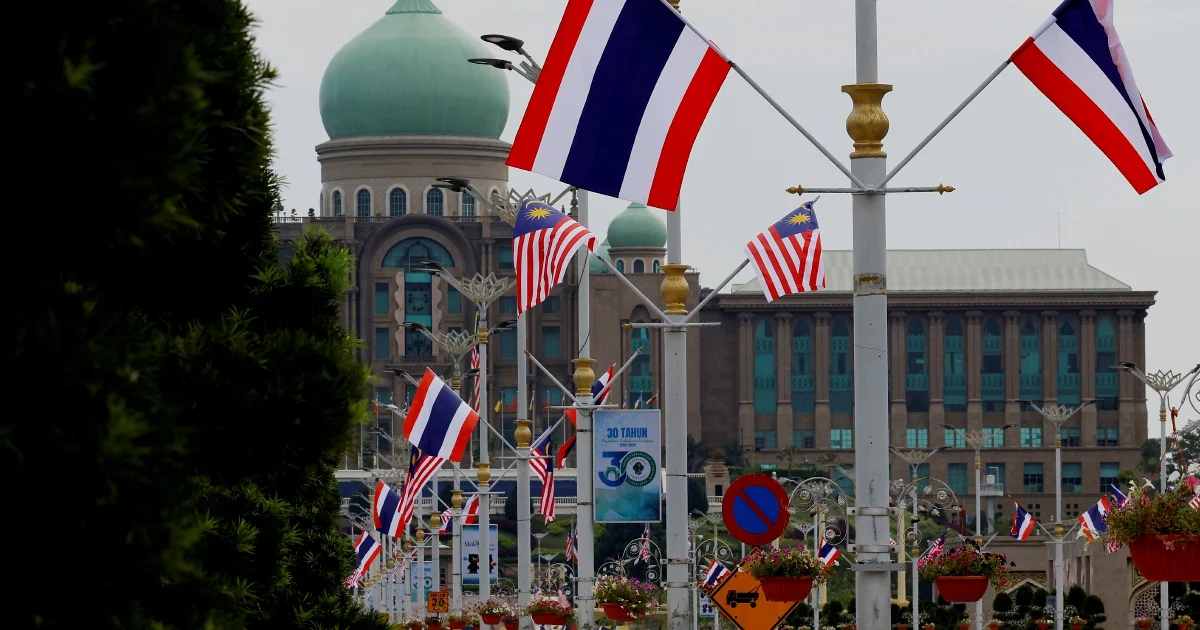
Thai Prime Minister Anutin Charnvirakul is set to arrive in Malaysia on Thursday for a two-day official visit aimed at strengthening cross-border relations and advancing joint development initiatives. The high-level diplomatic engagement underscores the growing importance of direct transport connectivity between Bangkok and Kuala Lumpur, as both governments seek to leverage geography and trade potential in the region's increasingly integrated economy.
The centrepiece of the Thai leader's visit will be the inauguration of a new border road connecting the two nations, a project that has been in development as part of broader infrastructure modernisation efforts along the Malaysia-Thailand frontier. This ceremonial opening, which will be jointly officiated with Malaysian Prime Minister Anwar Ibrahim, represents a tangible outcome of sustained diplomatic cooperation and marks another chapter in the countries' efforts to facilitate smoother cross-border movement of goods, services, and people. Such connectivity projects have become essential components of economic strategy for both Southeast Asian neighbours, reducing transit times and costs for businesses operating across their shared boundary.
The border road initiative forms part of a wider strategic framework that extends beyond simple transportation concerns. Improved physical infrastructure along frontier regions has historically acted as a catalyst for regional economic integration, enabling businesses in neighbouring territories to function as interdependent supply chains rather than competing entities. For Malaysia, deepening ties with Thailand carries particular significance given the substantial Thai expatriate communities in certain Malaysian states and the intricate cross-border commercial networks that have developed over decades. For Thailand, strengthened connections with Malaysia open pathways to Southeast Asian markets and reinforce Bangkok's position as a regional connectivity hub.
Agriculture features prominently in the bilateral agenda, reflecting both nations' substantial investment in farming sectors and their shared interest in trade expansion. Malaysian and Thai agricultural producers have discovered substantial complementarities—Thailand's significant rice, cassava, and rubber production matches well with Malaysian palm oil, processed food exports, and agribusiness expertise. Enhanced cooperation frameworks can facilitate knowledge transfer, joint research initiatives, and preferential trade arrangements that benefit farmers and agribusinesses in both countries. This dimension of the visit also addresses food security concerns increasingly relevant across Southeast Asia, as regional governments seek to optimise production capacity and establish resilient supply chains less dependent on distant suppliers.
The timing of Anutin's visit reflects broader regional dynamics in Southeast Asia, where deepening integration and connectivity have become central policy objectives for the Association of Southeast Asian Nations (ASEAN). Bilateral initiatives between individual member states increasingly serve as building blocks toward the collective vision of seamless intra-regional commerce and movement. Malaysia and Thailand, as bordering ASEAN members with substantial economic capacity and geographic advantages, bear particular responsibility for pioneering such integration models that other member states can study and potentially emulate.
From Malaysia's perspective, this engagement with Thailand represents an opportunity to address infrastructure gaps that have historically constrained economic development in border states such as Kedah and Perlis. These regions, though geographically marginal relative to Kuala Lumpur, possess significant untapped potential if connectivity improves substantially. Better links to Thailand create possibilities for integrated industrial zones, cross-border tourism development, and expanded agricultural marketing networks that could transform these peripheral areas into more dynamic economic contributors. The new border road project thus carries implications extending far beyond symbolic diplomatic cooperation.
The visit also carries implications for Thailand's broader foreign policy orientation. As Thai governments seek to rebuild regional standing and international credibility after periods of domestic political turbulence, such high-profile bilateral visits demonstrate commitment to stable, productive relationships with key neighbours. Malaysia, as a substantial ASEAN economy and influential voice within regional forums, represents a priority relationship for Bangkok. Strengthening ties through infrastructure and trade cooperation reinforces Thailand's position within ASEAN structures and signals stability to international investors concerned about Thailand's domestic political environment.
Anwar Ibrahim's participation in the border road inauguration emphasises Malaysian interest in regional connectivity and economic integration under current leadership. The Malaysian Prime Minister has consistently prioritised infrastructure development and regional cooperation, viewing these as essential ingredients for Malaysia's economic modernisation and enhanced regional influence. Hosting a Thai Prime Minister to jointly open a cross-border facility aligns with this strategic vision and demonstrates tangible progress in translating diplomatic rhetoric into concrete developmental outcomes.
Economic considerations underlying this visit extend to supply chain resilience and regional economic diversification, issues that have gained urgency following global trade disruptions and geopolitical tensions. By strengthening direct transport linkages and establishing more institutionalised frameworks for agricultural cooperation, Malaysia and Thailand are positioning themselves to navigate uncertain global conditions while expanding mutual prosperity. The border road represents infrastructure resilience—an asset that cannot be disrupted by distant geopolitical shocks and serves immediate, tangible economic functions.
Looking forward, this visit establishes foundations for deeper institutional cooperation between the Thai and Malaysian governments. Beyond the immediate border road inauguration and agricultural dialogue, the high-level engagement likely generates momentum for expanded consultations on regional security, tourism development, and digital economy integration—domains where both countries possess complementary interests and capacities. Such bilateral deepening ultimately strengthens ASEAN's collective position in an increasingly complex regional environment where internal cohesion and demonstrated integration capacity constitute important sources of leverage.

