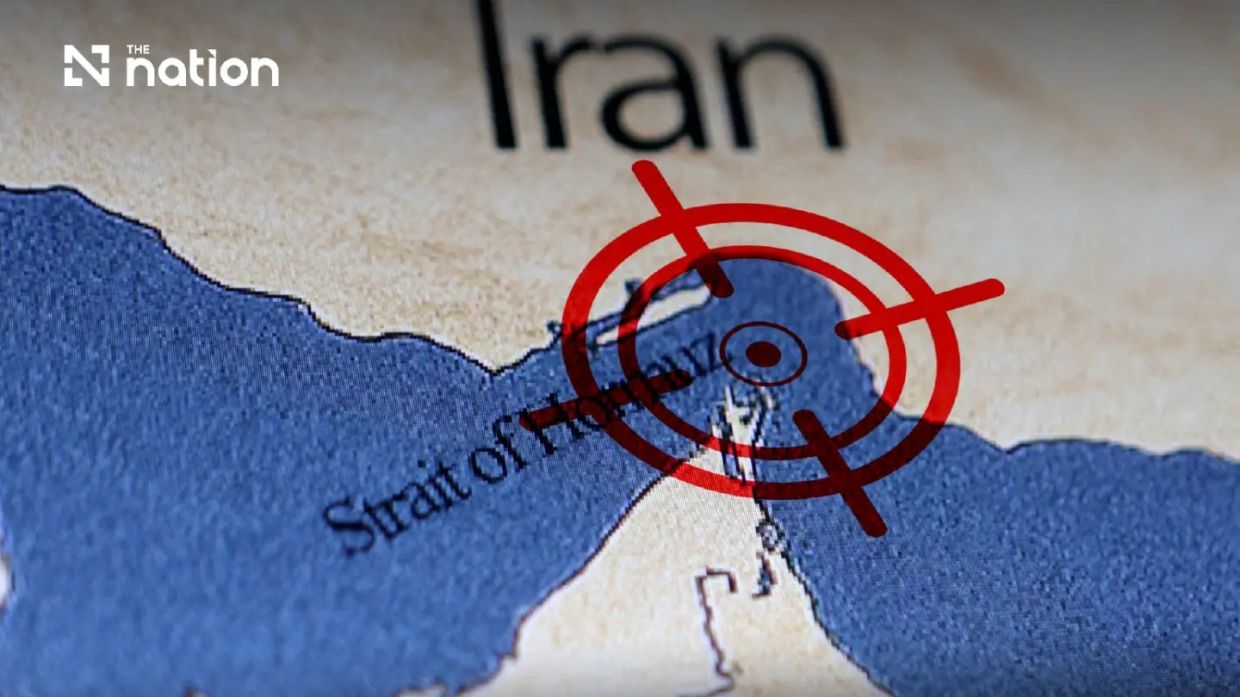
A merchant vessel flying a Thai flag has reportedly come under attack from Iranian forces while navigating the Strait of Hormuz, one of the world's most strategically vital shipping routes and a flashpoint for mounting tension between Washington and Tehran. The incident, disclosed by Iran's semi-official Tasnim news agency, occurred as military hostilities between the two powers have escalated dramatically, placing thousands of commercial ships and crew members at heightened risk in a waterway through which roughly one-third of globally traded seaborne oil passes daily.
Details about the specific vessel remain scarce. Tasnim did not publicly reveal the ship's identity, ownership structure, cargo manifest, destination port, or the nationalities of those serving aboard. Thai authorities have yet to issue an official statement acknowledging or commenting on the reported attack. Similarly, independent maritime monitoring organisations and the vessel's operational company have not confirmed the incident, and it remains uncertain whether the ship sustained material damage or whether any crew suffered casualties. The lack of transparency underscores the fog of war enveloping the region as competing narratives emerge from different actors.
The alleged assault on the Thai-flagged ship represents merely one element of a broader pattern of reported incidents destabilising the Strait of Hormuz. According to Tasnim, two separate oil tankers recently experienced fires ignited by explosions when they attempted to transit waters that Iranian media described as containing a minefield. The Islamic Revolutionary Guard Corps Navy asserted that the waterway had become "extremely unsafe" and claimed it was effectively shuttered due to what it characterised as American military aggression in the region.
In a separate claim, the IRGC alleged it had successfully intercepted four oil tankers that were purportedly endeavouring to traverse the strait with American military backing. The Iranian force ordered these vessels to remain stationary whilst conducting combined missile and drone operations in the area. The IRGC Navy publicly warned shipowners to prioritise compliance with Iranian military directives rather than depend upon protective measures offered by United States naval forces. However, the four vessels mentioned were not identified, and no information regarding their locations, flag states, registry details, or operational condition was disclosed.
These reported developments carry serious implications for global maritime commerce and energy security. The Strait of Hormuz functions as the world's most critical energy transit chokepoint; any extended disruption to shipping through these waters could trigger cascading economic consequences including inflated freight rates, elevated marine insurance premiums, constrained energy supplies to importing nations, and heightened volatility in international commodity markets. For Malaysia and other Southeast Asian economies dependent on imported oil and reliant on stable energy pricing, developments in the Persian Gulf directly affect domestic inflation, industrial competitiveness, and energy security planning.
Underscoring the severity of the regional confrontation, the United States has conducted seven consecutive nights of military strikes targeting Iranian positions and capabilities. American Central Command announced through its social media presence that the latest bombardment commenced at 7pm Greenwich Mean Time on Friday. The US military stated these air operations aimed to methodically diminish Iran's military infrastructure and operational capacity. However, CENTCOM declined to furnish comprehensive target lists or fully delineate the extent of destruction inflicted by these campaigns.
Iranian officials have contested American characterisations of these operations, asserting that prior US strikes have inflicted substantial damage upon civilian infrastructure throughout Iran's southern regions, including transportation networks, airport facilities, electrical generation systems, and railway installations. Foreign Minister Abbas Araghchi specifically identified casualties from an assault on a bridge in Bandar Khamir, stating that three individuals died in that attack amongst eight total fatalities from overnight American strikes. Tasnim further reported, citing a provincial administrator, that the United States had targeted an Iranian oil tanker positioned at Kharg Island. Such allegations of civilian infrastructure damage have not been independently verified through neutral international observers.
Iran has responded militarily to American strikes by conducting what it claims are attacks against US military installations throughout the Gulf region. The Iranian military asserted responsibility for strikes against American assets and military bases situated in Bahrain, Jordan, Kuwait, and Qatar. Qatari officials confirmed that their country's armed forces intercepted an incoming Iranian attack, though a child sustained injuries from falling debris generated during the interception. The competitive military claims and counterclaims create a chaotic information environment where establishing objective facts remains extremely difficult.
The Iranian military has additionally claimed success in deploying newly developed air-defence systems to bring down a US MQ-9 surveillance drone over Bushehr, an Iranian port city. The IRGC stated the unmanned aircraft was destroyed whilst operating under Iran's integrated air-defence command structure. The United States has not immediately acknowledged losing an MQ-9 drone in Iranian airspace, maintaining standard operational security practices regarding specific asset losses.
The escalating confrontation presents grave dangers for an already volatile region hosting numerous American military personnel and facilities. Several Gulf states, including those housing critical US bases, now find themselves positioned between two belligerent powers engaged in direct military operations. The reported attack on the Thai-flagged vessel, combined with allegations of tanker incidents and competing military claims regarding strikes and interceptions, collectively illustrate the mounting perils confronting civilian shipping and commercial operations as Washington-Tehran hostilities intensify without clear mechanisms for de-escalation or conflict resolution.
For Malaysian policymakers and maritime stakeholders, these developments demand heightened vigilance and strategic consideration. The concentration of global energy trade through such a contested waterway presents obvious risks to Southeast Asia's energy security and broader economic interests. Any major disruption to Hormuz shipping could reverberate throughout regional supply chains, affecting petrochemical industries, shipping logistics, and energy pricing across ASEAN economies that depend significantly on Middle Eastern oil imports and stable maritime trading conditions.

