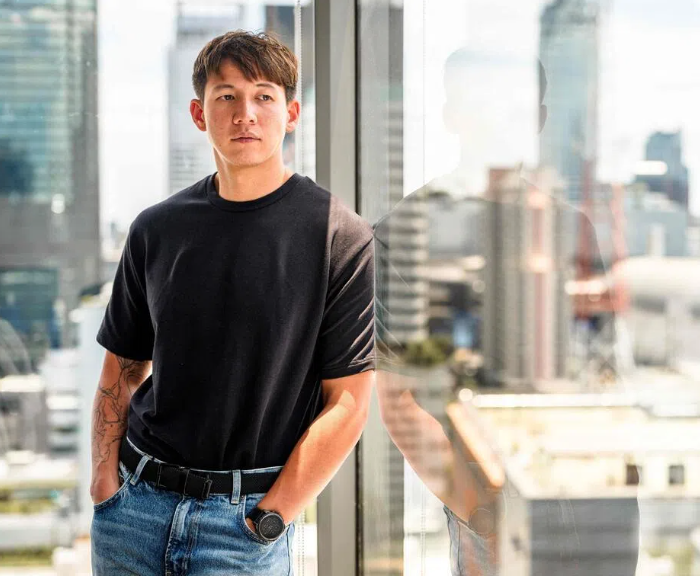
A prominent member of Thailand's billionaire Bhirombhakdi family formally withdrew a lawsuit against her son on Wednesday, bringing an abrupt end to a contentious legal dispute that had thrust one of Southeast Asia's most prominent business dynasties into the spotlight. Jeeranuch Bhirombhakdi, a third-generation heir to the Singha beer empire, had filed the case against her son Siranudh 'Psi' Scott in February, but a Bangkok civil court confirmed the formal withdrawal this week in a development that signals a potential thawing in family relations, at least on the surface.
The lawsuit itself invoked a distinctly Thai legal mechanism known as the "ungrateful child law", a measure that permits parents to reclaim substantial gifts and property transfers if offspring are judged to have exhibited ingratitude, physical abuse towards parents, neglect in caring for aging family members, or conduct that severely damages family reputation. Under this provision, Jeeranuch sought to recover land worth millions of dollars that had been transferred to Siranudh by his late grandfather, arguing that her son's behaviour had brought dishonour to the family name.
The case took a dramatic and unexpected turn in May when Siranudh responded to the lawsuit by making public allegations that he had endured sexual abuse perpetrated by his elder brother Sunit and the family's babysitter. This disclosure fundamentally shifted the narrative from one focused on filial ingratitude to one centred on serious criminal accusations involving abuse within a privileged household. The revelation prompted intensive media coverage across Thailand and Southeast Asia, drawing unprecedented scrutiny to the normally insulated affairs of one of the region's most prominent business families.
The property at stake represents just one dimension of the broader wealth held by the Bhirombhakdi family, whom Forbes ranks as Thailand's 15th richest household with an estimated combined net worth of US$1.75 billion. The family's fortune derives primarily from their controlling interest in Boonrawd Brewery, the production and distribution powerhouse behind Singha beer, a beverage that commands significant market share across Thailand and has become synonymous with Thai beer globally. Such substantial sums at stake ensured that the dispute attracted considerable attention from Thai society and international observers alike.
When speaking to journalists outside the courthouse following the withdrawal, Siranudh expressed a notably measured perspective on what might superficially appear to be a victory. He emphasized that the dismissal of the lawsuit, whilst relieving immediate legal pressure, did not constitute a genuine triumph given that the case should never have been initiated. His statement conveyed the lingering emotional toll of the episode, suggesting that whilst legal proceedings might conclude, the psychological consequences would persist far longer. Approximately two dozen supporters had gathered near the court building to express solidarity with Siranudh, many carrying paper flowers and photographs, underscoring the public sympathy he has garnered.
Jeeranuch's decision to withdraw appears to have been influenced by a shift towards reconciliation rather than continued confrontation. In a statement dated Friday, she indicated openness to dialogue within the family framework, emphasizing her readiness to engage in conversations characterised by "love and genuine goodwill". She additionally signalled her intention to respect the judicial processes concerning the allegations between her two sons, expressing hope that the truth would eventually surface and that justice would be administered equitably to both boys. This language suggests a deliberate repositioning away from the aggressive stance that had characterised the original lawsuit filing.
Parnthep Pourpongpan, acting as Siranudh's representative, offered his interpretation of Jeeranuch's motivations, characterizing her original filing as fundamentally motivated by a desire for family conciliation rather than punitive legal action. This framing attempts to portray the entire dispute as a domestic misunderstanding rather than a calculated attempt to recover substantial assets, though such characterization sits in considerable tension with the millions of dollars in property involved and the invocation of a law specifically designed to penalize ungrateful children.
Meanwhile, Sunit, the elder brother against whom the sexual abuse allegations were directed, has maintained his denial of the accusations whilst acknowledging that he and his brother engaged in what he characterises as rough physical play during their youth. The distinction between innocent boyhood roughhousing and actual abuse appears to be a central contested point. In a significant corporate consequence, Boonrawd Brewery, the parent company controlling the Singha brand, took action in May by removing Sunit from his executive position within the organization, a decision that reflected the gravity with which the company leadership and the family assessed the allegations.
For Malaysian and Southeast Asian observers, this case illuminates several aspects of wealth concentration and family dynamics in the region. The invocation of the "ungrateful child law" demonstrates how legal frameworks in various Asian jurisdictions can entrench parental control and asset disposition even among adult children, particularly when substantial wealth is involved. The episode also underscores how allegations of abuse within privileged families can remain obscured until external legal pressure—in this instance, the threat of losing substantial inherited property—creates sufficient incentive for victims to speak publicly.
The withdrawal of the lawsuit marks a temporary resolution to active legal proceedings but clearly does not resolve the underlying family tensions or allegations. The fact that Siranudh characterized the moment as falling far short of victory, and that he continued to emphasize the irreversible damage done to his life, suggests that formal legal closure will not translate into genuine family reconciliation. The Bhirombhakdi family now faces the challenge of navigating substantial internal divisions whilst managing a global beverage brand and maintaining the public reputation that wealth at this scale demands.

