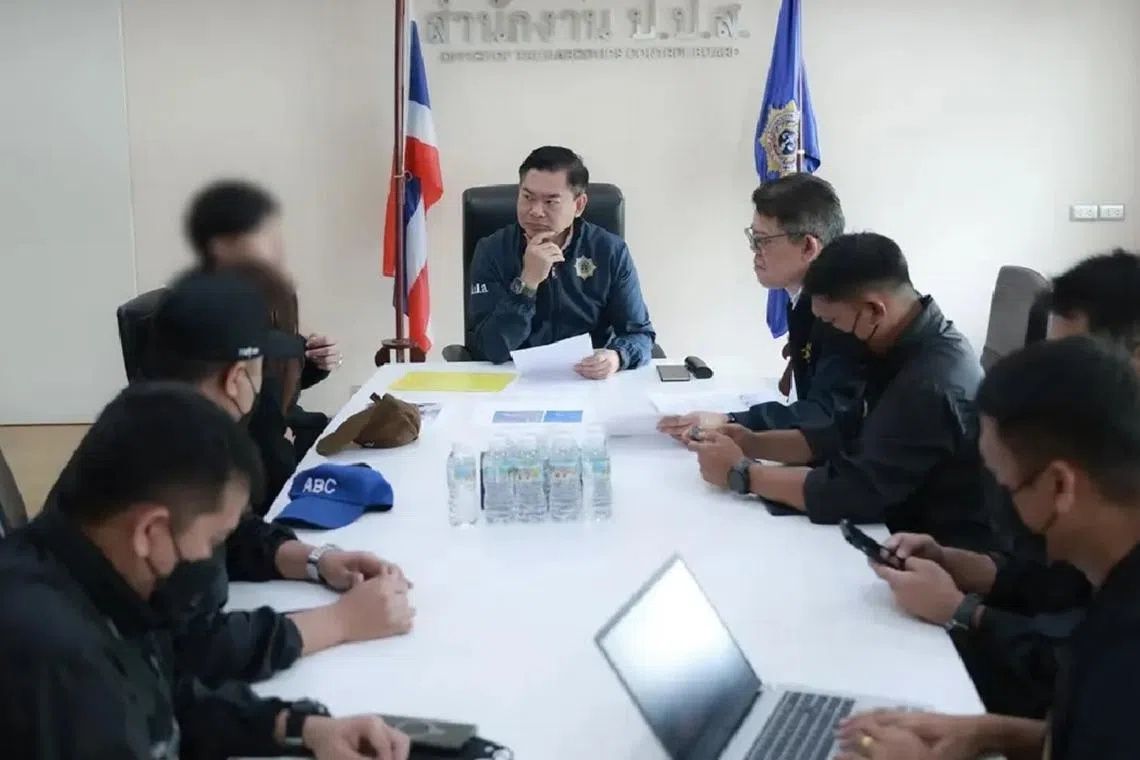
Thai narcotics officials have provided fresh details about the heroin seizure involving a Thai female airline crew member arrested by Australian authorities, revealing that the drug was hidden using a sophisticated concealment method that targeted just two of twelve bags inside a larger parcel. According to Police Major Suriya Singhakamol, secretary-general of the Office of the Narcotics Control Board (ONCB), Australian Federal Police officials determined that approximately 900 grams of suspected heroin was found in one of the two bags after cutting it open for examination. The ONCB believes the combined contents of both targeted bags do not exceed 2 kilograms, though Thai authorities continue awaiting formal laboratory confirmation from their Australian counterparts.
The discovery highlights an increasingly refined smuggling technique employed by transnational drug networks operating across Southeast Asia and beyond. Rather than distributing contraband evenly throughout the shipment—a method more likely to trigger detection at multiple checkpoints—the traffickers embedded heroin directly into the fabric of selected bags, leaving the remaining ten completely clean. This selective approach not only reduces the overall risk profile of the consignment but also complicates detection methodologies that rely on scanning or profiling based on weight distribution or chemical signatures. For authorities across the region, the tactic underscores how organised crime syndicates continue to adapt their operations in response to enforcement pressures.
Thailand's Office of the Narcotics Control Board has mobilised substantial investigative resources to dismantle what officials characterise as a sophisticated transnational trafficking organisation. Coordination between Thai authorities and the Australian Federal Police has intensified significantly, with both nations committing to an expanded inquiry aimed at identifying the network's upper-level operatives. The involvement of multiple Thai agencies—including the Customs Department and the Department of Special Investigation—alongside Australian law enforcement demonstrates the severity with which both countries regard the case and their commitment to pursuing prosecutions against those responsible for orchestrating the shipment.
One significant breakthrough came when a delivery rider voluntarily approached the ONCB to clear his name following initial suspicion surrounding parcel deliveries. After careful examination of closed-circuit television footage and cross-referencing timestamps and physical descriptions, investigators determined definitively that this individual was not the courier who delivered the suspicious parcel. The differences were striking: the cooperative rider had delivered his package on June 23 at approximately 5 p.m. in a black plastic box while wearing a yellow shirt and white helmet, whereas the actual suspect delivered the heroin-containing parcel on June 22 at midday using a large brown cardboard box and wearing a black helmet. These details illustrate the methodical forensic approach Thai authorities are employing to distinguish between innocent parties and those genuinely involved in the trafficking operation.
The investigation has now pivoted toward identifying the actual courier responsible for the June 22 delivery while simultaneously pursuing inquiries into the person who recruited the delivery service through a Facebook group operating under the account name "Rose". This dual-track approach recognises that courier services, while essential to the trafficking supply chain, often represent lower-tier operatives with limited knowledge of the shipment's contents or ultimate destinations. The more significant investigative priority lies in apprehending the network coordinator who leveraged social media platforms to arrange logistics—a pattern increasingly common in Southeast Asian narcotics operations, where encrypted messaging and social networking services provide operational anonymity.
Thailand's illicit drug landscape has long been shaped by geography and geopolitical factors beyond its borders. As Suriya explained, substantial quantities of heroin, crystal methamphetamine, and methamphetamine pills flow into Thailand from the Golden Triangle region spanning portions of Myanmar, Laos, and neighbouring countries. While Thailand does not manufacture these substances domestically in significant quantities, the country has become a crucial transshipment hub and processing centre where drugs are repackaged, concealed, and prepared for distribution throughout the region and beyond. The particular concealment methodology employed in this case—embedding heroin within fabric—could theoretically occur in any location along the supply chain, whether in source countries, during transit through regional hubs, or at final staging points before export.
Task Force Storm, a joint operational framework encompassing Thai and Australian law enforcement alongside customs authorities, has begun the detailed investigative work necessary to reconstruct the parcel's journey through the supply chain. Understanding how the shipment was consolidated, moved through various checkpoints, and ultimately entered the Australian customs environment remains crucial to identifying not just lower-level operatives but the strategic decision-makers orchestrating the operation. Such comprehensive route mapping often reveals patterns that implicate previously unknown participants and expose operational vulnerabilities that enforcement can exploit in future interventions.
For Malaysian and broader Southeast Asian readers, this case exemplifies the persistent challenge posed by transnational drug trafficking networks that exploit porous borders, international courier services, and legitimate trade infrastructure to move contraband across the region. The involvement of airline crew members—individuals with privileged access to airport environments and existing international travel patterns—represents a recruitment tactic repeatedly documented by authorities across Asia-Pacific jurisdictions. These networks specifically target transportation workers and logistics personnel whose professional roles provide cover for smuggling activities.
The sophistication of the concealment method and the apparent scale of the operation suggest involvement by established criminal syndicates with significant resources and technical capabilities. The deliberate use of social media recruitment, combined with carefully planned logistics involving specific delivery times and carefully selected couriers, indicates organisational maturity and operational discipline. For Australian and Thai authorities, disrupting such networks requires sustained intelligence sharing, rapid information exchange, and willingness to pursue investigations across national boundaries—cooperation that this case has already demonstrated.
Looking ahead, the success of Task Force Storm's investigation will likely depend on whether investigators can identify and apprehend the individual operating the "Rose" Facebook account and trace the financial flows associated with the shipment. Digital forensics, combined with international banking inquiries and further interviews with the arrested crew member, may yet yield leads pointing to broader trafficking infrastructure. The case also serves as a reminder that Southeast Asian nations must continue strengthening their border enforcement capabilities, enhancing intelligence coordination, and developing sophisticated investigative techniques capable of targeting the organisational networks orchestrating large-scale drug movements rather than simply intercepting individual shipments.

