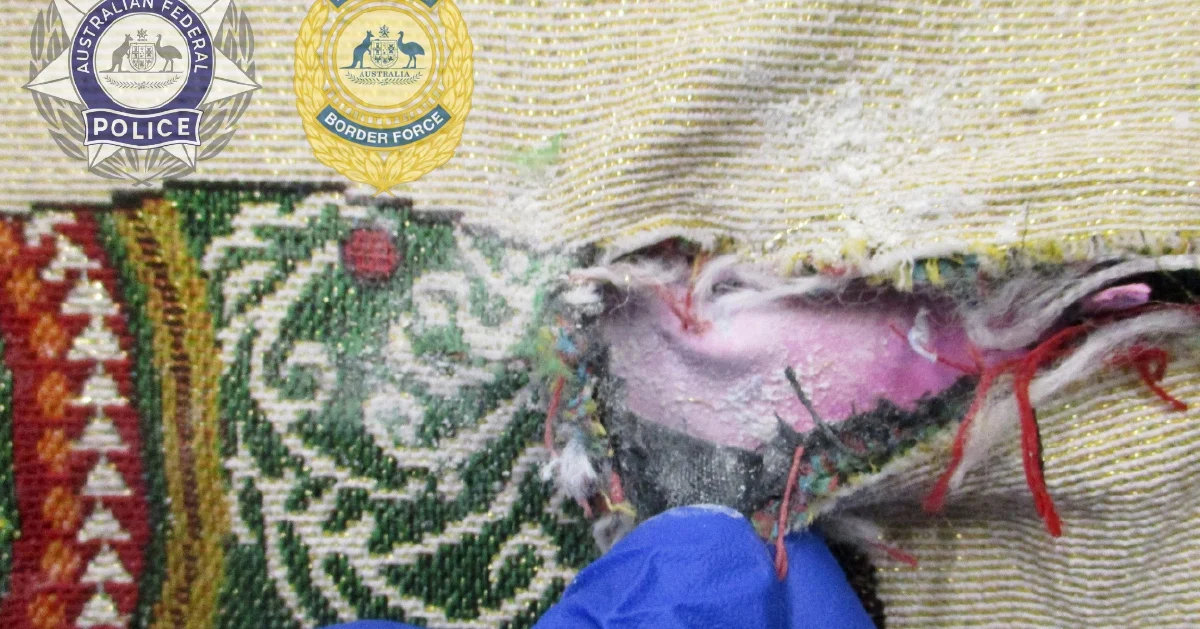
A crew member employed by Thai Airways faced serious drug trafficking charges in Australia after customs authorities uncovered a substantial heroin shipment hidden within seemingly innocuous luggage at Sydney airport. The discovery, made during routine border screening procedures, revealed more than a kilogramme of the narcotic concealed in tote bags carried by the airline employee. The arrest and subsequent charges, disclosed by the Australian Federal Police, represent another significant seizure in ongoing efforts to combat narcotics smuggling through international air travel routes.
The incident highlights vulnerabilities in airline supply chains and the methods employed by trafficking networks to exploit employees of major carriers operating across Southeast Asia and Australia. By recruiting staff with legitimate access to airport facilities and cargo areas, smuggling organisations reduce detection risks and circumvent standard security protocols. This particular case underscores how professional positions within the aviation sector can be weaponised for illicit purposes, transforming what should be routine employment into a conduit for dangerous substances crossing international borders.
Thailand has long struggled with its position within global heroin distribution networks, serving simultaneously as a transit country and a source region for opiate trafficking. The nation's proximity to the Golden Triangle—the mountainous border region encompassing parts of Myanmar, Laos, and Thailand where significant poppy cultivation persists—creates persistent supply chain pressures. Bangkok's major airports, handling millions of passengers and tonnes of cargo annually, present numerous opportunities for smugglers seeking to route contraband through established trade corridors to affluent markets in Australia, New Zealand, and beyond.
Australian customs and border protection agencies have intensified screening measures targeting flights originating from or transiting through Southeast Asia, where heroin production and distribution remain entrenched despite enforcement efforts. The Australian Federal Police maintains sophisticated detection capabilities, including advanced scanning equipment and intelligence networks that identify suspicious patterns in baggage and cargo manifests. Nevertheless, the ongoing discovery of significant quantities like the one kilogramme seized in this case demonstrates that determined smuggling operations continue exploiting gaps in security frameworks.
For Thai Airways, the arrest presents a serious reputational challenge and operational complication. Airlines operating internationally must maintain rigorous employment vetting procedures and implement comprehensive staff training on prohibited substances policies to protect corporate standing and avoid regulatory sanctions. Involvement of personnel in major narcotics trafficking can trigger investigations into hiring practices, security protocols, and whether institutional oversight failed to detect warning signs or prevent access to vulnerable positions. Australian authorities may expand their inquiries to examine whether the employee operated within a larger trafficking network or acted independently.
The implications extend beyond individual prosecution to broader regional security frameworks. Australia classifies heroin as a Schedule 9 prohibited substance, carrying severe penalties including lengthy custodial sentences for importation offences. Conviction in this case would likely result in substantial prison time, serving as a cautionary example to others considering similar ventures. Yet Australian law enforcement and intelligence agencies recognise that individual prosecutions represent only partial solutions to systemic trafficking problems rooted in upstream production regions and middlemen organisations orchestrating international operations.
Regional cooperation mechanisms, including intelligence sharing agreements between Australian Federal Police, Thai law enforcement, and other Southeast Asian agencies, remain critical to addressing transnational narcotics movements. The ASEAN region generates an estimated 300 to 400 tonnes of illicit heroin annually according to United Nations Office on Drugs and Crime assessments, with Australia remaining a high-value destination market due to consumer purchasing power and relative scarcity keeping street prices elevated. This economic reality sustains trafficking networks' motivation to develop and refine smuggling methodologies.
For Malaysian readers and regional observers, the incident reinforces vulnerabilities affecting the entire Southeast Asian aviation ecosystem. Major airlines throughout the region—including Malaysian carriers—must remain vigilant regarding employee recruitment and monitoring. Smuggling networks specifically target individuals facing financial difficulties, gambling debts, or personal crises, making comprehensive staff welfare support and financial counselling programmes essential preventive measures. Internal reporting mechanisms allowing employees to flag suspicious colleague behaviour without fear of retaliation strengthen institutional defences against infiltration.
The arrest also reflects broader patterns evident across major international routes, where heroin shipments regularly transit Southeast Asian hubs destined for Australian, New Zealand, and sometimes North American markets. Customs agencies increasingly employ behavioural analysis alongside technological screening, recognising that nervous demeanour, inconsistent travel histories, and unusual luggage contents may indicate smuggling attempts. Professional smugglers continuously adapt tactics, however, rotating couriers, varying concealment methods, and exploiting trusted employees to reduce detection probabilities.
Looking forward, this case will likely inform Australian legislative and enforcement discussions regarding airline accountability measures and potential enhanced screening requirements for employees of carriers operating high-risk routes. International aviation bodies and individual nations are exploring whether additional protocols—including random baggage screening of staff, enhanced background investigations, or technology-enabled monitoring systems—can meaningfully reduce narcotics smuggling without imposing excessive operational burdens on legitimate air transport activities.

