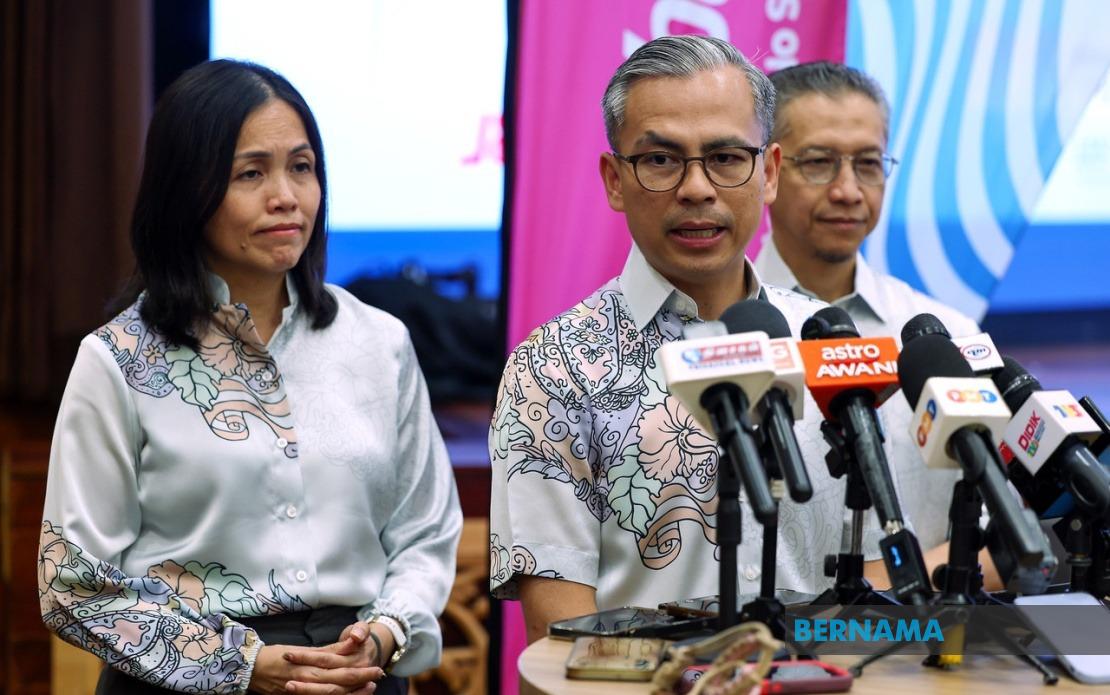
Communications Minister Datuk Seri Fahmi Fadzil has confirmed that the Royal Commission of Inquiry report on Lembaga Tabung Haji will be submitted to enforcement and regulatory agencies for thorough investigation of all findings and evidence. The report, which became public on July 29, documented significant governance and operational deficiencies at the Islamic pilgrimage fund during a seven-year period and proposed 25 corrective measures, three-quarters of which have already been adopted as of late July.
The minister outlined the scope of agencies involved in the investigative process, which spans multiple portfolios and enforcement mandates. The Royal Malaysia Police, the Malaysian Anti-Corruption Commission, financial intelligence units under the Anti-Money Laundering, Anti-Terrorism Financing and Proceeds of Unlawful Activities Act framework, Bank Negara Malaysia, and the Inland Revenue Board will all examine the report's content and conduct follow-up inquiries. This multi-agency approach reflects the complexity and cross-cutting nature of the governance failures identified in the inquiry.
Fahmi's announcement came after a parliamentary sitting specifically convened to debate the RCI findings, during which Finance Minister II Datuk Seri Amir Hamzah Azizan and Minister in the Prime Minister's Department (Religious Affairs) Dr Zulkifli Hasan provided additional briefings. The decision to forward findings to enforcement bodies follows Prime Minister Datuk Seri Anwar Ibrahim's earlier undertaking to ensure comprehensive investigation of all matters raised in the report. This sequential approach—from public disclosure through parliamentary debate to agency referral—underscores the government's transparency framework in handling the inquiry's conclusions.
The RCI covered the financial and operational management of Tabung Haji between 2014 and 2020, a critical period that encompassed significant market volatility and regulatory evolution in Malaysia's Islamic finance sector. The inquiry identified systemic weaknesses in governance structures, investment oversight, and operational controls. The implementation of 75 per cent of the 25 recommendations within weeks of the report's release demonstrates that Tabung Haji has already begun remedial action in certain areas, though the full scope of the report's implications remains to be assessed through formal investigations.
When questioned about legislative calls from both Barisan Nasional and Pakatan Harapan parliamentarians for a subsequent inquiry covering the 2021-2025 period, Fahmi indicated that such a decision would require deliberation at the highest levels of government. Establishing a Royal Commission of Inquiry involves more than executive action; it necessitates Cabinet approval and, critically, the consent of the Yang di-Pertuan Agong. This constitutional requirement reflects the formal and elevated nature of such inquiries and suggests that any extension of the investigative scope would require significant political consensus and royal approval, factors that may complicate efforts to establish a successor inquiry.
The minister drew attention to the contrasting parliamentary conduct of Parti Pribumi Bersatu Malaysia and other Perikatan Nasional opposition parties during yesterday's debate. Bersatu MPs chose to attend and participate in the special sitting, a decision Fahmi characterised as prudent and responsible, particularly given that members of the now-opposition PAS and current Opposition Leader Datuk Seri Hamzah Zainudin held ministerial positions when the RCI was established in 2021. Fahmi expressed frustration that some opposition MPs declined to engage in the debate, suggesting they had forfeited an opportunity to scrutinise findings and contribute to parliamentary discourse on governance failures at a major public institution.
The parliamentary session itself reflected tensions within the opposition benches. While 39 MPs participated in the debate following Dr Zulkifli's ministerial briefing, other opposition members staged a walkout and boycotted both the briefing and subsequent discussion sessions. Their objection centred on Speaker Tan Sri Johari Abdul's decision to proceed without the physical presence of Prime Minister Anwar Ibrahim, raising questions about parliamentary procedure and the protocol governing special sittings on matters of public concern. This procedural dispute underscores underlying political divisions and disagreements over the parliamentary process itself, beyond substantive debate on Tabung Haji governance.
For Malaysian and Southeast Asian readers, the Tabung Haji matter carries significance beyond institutional governance. The fund manages assets belonging to millions of Malaysian Muslims preparing for the Hajj pilgrimage, making its financial integrity and operational effectiveness matters of considerable public interest. Weaknesses in its management between 2014 and 2020 had direct implications for the savings and investments of ordinary Malaysians, particularly retirees and middle-income earners who rely on Tabung Haji schemes. The RCI's findings thus resonated with a broad constituency concerned not merely with administrative efficiency but with the protection of personal savings entrusted to a government-linked institution.
The referral of the RCI report to multiple enforcement and regulatory agencies reflects a deliberate strategy to ensure accountability through diverse investigative lenses. The MACC's anti-corruption mandate, the police's general investigative authority, and Bank Negara's regulatory focus each bring specialised expertise to different aspects of the report's findings. However, the effectiveness of this multi-agency approach depends on coordination, information-sharing, and aligned investigative timelines—challenges that Malaysian authorities have grappled with in previous complex cases involving governance failures and potential misconduct at large institutions.
The timeline for investigation remains unclear. Fahmi's statement emphasised the government's commitment to pursuing all matters raised in the report but did not specify investigative deadlines or expected milestones. Given the scope of the findings and the span of years under examination, investigations are likely to extend over many months, with outcomes possibly not emerging until well into 2024 or beyond. This extended timeline means Malaysian stakeholders will face a prolonged period of uncertainty regarding potential findings, accountability measures, and any remedial actions beyond those already implemented.
The political dimensions of the RCI and its aftermath reveal deeper fault lines within Malaysia's parliamentary opposition. The willingness of some opposition MPs to engage constructively with government inquiries, contrasted with the boycott tactics of others, suggests divergent strategies for opposition politics in the MADANI era. Fahmi's critique of the walkout reflects government frustration with what it views as obstructionist tactics, though opposition MPs might counter that their objections concerned procedural fairness and the constitutional role of the Prime Minister in parliamentary proceedings. These underlying tensions will likely influence how subsequent governance inquiries are received and debated in parliament.
Moving forward, the investigation outcomes could have material implications for Tabung Haji's governance structures, leadership, and operational frameworks. If investigations uncover evidence of misconduct or criminal activity, the institution may face not only reputational damage but also broader questions about regulatory oversight and government accountability. For Malaysian citizens, particularly those with ongoing relationships with Tabung Haji, the investigation process offers a degree of reassurance that governance lapses are being addressed through formal mechanisms. However, the extended timeline and multi-agency approach also raise expectations that findings will be comprehensive and that accountability will extend to individuals responsible for identified failures, not merely to institutional reforms alone.

